Alert (09/29/2026): Our Parkersburg TV transmitter is still undergoing maintenance and remains temporarily inoperative. We apologize for the inconvenience.
All our programming is available via our TV livestreams on our website and WVPB Passport. Thank you for your patience!
This week, author Silas House returns with a sweeping new novel. Also, some folks say, you have to fake it 'til you make it, even if you're trying to establish a state park. And, the story of the first Mothman sightings as written by a small town journalist in 1966.
A Traditional Japanese Garden In Virginia Tethers A Family Story To The Land
Most of the flowers in the Shinto garden are white. Amelia Bland Waller planted white flowers to create a moonlight garden, equally beautiful in moonlight or sunshine. Courtesy of Amelia Bland Waller
In 2024, Amelia Bland Waller, a longtime resident of Elk Creek, Virginia, started to build a Shinto Garden on her family’s land.
“I tell people it was like Richard Dreyfuss in Close Encounters of the Third Kind and that scene where he’s building something with mashed potatoes. I just had to have it, and the reason why is very deep,” she said.
Shinto is Japan’s oldest indigenous spiritual tradition, which focuses on the appreciation for the divine in nature. Waller’s Shinto Garden is located on a reclaimed swamp behind her late grandmother’s house. The land has been in the family eight generations.
“As a child growing up in Florida coming there, I just thought it was a wonderland,” Waller said. “And so even though the house was in terrible condition when I inherited it, I had to preserve it.”
The house is almost 100 years old. It wasn’t electrified until after World War II. After World War II is also when her grandmother’s — her name was Sibbie Comer Bland but Waller called her “Granny” — house acquired one of its most beloved visitors. Her name was Hime Yamuchi Bland, she was a Japanese nurse that Waller’s uncle had met when he was in Japan during the war. Hime became Waller’s favorite aunt.
“My Granny loved her daughter, her Japanese daughter-in-law. And her Japanese daughter-in-law loved my Granny,” Waller said.
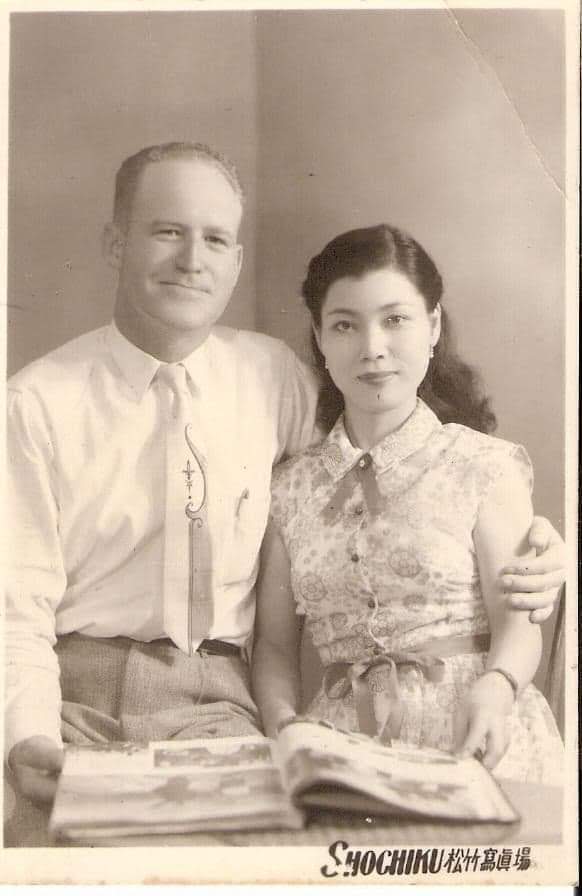
This picture was taken after the couple were married. Gerald was at first forbidden to marry Hime while on duty in Japan, as it was an occupied country. He re-enlisted so she could join him in Germany as his wife.
Courtesy of Amelia Bland Waller
Hime and her husband Gerald Bland were frequent visitors to Granny’s place, although they lived in Washington State. Waller still has the doll they gave her for her first Christmas. She cherishes memories of time spent with her aunt.
“My Aunt Hime — well I’ll use the phrase that was spoken by one of her friends at her funeral: She said if she had to describe Hime in a word it would be ‘pure.’ I adored that Hime called Granny ‘Mama,’ and she did that because she lost her own mother when she was very young, as did my Granny. They were both about 10 years old when they lost their mothers,” Waller said.
Hime had no children, so as an adult, Waller visited Hime several times in her senior years. Their relationship piqued her interest in Japan. Hime had dementia and began to lose her ability to communicate in English, so Waller began learning Japanese.
When Hime died at the age of 98 years old in January 2023, Waller traveled to Japan to bring her Japanese cousins their inheritance from Hime and to connect with them as part of the extended family. She also visited the world-famous Kenrokuen Gardens, known for their panoramic views, water features and beautifully tended trees and flowering shrubs.
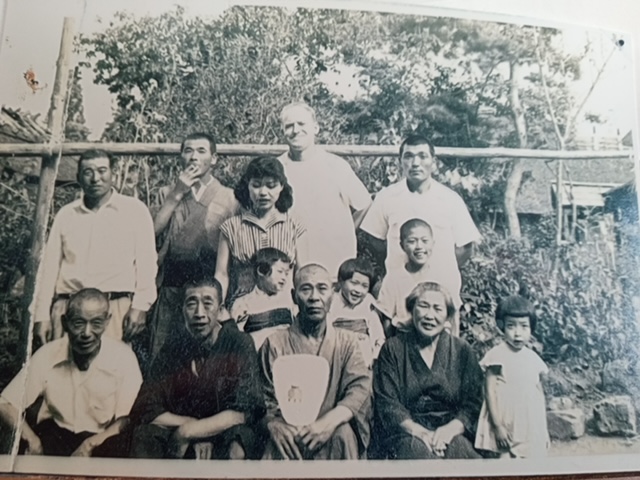
Gerald Bland visited Hime’s Yamuchi Bland’s family several times. Amelia Bland Waller met many of those pictured here when she traveled to Japan in 2024 to execute the behests in Hime’s will.
Courtesy of Amelia Bland Waller
“I just came back with this profound sense that part of the homeplace story was going to be integrating Japanese culture in some way. Because even though my Granny was as Appalachian as Appalachian could be, she and my Japanese aunt connected on a deep cultural level,” Waller said.
She felt deep cultural connections of her own after visiting Kenrokuen. That’s what inspired her Shinto Garden.
“It’s all related to the family story,” Waller said. “And I play a role in it now. I’m paying tribute to them, but it’s my creativity. I had a vision. I had land. And the vision in my mind was related to the land so I installed my vision on family land.”
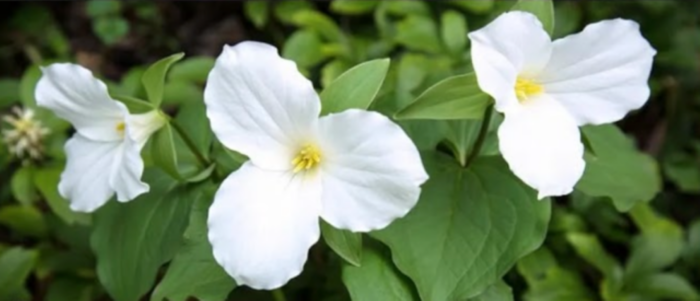
She started by ripping out a chicken coop and draining the swamp water into a pond. She added white flowers: trillium and irises, among others. Next came trees.
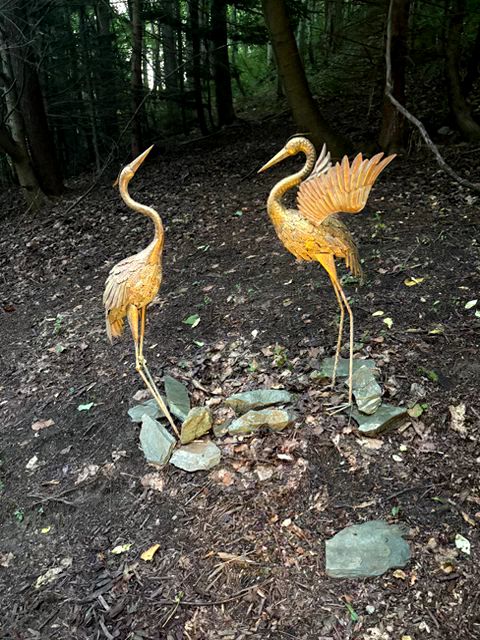
Cranes are known as the bird of happiness in Japan. They symbolize loyalty, longevity, peace and good luck.
Courtesy of Amelia Bland Waller
“[Hime] loved cherry trees, and in the cemetery where she’s buried they have a spectacular display at the entrance and when we’d drive by there in the spring, she’d ooh and ah about the cherry trees, which is the national symbol of Japan,” Waller said.
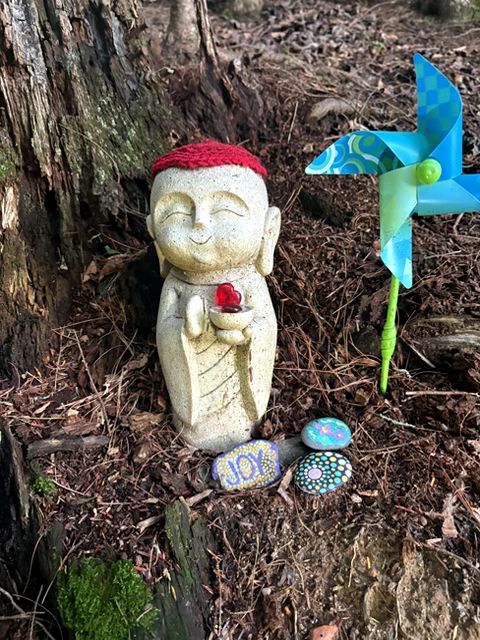
After the plants were in, Waller went back to Japan as a language student. While there, she learned about Jizo: little statues placed in gardens that are often wearing little red hats or bibs. They memorialize children who have died before their parents. Parents and others will keep the little hats and bibs fresh.
“I just thought that was really sweet,” Waller said.
Jizo are also the patrons of travelers. Waller had turned her grandmother’s homestead into an Airbnb called “Granny’s Place” years before. Now she installed Jizo to honor the travelers who stayed there.
Jizo statues honor children who died before their parents, and travelers. Jizo translates as “womb of the earth.”
Courtesy of Amelia Bland Waller
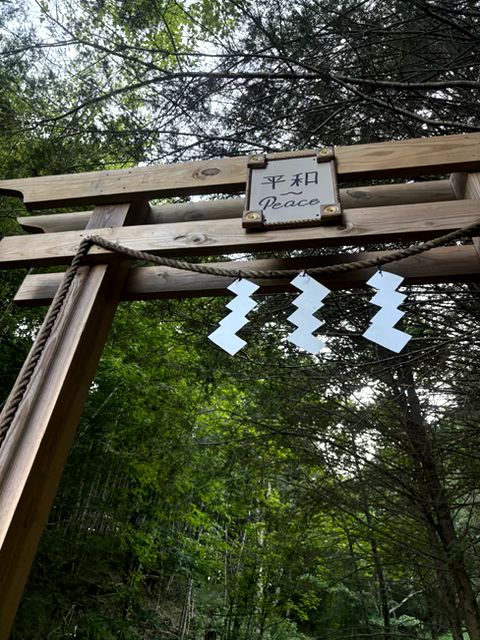
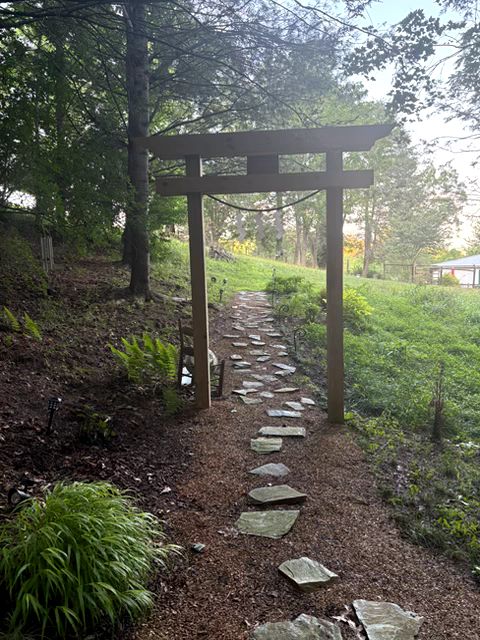
No Shinto Garden could be complete without a Torii gate. A Torii gate is a large square entrance designed to honor the liminal space between the mundane and the divine.
“I came up with this design that I sketched on paper. And I asked my good, lifetime evangelical Christian husband if he would help me construct a Torii gate,” she said.
And he did.
Torii gates are often decorated with shide. These white lightning strips cut from paper symbolize purity, mark divine spaces, and are said to ward off evil.
Photo Credit: Wendy Welch/West Virginia Public Broadcasting
That easy acceptance is part of what Waller aimed for with the Shinto Garden, she said. She wanted it to honor the relationship between two different women united by their love for nature and each other. And she wanted to celebrate the Appalachian respect for land.
“I think in some ways, we view our land, our inherited land as somewhat extensions of ourselves, and our canvas on which we can create,” she said.
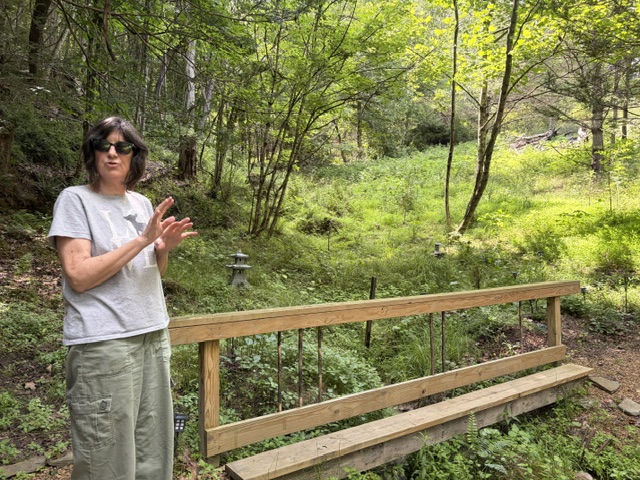
Guests in the Shinto Garden gravitate toward the pond full of goldfish. They sit on the bridge. Her husband Jimmy salvaged a massive beam from the homestead’s old granary for the bridge base.
Amelia Bland Waller explains the railing of the bridge in her Shinto Garden. Japanese culture prefers asymmetrical decoration.
Photo Credit: Wendy Welch/West Virginia Public Broadcasting
“I made the garden using what I could salvage from other parts of the place, my personal history and what I know about the property. It’s a reminder to me of this Japanese concept of “mono no aware,” which is like the appreciation of the ephemeral,” Waller said. “A garden teaches you that. The plants are always changing through the seasons. Sometimes they grow, sometimes they die.”
Families and land are the same, Waller said. It might feel like they’re going to be around forever, but they’re not. Waller’s youngest son Will Beatty is set to inherit Granny’s Place someday. He and his wife Jess Burke held their wedding there.
“He understands the impetus for it, the inspiration for it and he appreciates it,” she said. “He knows it adds value to the place and I’m not talking merely about dollar value, I’m talking about the family history woven into the place.”
What would Aunt Hime and Granny have said of the garden, had either of them seen it?
“I think Granny would like the pond, and the fish in the pond,” Waller said. “She would like the use to which the water has been put. Granny was very practical. She valued things for their usefulness.”
And Hime?
“I think she’d really like the trillium, the white trillium, which are not Japanese but are native Appalachian, she would like those,” Waller said.
The path into the Shinto Garden is marked by several flowers and the Torii Gate. Torii Gates mark space between the mundane and the divine.
Photo Credit: Wendy Welch/West Virginia Public Broadcasting
“When you venture into the garden, the Shinto Garden, you are immersed in nature,” Waller said. “People in Appalachia understand that. They sit on their porches to watch the sunset or the clouds move. And just sit beside a little pond and see the goldfish swim, it’s just a very calm and peaceful place to sit and listen to the birds, it’s just lovely. And I’m really glad that I built it.”
--
This story is part of the Inside Appalachia Folkways Reporting Project, a partnership with West Virginia Public Broadcasting’s Inside Appalachia.Subscribe to the podcast to hear more stories of Appalachian folklife, arts and culture.
Add WVPB as a preferred source on Google to see more from our team
Generations ago, kudzu was introduced to Appalachia to help control erosion and provide forage for cattle. But then, it kind of just took over. Kudzu is an invasive plant that chokes out native greenery. Some people are fighting back. Folkways Reporter Eliza Benbow spent time with the kudzu warriors in western North Carolina.
For LGBTQ youth in Appalachia, estrangement from their families of origin can be a common and heartbreaking experience. So, some LGBTQ people rely on “chosen family." In Roanoke, Virginia, the culture of ballroom offers the safety and stability of family, along with traditions that are handed down — traditions like vogueing. Mason Adams reported this Folkways story, in collaboration with Brad Kutner and Kelley Libby.
Through early October, the Blowing Rock Art and History Museum in North Carolina is hosting an exhibit celebrating one of the region’s most notable fiber artists – Barbara Grennell. The exhibit does more than expose people to great art; it asks people, what makes art, art? Folkways Reporter Wendy Welch reports.