Alert (09/10/2026): Our Parkersburg TV transmitter is undergoing maintenance for a few days and will not be operational. We apologize for any inconvenience.
All our programming is available via our TV livestreams on our website and WVPB Passport. Thank you for your patience!
This week, in author Willie Carver, Jr.’s new book, he reconsiders a negative childhood experience with a neighborhood girl who might have just been looking for a friend. Also, a southwestern Virginia community rang the alarm after more and more of its children were diagnosed with cancer. A local journalist is trying to unravel the cause. And, the city of Asheville has a new crusading reporter. He’s a puppet.
"No Options" from June Appal showcases hip hop music from across Appalachia.Courtesy
Listen
Share this Article
One of America’s greatest contributions to world culture … is hip hop. A new compilation documents what it sounds like across Appalachia.
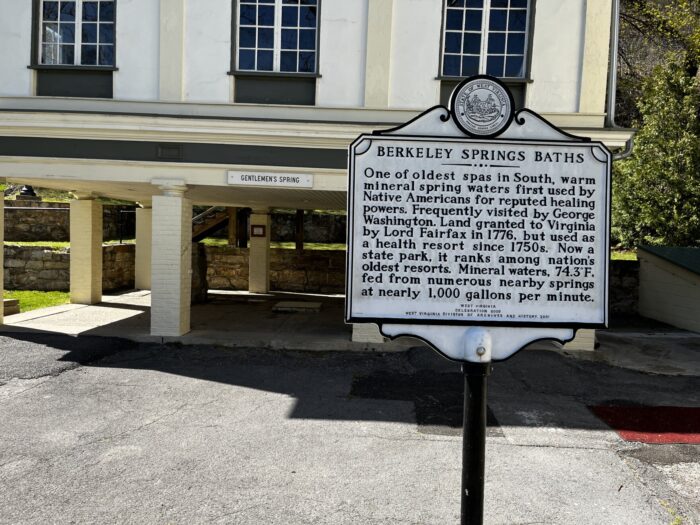
Also people in the region love their local water springs, but in Berkeley Springs, West Virginia, they take that dedication to another level.
And, congressional Republicans are trying to freeze funding for new mine safety rules. Advocates are concerned.
In This Episode
“No Options” Explores Hip-Hop in Appalachia
The Watery Allure Of Berkeley Springs
The Continuing Battle Over Black Lung
“No Options” Explores Hip-Hop in Appalachia
Rapper Monstalung is one of the artists featured in “No Options,” a CD collection of Appalachian hip hop. Courtesy
Hip hop has been in Appalachia for about as long as the genre has been around, about 50 years. A new compilation from June Appal Recordings, “No Options: Hip-Hop in Appalachia” 24 tracks from across the region. Mason Adams spoke with executive producer JK Turner, and rapper Eric Jordan, also known as Monstalung.
The Watery Allure Of Berkeley Springs
Fans of spring water come from all over to collect water from Berkeley Springs. Zack Harold/West Virginia Public Broadcasting.
There are natural springs all over Appalachia. Before indoor plumbing, that’s where most folks got their fresh water. In Berkeley Springs, West Virginia, people still fill jugs with spring water to lug back home. In 2022, Folkways reporter Zack Harold visited the springs and brought us this story.
The Continuing Battle Over Black Lung
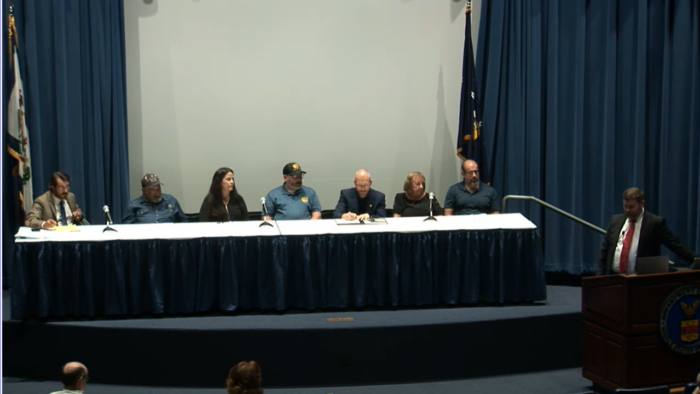
Assistant Secretary for Mine Safety and Health Chris Williamson moderates a panel on Black Lung and MSHA’s new silica dust rule.
As Appalachian miners cut into increasingly thinner seams of coal, they’re encountering more silica dust from rock. The dust contributes to an advanced form of black lung disease. Coal miners and advocates have spent decades negotiating with the federal government to add safety rules. When a new rule was finalized in April, advocates celebrated, but before it could take full effect, opponents threw up another roadblock.
Emily Rice reported.
------
Our theme music is by Matt Jackfert. Other music this week was provided by Joshua Outsey, Monstalung, Tim and Dave Bing, Deep Jackson and Dinosaur Burps.
Bill Lynch is our producer. Zander Aloi is our associate producer. Our executive producer is Eric Douglas. Kelley Libby is our editor. Our audio mixer is Patrick Stephens. We had help this week from folkways editor Chris Julin. You can find us on Instagram and Twitter @InAppalachia.
You can send us an email: InsideAppalachia@wvpublic.org.
A new report from the Centers for Disease Control found that black lung rates are the highest they’ve been since the 1970s. The disease can be debilitating, even for young miners. Justin Hicks reported for the Appalachia + Mid-South Newsroom on the new CDC report. Longtime investigative reporter Howard Berkes assisted, continuing his years of reporting on black lung, as previously featured on Inside Appalachia. Following the story’s release, Inside Appalachia Host Mason Adams reached out to dig deeper.
On this West Virginia Week, the state signs a memorandum of understanding about nuclear energy, the Public Service Commission disputes need for a transmission line, and 9/11 is remembered.
This week, in author Willie Carver, Jr.’s new book, he reconsiders a negative childhood experience with a neighborhood girl who might have just been looking for a friend. Also, a southwestern Virginia community rang the alarm after more and more of its children were diagnosed with cancer. A local journalist is trying to unravel the cause. And, the city of Asheville has a new crusading reporter. He’s a puppet.
Twenty-five years ago, on Sept. 11, 2001, at 8:46 a.m., a hijacked plane hit one of the twin towers at the World Trade Center in New York City, ending for this nation a certain innocence, and the belief that such an attack would never happen on American soil. Maria Young caught up an economics professor from WVU who was on site when the planes hit – and gave an exclusive interview to then-West Virginia Public Broadcasting News Director Beth Vorhees.