Acclaimed singer-songwriter Amythyst Kiah released "Still + Bright" last year, which featured guests like S.G. Goodman and Billy Strings. Inside Appalachia host Mason Adams spoke with Kiah from her home in Johnson City, Tennessee at that time. We listen to an encore of that conversation.
A Decade After Millions Of Opioid Pills Hit Kermit, W.Va., Can The Town Rebound?
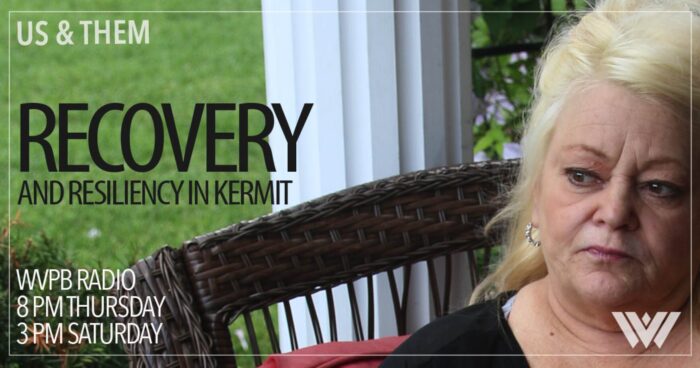
Debbie Preece of Kermit, W.Va., lost two brothers to the opioid epidemic.
Listen
Share this Article
At the peak of the opioid crisis, drug companies sent 12 million hydrocodone pills to Kermit, W.Va., a town of about 350 people. Cars would line up at the one pharmacy with people waiting to pick up pain pills. The so-called pain clinics of a decade ago are gone. In their place, a continued need for addiction treatment and recovery resources. Lawsuits against big pharmaceutical companies continue to bring in settlements, but so far Kermit hasn’t seen any money from the litigation. We head to Mingo County to see how the community is healing and what the future might look like.
Credit Trey Kay / WVPB
/
WVPB
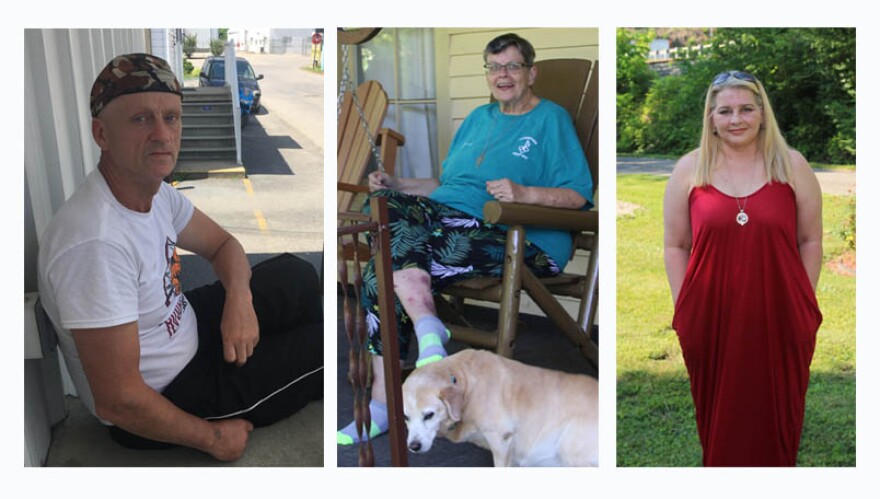
Kermit residents Michael Duty, Sister Therese Carew and Etta Lea Blankenship-Kiser share their stories about the long road to recovery for individuals and the small West Virginia town they love.
This episode of Us & Them is presented with support from the Claude Worthington Benedum Foundation and the West Virginia Humanities Council. Subscribe to Us & Them on Apple Podcasts, NPR One, RadioPublic, Spotify, Stitcher and beyond. You also can listen to Us & Them on WVPB Radio — tune in on the fourth Thursday of every month at 8 p.m., with an encore presentation on the fourth Saturday at 3 p.m.
Add WVPB as a preferred source on Google to see more from our team
Acclaimed singer-songwriter Amythyst Kiah released "Still + Bright" last year, which featured guests like S.G. Goodman and Billy Strings. Inside Appalachia host Mason Adams spoke with Kiah from her home in Johnson City, Tennessee at that time. We listen to an encore of that conversation.
America continues to wrestle with racial division, but music has often been a space where those barriers are challenged. In this episode of Us & Them, host Trey Kay revisits a 1960s moment when a band refused to perform unless a mixed-race couple was allowed to dance — and paid the price for taking that stand. It’s a story about courage, consequences and the uneasy intersection of music and race in America.
The struggle against racial discrimination has hundreds of years of history in the United States. On the next episode of Us & Them, Trey Kay looks at the intersection of music and race in the 1960s. It’s about a band that took a stand against racism – and musicians who suffered the consequences.
Financial leaders in the House of Delegates discuss the difference between the governor’s budget numbers and the budget state lawmakers are crafting at the Capitol now. Also, we hear the latest from our occasional series on the cosmos above West Virginia, "Almost Heavens."