Traditional Appalachian ballads have found new life in the form of an audio drama podcast produced by the Appalachia Book Company. We look at a reimagined story of a traditional railroad disaster ballad.
In this episode, we’ll hear reactions to Obama’s proposed tax credits and other funding for Appalachia. And we’ll talk with documentary filmmaker John Nakashima, whose new film, “The First 1000 Days,” explores the effects of poverty on young children.
We’ll also take a look back at how the lessons from the War on Poverty could shine light on present day economic development efforts.
Coalfields React to Part of Obama’s Budget
President Barack Obama’s new budget proposal includes more than $3 billion worth of tax credits and other spending to help the Appalachian region recover from the declining coal industry. People across the coalfields are responding with mixed feelings.
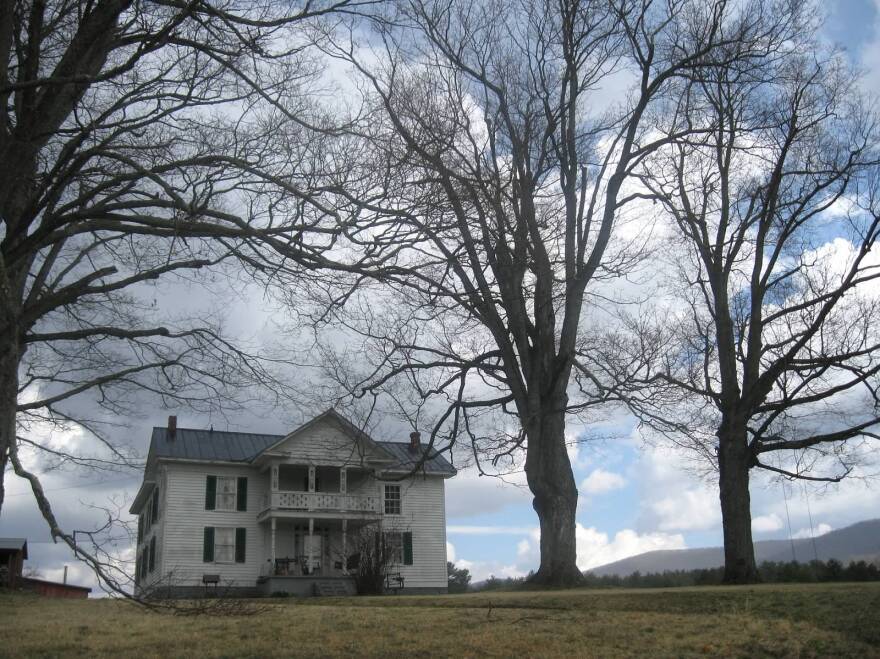
For many people Appalachia, the label of poverty is in the eyes of the beholder. Cultural wealth still abides, like this historic home in Pocahontas County. Photo by Kristi George.
Remembering the War on Poverty – and the Lessons Learned
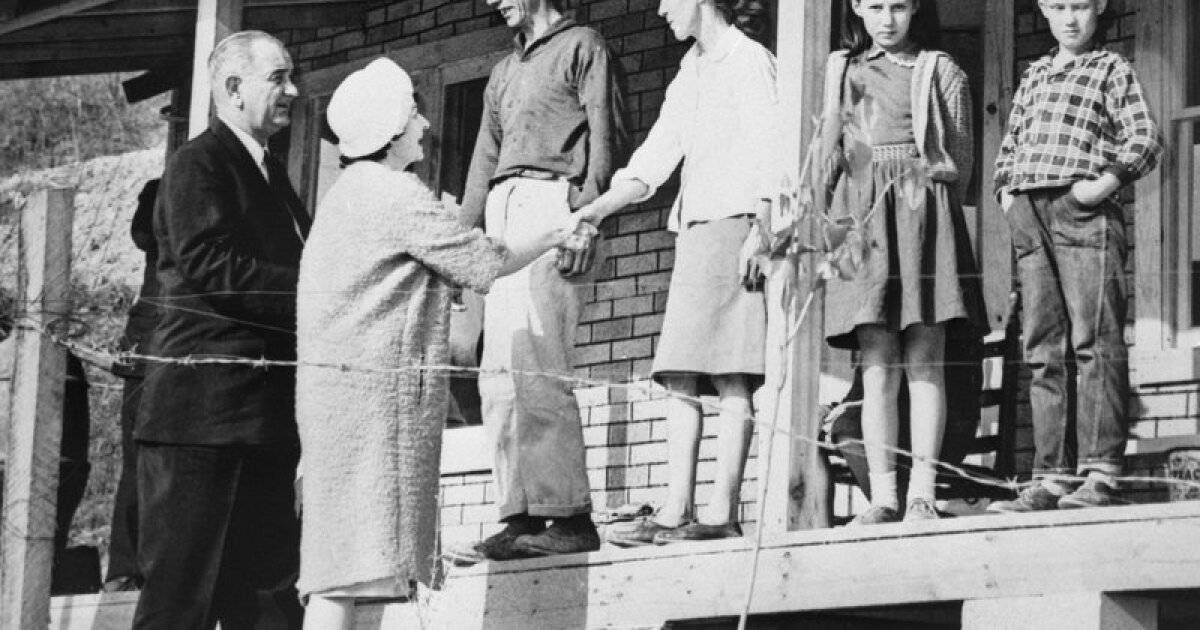
Last year marked the 50th anniversary of President Lyndon B. Johnson famously declaring America’s War on Poverty from a front porch in Inez, Kentucky. Today, poverty has decreased, but eastern Kentucky continues to rank last in the nation in terms of health, wealth, and wellbeing. When Johnson’s “War on Poverty” is mentioned, it’s often written off as a complete failure.
But as nonprofits and government agencies try to step in once again and give assistance to Appalachia’s struggling economy, it’s worth looking back to that transformative moment to ask: what really happened? What can we learn from it? WMMT’s Sylvia Ryerson and Mimi Pickering spoke with two veterans of the War on Poverty who were on the front lines in eastern Kentucky.
Hollis West, a veteran of the ‘War on Poverty’ in southeast Ky. in the 1960’s. Photo credit Mimi Pickering, Sylvia Ryerson/ WMMT
Poverty is in the Eye of the Beholder
President Lyndon Johnson went to Eastern Kentucky in 1964 to promote his war on poverty, but when he did, he opened a wound that still remains raw today. Last year, NPR’s Pam Fessler went to Appalachia to report on how the war on poverty is going. People told her that poverty is in the eye of the beholder.
Rising Above Appalachian Stereotypes
While it’s no longer politically correct to use racial, or gender-related remarks that stereotype groups of people, what about negative or Appalachian stereotypes?
Appalachians are commonly stereotyped as white, lazy, tobacco smoking, overall-wearing, poor farmers with poor dental hygiene, no indoor plumbing, and no shoes. Last fall, I talked with Sarah Beasley Concord University’s Director of Retention. She researched how these Stereotypes can influence young Appalachians who attend colleges and universities.
What’s in a Name?
The War on Poverty was declared in a little town called Inez Kentucky. But the name was originally Eden. Why did it change? To help us sort this one out, and to help give us a story beyond the face of poverty, we’ve got Mickey McCoy, who was born and raised in Inez. Mickey McCoy is a retired school teacher and now he owns a small sandwich shop called MetroBillies, in Inez.
Credit UCSF
/
UCSF
Paula Braveman researches the effect of stress on developing brains.
Does Being Poor Mean Being Sick?
Stress. We all live with it, but at what point does it become toxic? When do social pressures turn from a healthy challenge to a source of poison? These are some of the ideas turned over in a public health dialogue held last year at West Virginia University that explored the “social determinants of health.”
Award-winning producer John Nakashima set out to investigate the problem of child poverty in West Virginia. What he discovered and has documented is an overwhelming need of services and support for the very youngest.
Sabrina Shrader, The Face of Poverty, Says “Never Give Up”
Sabrina Shrader has been friends with Heather Wingate since attending Head Start together.
From Southern West Virginia, a McDowell County native Sabrina Shrader is featured in the documentary, the First 1000 Days. Shrader first shared her story with us in 2013. She talked about how a program called Upward Bound provided resources that helped her to graduate from college after a difficult and abusive childhood. She was working as an Upward Bound Coordinator at Concord University. Things have changed since then.
Music in today’s show is courtesy of Andy Agnew Jr., Marteka and William with “Johnson Ridge Special” from their latest CD Sounds of a Tradition. Music in today’s show was also provided by Little Sparrow with “In the Wilderness” and “In West Virginia”, Jake Schepps, Moby, the Glennville State Bluegrass Band, and Nappy Roots and Anthony Hamilton with “Po Folks.”
The Inside Appalachia podcast is available on iTunes and Stitcher.
Add WVPB as a preferred source on Google to see more from our team
Traditional Appalachian ballads have found new life in the form of an audio drama podcast produced by the Appalachia Book Company. We look at a reimagined story of a traditional railroad disaster ballad.
Tornadoes are notoriously unpredictable, making forecasting nearly impossible. But now, artificial intelligence (AI) is being used to improve forecast models. We listen to the latest story from The Allegheny Front, a public media program based in Pittsburgh, that reports on environmental issues in the region.
Torrential rains flood the north-central part of the state, a state delegate faces 'disgusting' criminal charges, and scouts pour into W.Va. for the 2026 National Jamboree.
This week, after a disaster, can comics help set the record straight? Also, sifting through Hurricane Helene’s debris, one group tries to reunite keepsakes with their owners, including love letters. And, a cafe in Virginia feeds the hungry and tries to destigmatize homelessness. For its outreach manager, whose brother lived on the streets for years, it’s personal.