


Aluminum Plates For Deep Space Win W.Va. 'Coolest' Contest
Aluminum plates that helped keep astronauts on the Artemis II rocket safe won the first ever Coolest Thing Made In West Virginia competition.
Continue Reading Take Me to More NewsAlert (09/29/2026): Our Parkersburg TV transmitter is still undergoing maintenance and remains temporarily inoperative. We apologize for the inconvenience.
All our programming is available via our TV livestreams on our website and WVPB Passport. Thank you for your patience!




To Educate, Inform, and Inspire by Telling West Virginia's Story
Mountain Readers Week will be held Oct. 5-9, 2026! Celebrate and foster a love of reading in children across West Virginia.

Nominate an exceptional West Virginia K-12 teacher today!

On Demand

On Demand

Stream original productions from WVPB

Watch locally produced documentaries & more.

On Demand

On Demand




West Virginia Morning

Inside Appalachia

West Virginia Week
Mountain Stage
Us & Them
The Legislature Today
The Legislature This Week

Send us your comments and questions.

Stream our board meetings.

Check out the latest WVPB news.

Sign up for our newsletter and get weekly updates.

Meet the WVPB staff.

WV Educational Broadcasting Commission, the WVPB Foundation, and the Friends of WVPB.

Come work with us!

Read our annual report and learn how we educate, inform and inspire with your support.

Sponsor impactful and engaging media and entertainment.

Use your IRA to make a gift to WVPB.

Become a member with your gift of $1,000 or more.

Make WVPB part of your legacy.

Manage your membership account.

Learn how you can Protect and Sustain West Virginia Public Broadcasting.

America’s crime rates have prompted President Donald Trump to deploy federal agents and National Guard troops in a handful of major cities.
On this episode of Us & Them, host Trey Kay looks at what data and statistics can really tell us about the level of violence in our country.
Crime continues to be one of the defining issues for the Trump administration, and the president refers to what he calls “out of control” crime numbers to deploy soldiers on city streets and support his actions, while using federal agents to sweep up undocumented immigrants. However crime rates are inconsistently reported, and the analysis is challenging. The administration points to its own actions as a reason for a recent drop in crime, but FBI data show major crime categories have been on the decline for the past two years. In fact, a recent poll suggests Americans are less anxious about street crime and more fearful of online scams and school shootings.
This episode of Us & Them is presented with support from the Just Trust and the CRC Foundation.
Subscribe to Us & Them on Apple Podcasts, NPR One, RadioPublic, Spotify, Stitcher and beyond.
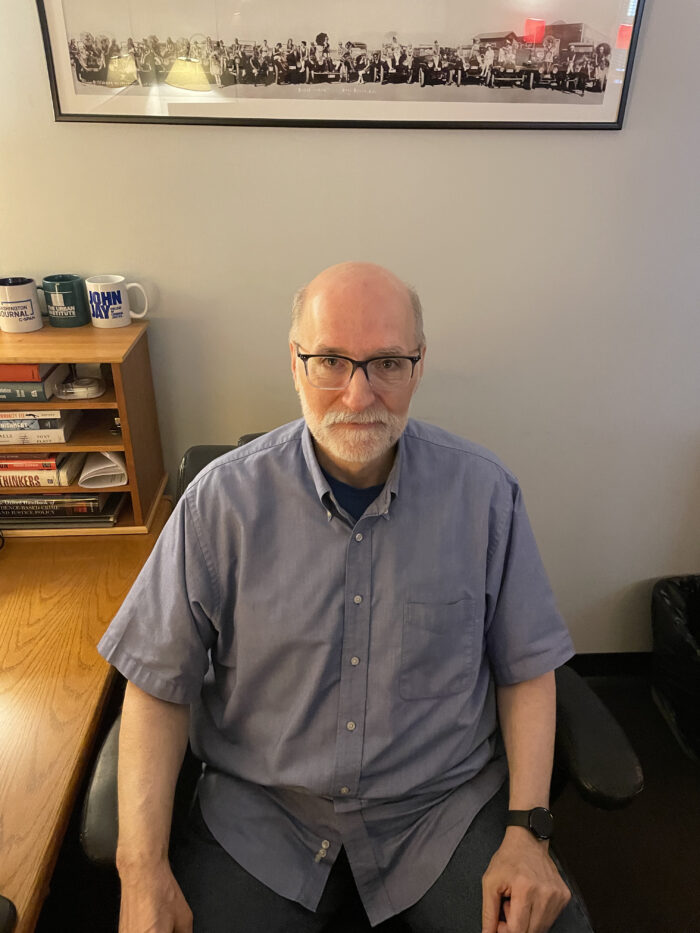
“We don’t have crime data because there’s no one walking around logging every offense. We have crime when someone sees it and reports it — that’s a complaint. An arrest is different, and the falloff between reports and arrests can be more than 50%. If you want to assess safety, you ask residents — the National Crime Victimization Survey does that — but the U.S. hasn’t sustained it well and almost never at the neighborhood level.”
— Jeffrey Butts, research professor at John Jay College of Criminal Justice and director of the school’s Research and Evaluation Center
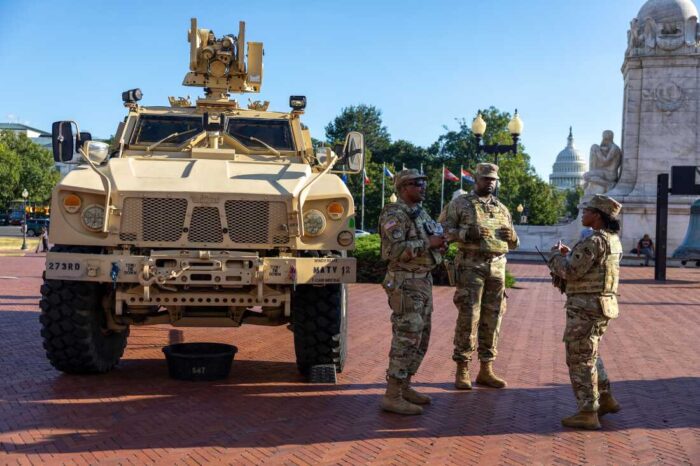
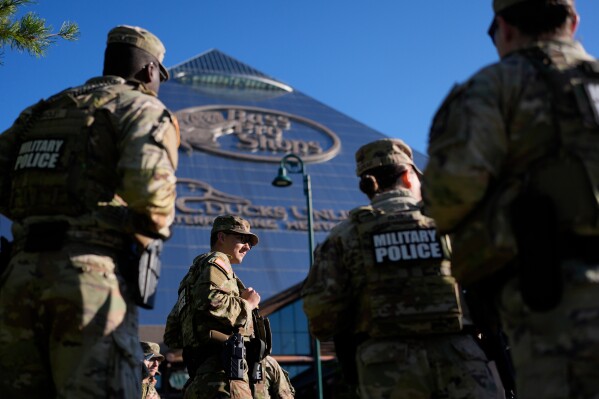
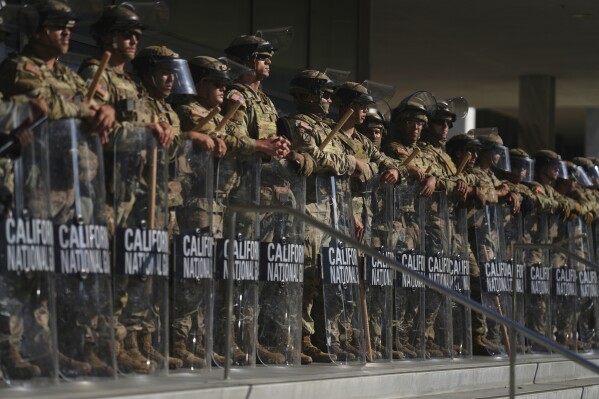
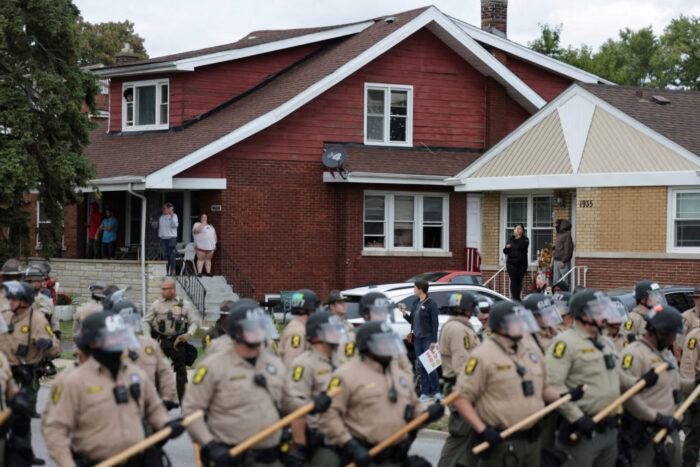
“All the things you just mentioned about DC and Chicago and LA and using the National Guard, that is not either a response to the crime problem or an intervention designed to improve the crime problem. It has nothing to do with crime. It’s public relations and political campaigning using the crime issue and using public safety to draw attention and motivate their base… The fact that any indicator of crime is lower now than it was six months ago, or six years ago, is not evidence of the impact of anything that’s been done to prevent crime. It’s the crime numbers moving… What politicians do is wait for them to go down and then claim credit, or they see them going up, and point to their opponents and say they did it.”
— Jeffrey Butts, research professor at John Jay College of Criminal Justice and director of the school’s research and evaluation center.
“Any time an elected official starts explaining the crime problem, keep a healthy skepticism. Too often, the numbers are wielded ineptly — or intentionally — to shape public reaction rather than improve public safety.”
— Jeffrey Butts, research professor at John Jay College of Criminal Justice and director of the school’s research and evaluation center.
Add WVPB as a preferred source on Google to see more from our team

Many of the devices we use in our daily lives run on rechargeable lithium-ion batteries. Be aware that damaged or incorrectly charged batteries can overheat, start a fire, or even explode.
Continue Reading Take Me to More NewsThere are several deadlines to consider before Election Day next month.
Continue Reading Take Me to More NewsTwo cases about whether the West Virginia Board of Education can mandate vaccines to students entering school without allowing for religious exemptions have been combined by the state Supreme Court of Appeals.
Continue Reading Take Me to More NewsDuring spooky season, popular attention turns toward ghosts and goblins – or if you live in Appalachia – cryptids. For the Appalachia + Mid-South Newsroom, Bill Lynch, producer of Inside Appalachia, brings us the story of the Flatwoods Monster.
Continue Reading Take Me to More News