Throughout the course of the year, West Virginia Public Broadcasting reporters and producers may create hundreds of stories. But some are favorites. We remember the story behind the story.
America’s crime rates have prompted President Donald Trump to deploy federal agents and National Guard troops in a handful of major cities.
On this episode of Us & Them, host Trey Kay looks at what data and statistics can really tell us about the level of violence in our country.
Crime continues to be one of the defining issues for the Trump administration, and the president refers to what he calls “out of control” crime numbers to deploy soldiers on city streets and support his actions, while using federal agents to sweep up undocumented immigrants. However crime rates are inconsistently reported, and the analysis is challenging. The administration points to its own actions as a reason for a recent drop in crime, but FBI data show major crime categories have been on the decline for the past two years. In fact, a recent poll suggests Americans are less anxious about street crime and more fearful of online scams and school shootings.
This episode of Us & Them is presented with support from the Just Trust and the CRC Foundation.
Subscribe to Us & Them on Apple Podcasts, NPR One, RadioPublic, Spotify, Stitcher and beyond.
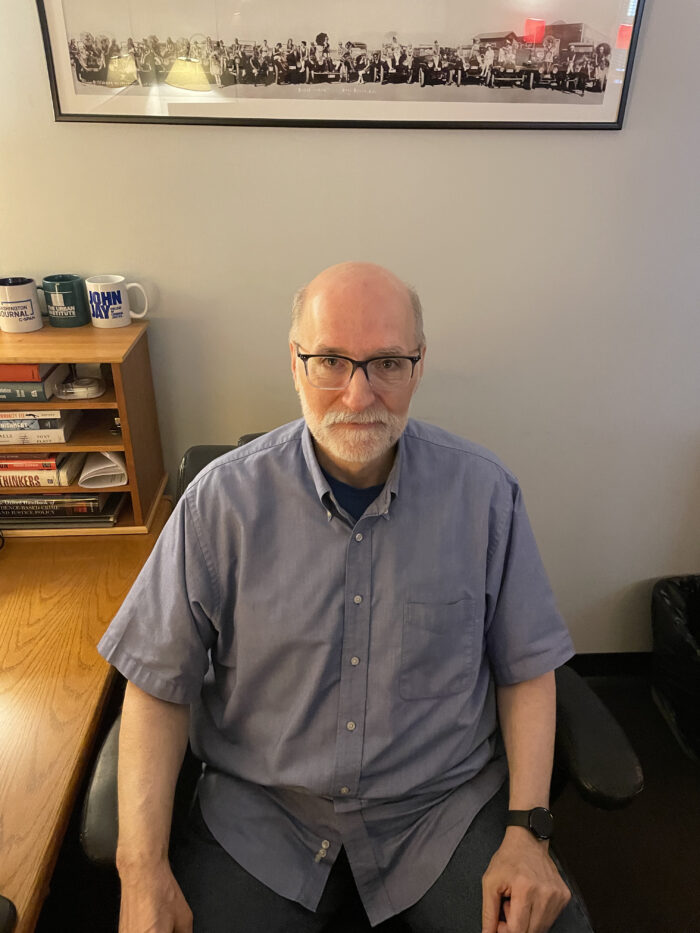
Jeffrey Butts, research professor at John Jay College of Criminal Justice and director of the school’s Research and Evaluation Center.
Photo Credit: Trey Kay/West Virginia Public Broadcasting
“We don’t have crime data because there’s no one walking around logging every offense. We have crime when someone sees it and reports it — that’s a complaint. An arrest is different, and the falloff between reports and arrests can be more than 50%. If you want to assess safety, you ask residents — the National Crime Victimization Survey does that — but the U.S. hasn’t sustained it well and almost never at the neighborhood level.”
— Jeffrey Butts, research professor at John Jay College of Criminal Justice and director of the school’s Research and Evaluation Center
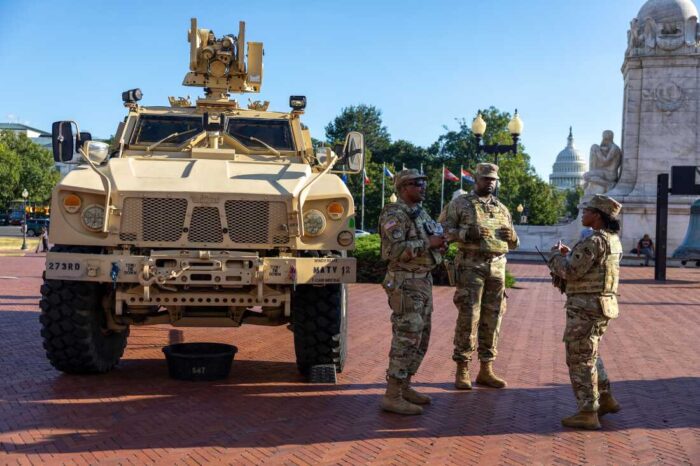
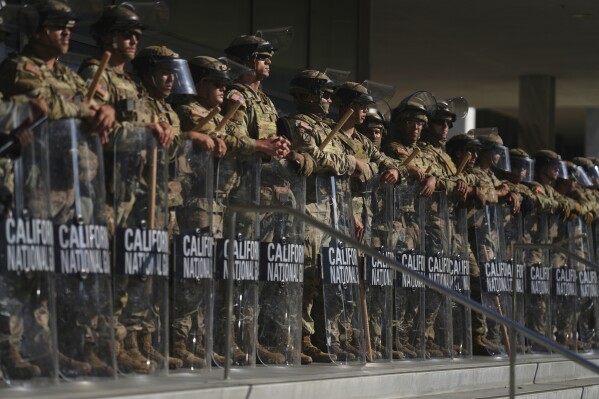
National Guard troops stand outside Union Station in September 2025 in Washington, DC.
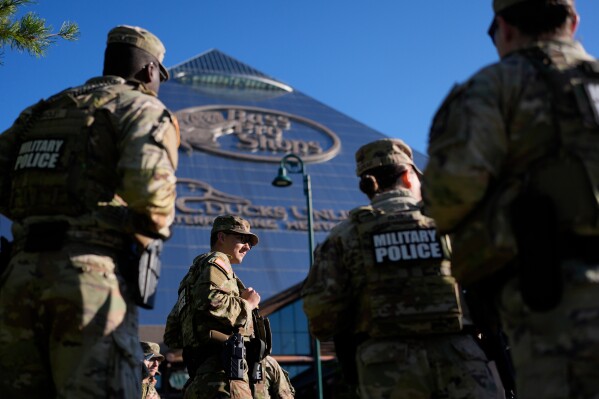
Photo Credit: Tasos Katopodis/Getty ImagesMembers of the National Guard patrol outside a Bass Pro Shops in October 2025 in Memphis, Tennessee.
Photo Credit: George Walker IV/AP PhotoCalifornia National Guard are positioned at the Federal Building, June 10, 2025, in downtown Los Angeles.
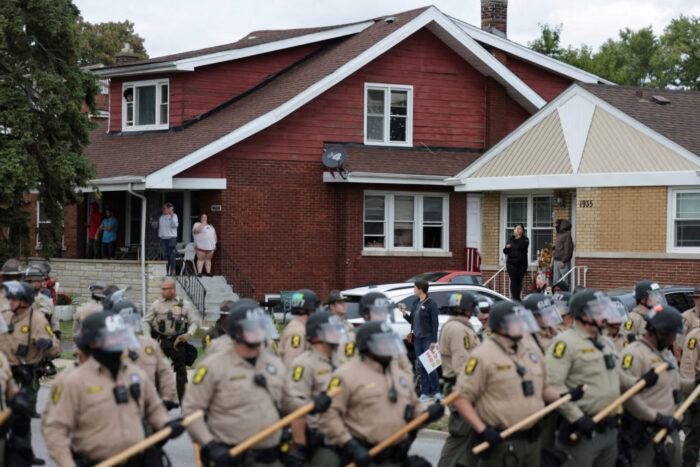
Photo Credit: Eric Thayer/AP PhotoResidents watch as people take part in a protest near the U.S. Immigration and Customs Enforcement Broadview facility in Chicago.
Photo Credit: Jeenah Moon/Reuters
“All the things you just mentioned about DC and Chicago and LA and using the National Guard, that is not either a response to the crime problem or an intervention designed to improve the crime problem. It has nothing to do with crime. It’s public relations and political campaigning using the crime issue and using public safety to draw attention and motivate their base… The fact that any indicator of crime is lower now than it was six months ago, or six years ago, is not evidence of the impact of anything that’s been done to prevent crime. It’s the crime numbers moving… What politicians do is wait for them to go down and then claim credit, or they see them going up, and point to their opponents and say they did it.”
— Jeffrey Butts, research professor at John Jay College of Criminal Justice and director of the school’s research and evaluation center.
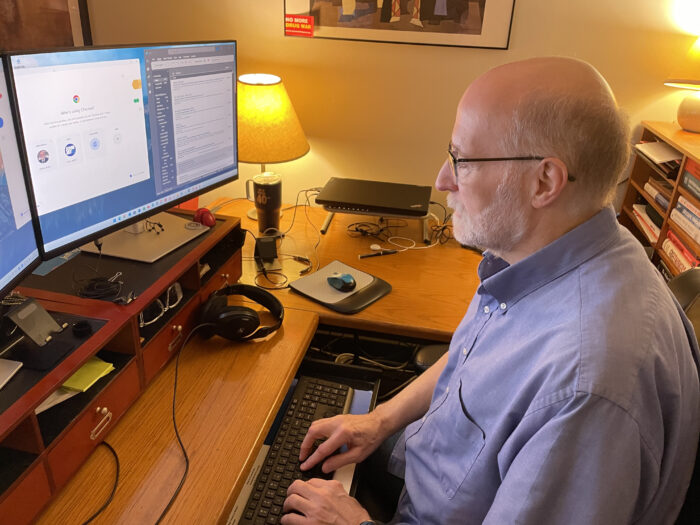
Jeffrey Butts reviews incident-level crime data and national victimization trends as part of his center’s research into how communities measure public safety.
Photo Credit: Trey Kay/West Virginia Public Broadcasting
“Any time an elected official starts explaining the crime problem, keep a healthy skepticism. Too often, the numbers are wielded ineptly — or intentionally — to shape public reaction rather than improve public safety.”
— Jeffrey Butts, research professor at John Jay College of Criminal Justice and director of the school’s research and evaluation center.
Throughout the course of the year, West Virginia Public Broadcasting reporters and producers may create hundreds of stories. But some are favorites. We remember the story behind the story.
The push to ban sodas was first announced when U.S. Sec. of Health Robert F. Kennedy visited the state in March as part of Gov. Patrick Morrisey's “Four Pillars of a Healthy West Virginia.”
West Virginia is set to receive $199 million from the Trump Administration through the Rural Health Transformation Fund (RHTP) for 2026, according to a press release from Gov. Patrick Morrisey’s office.