Alert (09/29/2026): Our Parkersburg TV transmitter is still undergoing maintenance and remains temporarily inoperative. We apologize for the inconvenience.
All our programming is available via our TV livestreams on our website and WVPB Passport. Thank you for your patience!
Our premiere fall broadcast season of Mountain Stage continues this week when host Kathy Mattea welcomes Tony Trischka’s EarlJam featuring Michael Daves, Buffalo Wabs & The Price Hill Hustle, Jack Barksdale, and Sarah Borges.
Us & Them Encore: SNAP — Do The Hungry Get More Policy Than Nutrition?
Listen
Share this Article
Forty-two million Americans, or about 12 percent of the the population, need help feeding their families.
That help often comes from a federal program called SNAP — which stands for Supplemental Nutrition Assistance Program, formerly called food stamps. The Mountain State is one of the top recipients of SNAP benefits. Nearly 45 percent of recipients are older adults or families with someone who’s disabled, while nearly 60 percent are families with children.
The nation’s food support program began six decades ago, as a pilot program in McDowell County. Since then, it has reduced poverty and hunger across the nation.
In an award-winning encore episode of Us & Them, host Trey Kay talks with three people — a retiree, a mom and a lawmaker who all say that nutritional support has made a difference in their lives.
This episode of Us & Them is presented with support from the West Virginia Humanities Council and the CRC Foundation.
Subscribe to Us & Them on Apple Podcasts, NPR One, RadioPublic, Spotify, Stitcher and beyond.
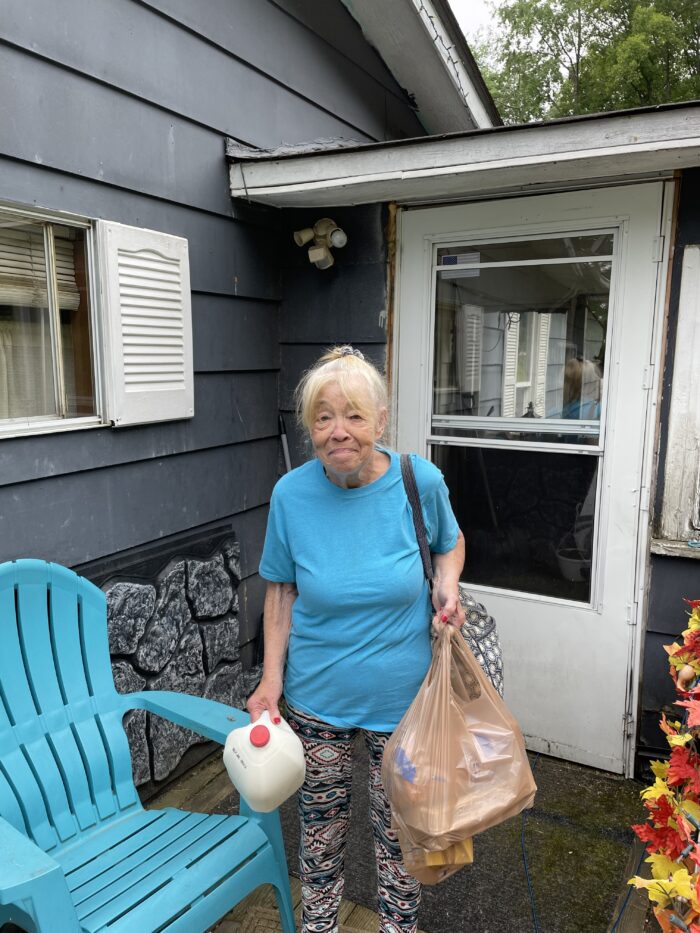
Reenie Kittle, 75, from Harding, W.Va., is a widow and retired with a physical disability. She does what she can to get by on a meager fixed income.
“How do I live on a fixed income? Very scarcely,” Kittle told Us & Them host Trey Kay as they sat in the living room of her converted double-wide home. “So I have to buy pellets for my wood stoves in the winter months. I have to pay the water bill … all my bills. I don’t go out very much ‘cause I can’t afford the gas. With my income and my bills of $1,300 a month, I am lucky if I have $200, maybe $250 left over to try to find food. My neighbor sometimes will bring me supper, and that’s been a blessing to me. They try to help me food-wise as much as they can. For SNAP, I qualify for $23 a month. It is nothing.They just tell me that they’ve reviewed my case and that’s as much as they can do. They have no extra money to give and that’s it.”
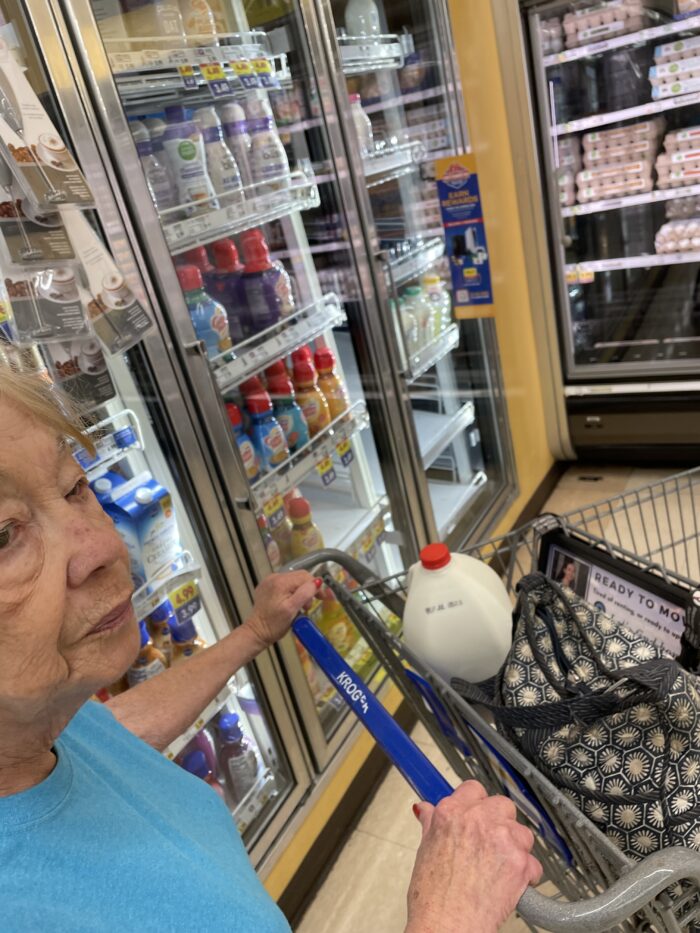
Photo Credit: Trey Kay/West Virginia Public BroadcastingEach month, Reenie Kittle heads to the grocery store in Elkins, W.Va. with $23 from the federal government’s SNAP program. SNAP stands for Supplemental Nutrition Assistance Program — it used to be called “Food Stamps.”
Reenie beelines past the produce section … beyond the tower of packaged strawberries, the cold case full of carrots and greens. She’s not here to buy what she wants to eat. She’s here to stretch the money she is allotted to the very last penny.
Photo Credit: Trey Kay/West Virginia Public BroadcastingRoughly 18 percent of West Virginia residents use SNAP benefits. Nationally, that number is more like 12 percent, which means that 42 million people across America need help getting enough to eat.
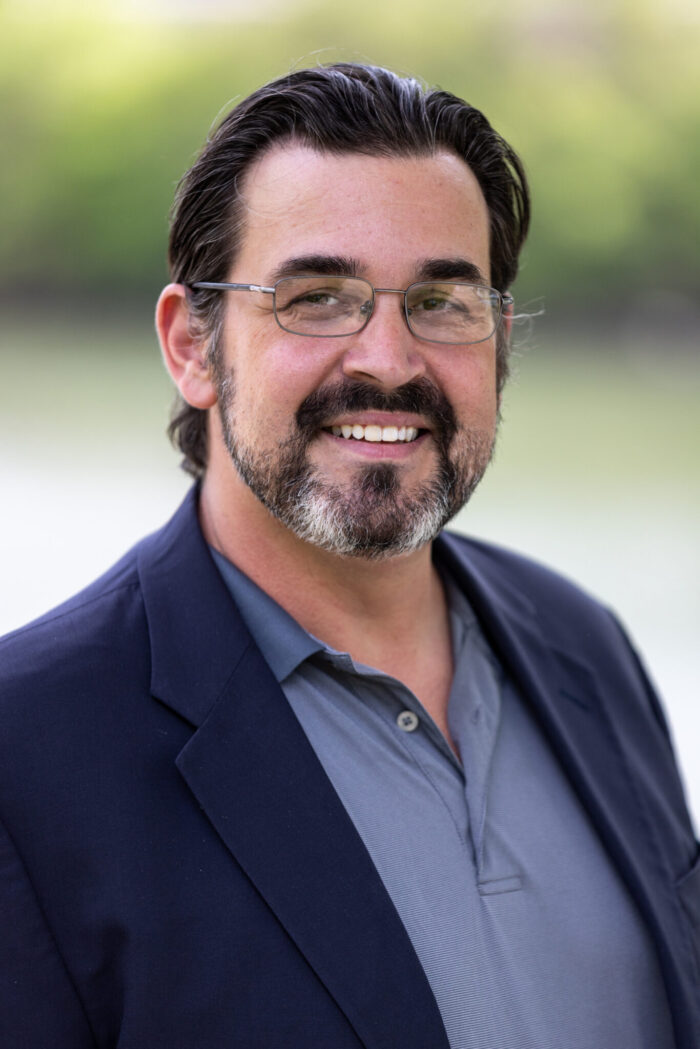
Seth DiStefano, with the West Virginia Center on Budget and Policy, lobbies to support programs like SNAP — which became a centerpiece of the social reform programs in President Lyndon Johnson’s “Great Society” initiative. DiStefano says SNAP has its roots in West Virginia. This goes back to when President John F. Kennedy started the original “Food Stamp” program in McDowell County.
“It truly is one of the most effective anti-poverty programs in the history of the United States,” DiStefano says.
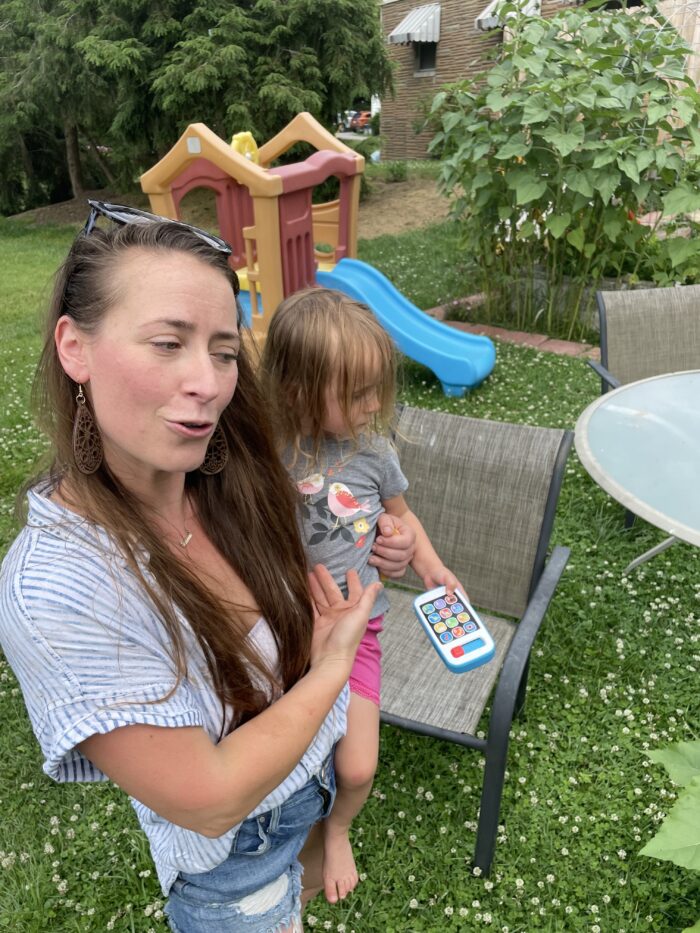
Photo Credit: West Virginia Center on Budget & PolicyMary Kathryn Molitor, 34, lives in St. Albans, W.Va. with her three daughters and an old dog named Brenda. Mary Kathryn works full-time at a local credit union, making about $13 an hour. When the Us & Them team first spoke with her, she wasn’t sure she wanted to talk on the record about her relationship with SNAP saying it was her “dirty little secret.”
“I don’t tell people that I use SNAP benefits because I know what that person looks like and that person doesn’t look like me,” Molitor explains while pulling one of her wriggling twin daughters up onto her hip. “That person doesn’t have a college education. That person doesn’t have a full-time job. That person isn’t who I am. I find it embarrassing. I don’t want to admit that I need help.”
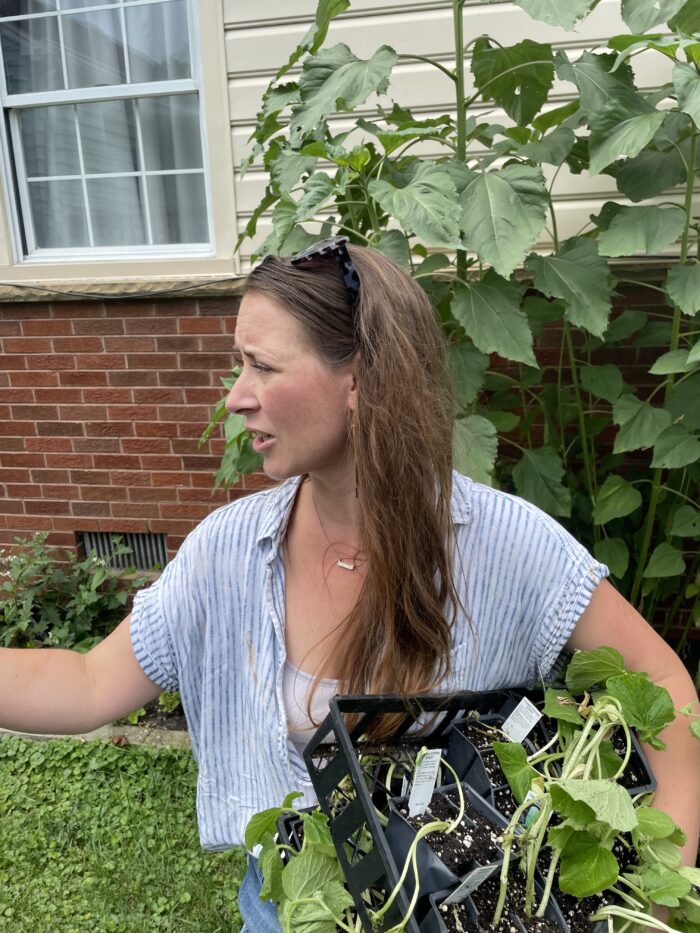
Photo Credit: Trey Kay/West Virginia Public BroadcastingTo supplement her family’s food supply, Mary Kathryn Molitor often goes to the Capital Market in Charleston and checks to see if they have wilted vegetable plants that are about to be discarded. She takes them home to plant in her garden.
“Those are pumpkins right there. Volunteers. All those tomatoes? Volunteers. Sunflowers? Volunteers,” Molitor says while showing Us & Them host Trey Kay the plants around her home. “After Halloween — I threw my pumpkins into a couple of different areas and they rotted, seeded and they are giants now! They grow on their own. They volunteer! If anybody needs a free pumpkin this year, just come to my house!”
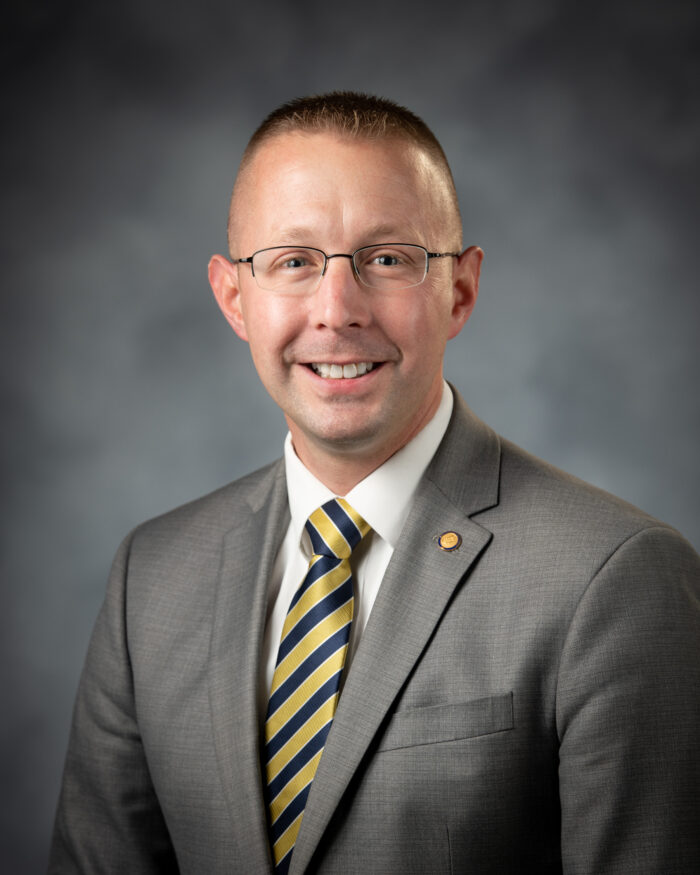
Photo Credit: Trey Kay/West Virginia Public BroadcastingDel. Jonathan Pinson represents the 17th District of West Virginia’s House of Delegates, on the western border of the state including parts of Mason and Jackson counties. Pinson, a Republican and a Baptist pastor was first elected in 2020.
“I cannot say that I have issues with [SNAP] in general,” Pinson told Us & Them host Trey Kay when they met in Point Pleasant, W.Va. “One of the reasons that I can’t say that I’m opposed to that is because I think back prior to my adoption … at 15 years old … I go back to Saturday mornings sitting in a line at the armory in Florida, picking up corn flakes and powdered milk and five pound jugs of peanut butter. And I can tell you that there were many, many meals that I wouldn’t have had, had my parents not been on food stamps — and at the time, ‘commodities,’ that’s what it was called. So I can’t say that I’m opposed to the government helping when help is warranted.”
Photo Credit: West Virginia Legislature
Add WVPB as a preferred source on Google to see more from our team
West Virginia has seen the largest population decline in the nation - nearly 1.5% - and many of those leaving are young people. In an episode that aired last month, Us & Them host Trey Kay heard from some young people who think they may stay in the state to launch their futures. This month, Kay talks with those who say living their dreams may well require moving away from the Mountain State. We listen to an excerpt from the latest Us & Them.
They love West Virginia, but love alone may not be enough to keep them here. In the second of two Us & Them episodes, Trey Kay talks with young West Virginians who say they may need to leave in search of careers, community and a place where they can imagine their futures. Their decisions reveal what the Mountain State risks losing when young people cannot see a place for themselves at home.
Last week, we aired the first part of an interview with a WVSU professor about what is AI. In the second part of that interview, we explore the best way to use AI to get what you want – while avoiding fabricated or false answers that seem real.
Direct-to-consumer tests like full-body scans are marketed as a way to catch diseases early and establish a baseline. But there are financial, physical and psychological risks to all medical tests — and in some cases, not getting a test could be better for your health. From the Appalachia + Mid-South Newsroom, HealthQ hosts Cara Anthony and Blake Farmer speak with UCSF Cardiologist Dr. Rita Redberg.