This week, we take a look at how the U.S. government built a secret city in East Tennessee during World War II to work on the atomic bomb. Also, almost everybody has a favorite cup or coffee mug, but how far would you go to replace it? And, we hear from a cabinetmaker on the physicality of poetry.
Nothing divides Americans like politics. At the same time, young people are showing up to vote. Turnout in America among 18 to 29 year olds shot up in the 2020 election to 55 percent — a level of participation not seen since the 1970s.
Recent voting trends also show the number of young people engaging in conservative politics is on the rise. In 2020, four in ten young people — from 18 to 29 — voted for former President Donald Trump and Trump won that youth vote in seven states.
In this Us & Them episode, host Trey Kay talks with author Kyle Spencer who’s studied that trend and says it’s not an accident. She’s researched the decades-long conservative organizing strategy to engage and mobilize young people. The money connected to values and beliefs can play an enormous and often invisible role in our democratic society. But while money can fund power, it doesn’t necessarily create a singular conservative or progressive vision.
Kay also speaks with Abby Kiesa from the Center for Information and Research on Civic Learning and Engagement at Tufts University. Kiesa says the trends around youth voting changed somewhat in Trump’s 2016 victory. But she says, there’s a much bigger problem looming in the background – the failure of our own political system in general to make meaningful headway in getting young people to turn up on election day.
This episode of Us & Them is presented with support from the West Virginia Humanities Council and the CRC Foundation.
Subscribe to Us & Them on Apple Podcasts, NPR One, RadioPublic, Spotify, Stitcher and beyond.
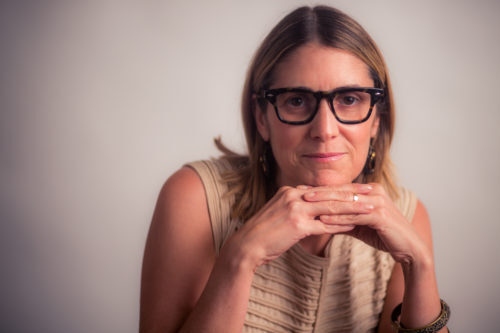
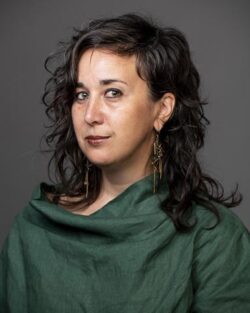
Kyle Spencer is an award-winning journalist and frequent New York Times contributor. She has written about Christian rockers, Philadelphia murderers, Harlem parents in the age of school reform, million dollar PTA’s, marijuana etiquette and gay culture among young American Catholics. In recent years, she has focused much of her attention on the ways in which race, class, and culture are impacting life inside American classrooms. Courtesy
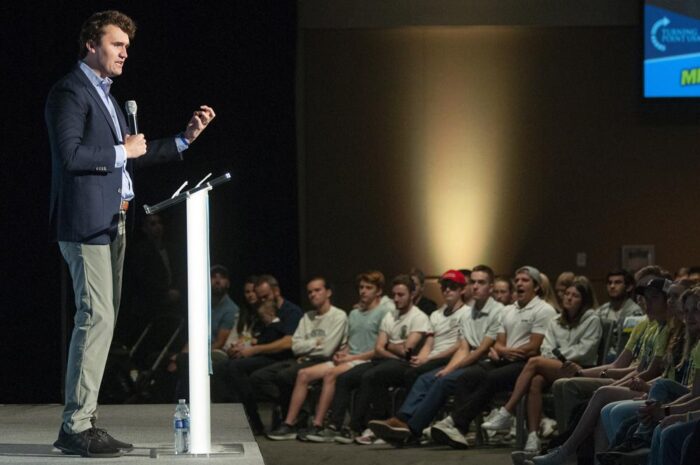
Read Charlie Kirk’s bio. Candace Owens is a young, Black woman, who has emerged as a notable conservative pundit. Owens served as communications director for Turning Point USA, but since then has become an influential commentator and entrepreneur. Credit: Gage Skidnore
“Mom and Dad… I’m a Conservative” is a self-produced humor video by Candace Owens.
Candace Owens responds to Congressman Ted Lieu playing a recording of her making a statement about Adolf Hitler.
Abby Kiesa runs the Center for Information and Research on Civic Learning and Engagement (CIRCLE) at Tufts University. She has worked on several major research projects and evaluations while at CIRCLE, as well as on several partnerships to support growing voters for a more equitable electorate. Abby is well-versed in the wide range of youth civic and political engagement efforts and practice, and brings a broad view of the institutions and interventions that can make up ecosystems for civic development among all youth. Courtesy
On The Legislature This Week, our student reporters dig into Gov. Patrick Morrisey’s legislative plan. We also hear from Senate President Randy Smith about his plans to help small businesses.
On this episode of The Legislature Today, Sen. Randy Smith, R-Preston, is in his second year as the Senate President. In that role, he is also the lieutenant governor. Smith sat down with News Director Eric Douglas to discuss how he sees things going this session
This week, we take a look at how the U.S. government built a secret city in East Tennessee during World War II to work on the atomic bomb. Also, almost everybody has a favorite cup or coffee mug, but how far would you go to replace it? And, we hear from a cabinetmaker on the physicality of poetry.
"Bombshell" is a new film from American Experience that explores how the government manipulated the public about the bomb’s development and deployment. Inside Appalachia’s Mason Adams spoke with author Greg Mitchell, who appears in the film.