Alert (09/29/2026): Our Parkersburg TV transmitter is still undergoing maintenance and remains temporarily inoperative. We apologize for the inconvenience.
All our programming is available via our TV livestreams on our website and WVPB Passport. Thank you for your patience!
This week, author Silas House returns with a sweeping new novel. Also, some folks say, you have to fake it 'til you make it, even if you're trying to establish a state park. And, the story of the first Mothman sightings as written by a small town journalist in 1966.
Why Appalachia Floods So Badly And Why It Will Likely Get Worse
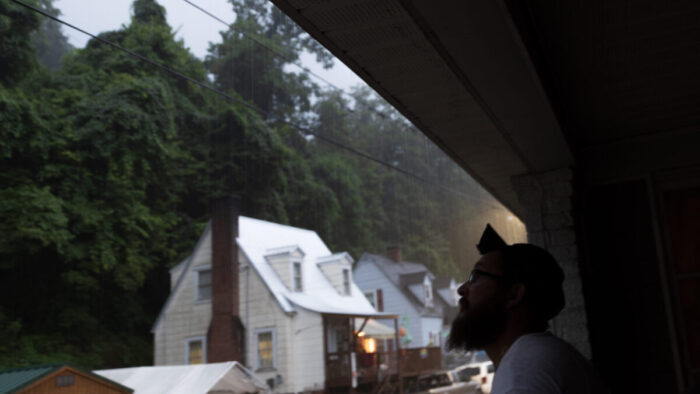
Howard Gibson, a resident and Marine Corps veteran, looks up at the dark sky as rain falls over Summers Street on July 16, 2025 in Welch, W.Va. “They just shut down our [regional] youth football program," Howard recalled. “We don’t have enough kids to field a team."Tom Brenner/The Washington Post
Appalachia has seen a series of devastating floods over the last few years. Eastern Kentucky in 2022, Hurricane Helene in 2024 and southern West Virginia in early 2025.
Why is such intense flooding hitting the mountains? And what do these storms signify for the future? A team of Washington Post journalists took on these questions in a story published late last year. Inside Appalachia host Mason Adams spoke with journalist Brady Dennis to learn more.
The transcript below has been lightly edited for clarity.
Dennis: Obviously, Appalachia has always had big storms, heavy rains. Appalachia has always had floods. But really, what we’re trying to do with this story is look at what makes it such a particularly vulnerable place right now, as those rains of the past are not necessarily what the rains of the future look like, or even really rainstorms of the present.
Some colleagues and I from the Post started by looking at the data that really make clear that there are these many stretches of sky over Appalachia that’s just carrying more moisture than it used to in the past. I think of it as, the sky is just more waterlogged. It’s like a sponge holding more water than it did in the past.
While that always doesn’t result in rain, when it does rain, there’s the potential there for these really torrential downpours that I think we’re familiar with now, and so that’s really what this story is about, is the reasons why that is happening, and the reasons that Appalachia, or at least parts of Appalachia, are really in the bull’s eye for that phenomenon.
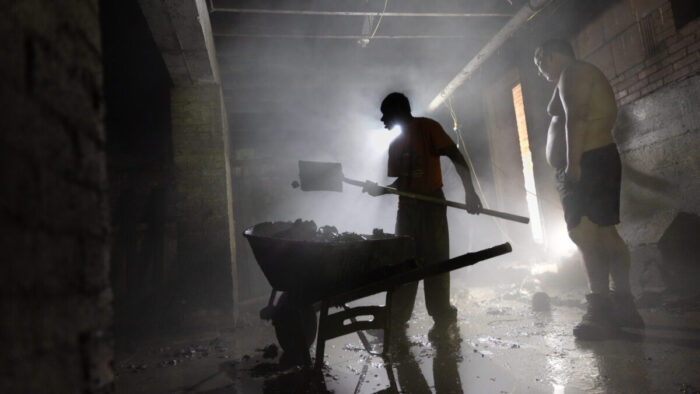
Elis, a resident of Welch, center, shovels out mud from a damaged downtown apartment building basement on July 16, 2025 in Welch, W.Va. Downtown Welch was heavily damaged after deadly floods swept through the area in February.
Photo Credit: Tom Brenner/The Washington Post
Adams: Your team studied this metric known as integrated vapor transport, or IVT, which basically measures the intensity of moisture in the sky and where it’s flowing. So what did y’all find?
Dennis: It’s really interesting. There are people on the team that I worked with who are a lot smarter about this science than I am, but I think, in a nutshell, it comes down to this: that as the air above us gets warmer and wetter over time, there’s more potential there for these extreme rainfalls and the flooding that occurs.
The reason in part that much of Appalachia lies in this stretch that’s really vulnerable to that is that there’s this, for lack of a better term, conveyor belt of this moisture coming up, often from the Gulf of Mexico to the mountains of Appalachia, intersecting with the mountains there and causing these huge storms.
Part of it is the climate that’s changing. The atmosphere is warmer. Part of it is just a fact of geography where Appalachia lies, and the landscape of these mountains. And then, of course, you have what happens when the water comes down the landscape, and where things are, and how the water flows, really plays a big, a big role in the story.
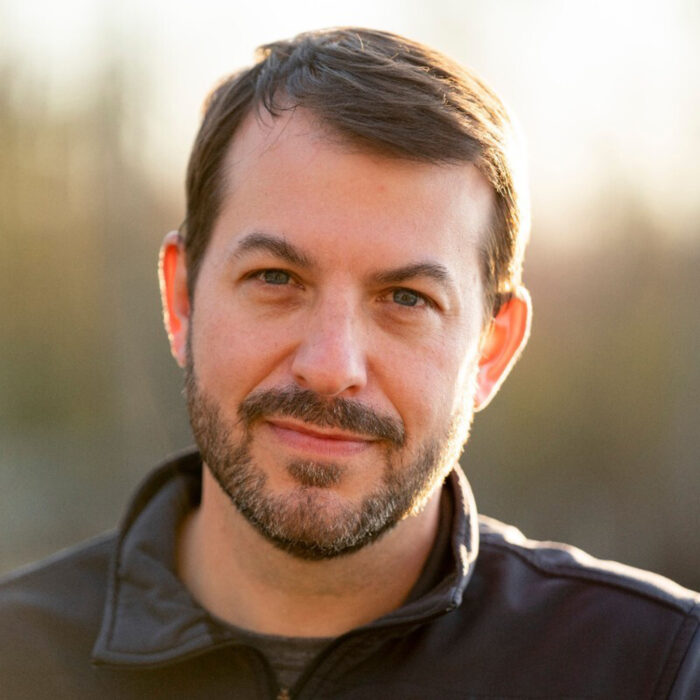
Washington Post reporter Brady Dennis.
Photo Credit: Carolyn Van Houten/The Washington Post
Adams: Let’s get into what happens when the water comes down, because not only are the mountains more susceptible to flooding, but they’re more vulnerable too. The story talks about how some of the dynamics around the integrated vapor transport exist elsewhere in the country, but they’re kind of different. What makes Appalachia so vulnerable?
Dennis: Appalachia is more vulnerable for any number of reasons. One we talked about is the landscape. Obviously, it stands to reason that large amounts of rain and water falling on steep slopes are going to put places at risk of flash flooding. We definitely see that throughout Appalachia.
Obviously, that gets worse as more rain falls from the sky. But then, when you’re talking about parts of Appalachia, specifically, you have an element of infrastructure and where things are. Historically, we’ve built in Appalachia on waterways, along rivers, because that’s where the only flat land is, and that’s where people live, and businesses and roads and railroad tracks are located.
But that also puts it really at risk of these severe flood events. Unlike some other parts of the country that have also seen an increase in these heavy rains — I’m thinking parts of the West — Appalachia has this widespread poverty that makes it more difficult to recover once you have an event like this, or you have people that traditionally don’t have flood insurance, and that that is not helping get people back on their feet in any large numbers.
Then you just have a limited capacity by state and local governments to either work on these issues up front and prevent them or come in and help after a disaster happens. When all those factors come together, it makes it a place where this is really already historically a problem. But I would argue, and the data would tell us, this is becoming more of a threat as time goes on.
Adams: The story details why Appalachia is prone to flooding and why it’s more deeply affected than some other places, but it also gets into the experiences of people on the ground. So, what can you tell us about some of the folks you spoke to and what they had to say?
Dennis: Yeah, so I went all over for this story. There’s any number of places when you start talking about West Virginia and flooding, certainly Kentucky and flooding, any number of other places in this region. You could go a lot of places and talk to people about flooding. What drew me to McDowell County was the floods that had hit earlier this year that really devastated this part of West Virginia. And it became pretty clear right away that the recovery was really slow.
This is not something that, for the most part, made the national news, but it really turned people’s lives upside down, and I wanted to go explore that. I spent time in this county talking to people who had been affected in one way or another by these floods.
Carol Lester, who’s mentioned in the lead of the story, a sweet lady who has lived in her home there for more than half a century, told me this really amazing story of carrying her young children up over the mountain to get them away from the water back in 1977, which was the biggest flood until this year. But like so many people, she told me that [the 2024 flood] eclipsed that.
This was worse than anything that she could remember. And I kept hearing that all over the place. I talked with Pastor Brad Davis, who actually grew up in Mingo County, but is a pastor who ministers at five small Methodist churches in McDowell. He is still not back in his house, which we walked through together in Welch, that was flooded in February.
He’s really been outspoken about the need for the state to do more when it comes to flooding. He’s really been sort of an activist on that front. I spent time with the Welch Mayor Harold McBride, who has done what he can to try to help his town recover. I mean that from a policy perspective, but also out there helping paint the town ice cream shop and actually doing the work of recovery. He’s really a proponent of trying to take some proactive steps to be better prepared the next time the flooding hits — which everyone expects that there will always be a next time.
There was a woman, Linda Pearson, who lives near Berwind. Even now, after the flood, she keeps bags packed by the bed for her and her husband in case they have to race out. She has medicines and important papers in there. That just really struck me, because it tells you how on edge people are. This looms over everyday life, to keep a suitcase by your bed, ready to leave at any moment.
Add WVPB as a preferred source on Google to see more from our team
This week, ballads tell stories about all kinds of real-life events, but after Hurricane Helene, one group of ballad singers felt some topics were still too raw. Also, the author of a book on ancient Ohio credits a former grad student with introducing him to the region’s mysterious earthworks. And, the legacy of Affrilachian poet Norman Jordan includes a summer camp for teens to study their heritage.
On this West Virginia Week, a Lincoln County student asks the state supreme court to step in, a state of emergency is declared in several counties, and a new initiative honors Dolly Parton.
Hockey is still finding fans and players in central Appalachia, but just because it’s an emerging sport in this region doesn’t mean we don’t have hockey heroes. Inside Appalachia’s Abby Neff met with Gwyneth Phillips, a goalie for the gold-medal winning U.S. Olympics Women’s team, to learn more.
A series of storm systems moved across West Virginia earlier this week, bringing repeated periods of heavy rainfall and thunderstorms, overwhelming streams, creeks, drainage systems, and low-water crossings.