Alert (09/29/2026): Our Parkersburg TV transmitter is still undergoing maintenance and remains temporarily inoperative. We apologize for the inconvenience.
All our programming is available via our TV livestreams on our website and WVPB Passport. Thank you for your patience!
A specific style of ballroom dance is helping disenfranchised young people find community in Appalachia. In our latest episode of Inside Appalachia, we explore LGBTQ ballroom culture and community in Roanoke, Virginia. Mason Adams has this excerpt.
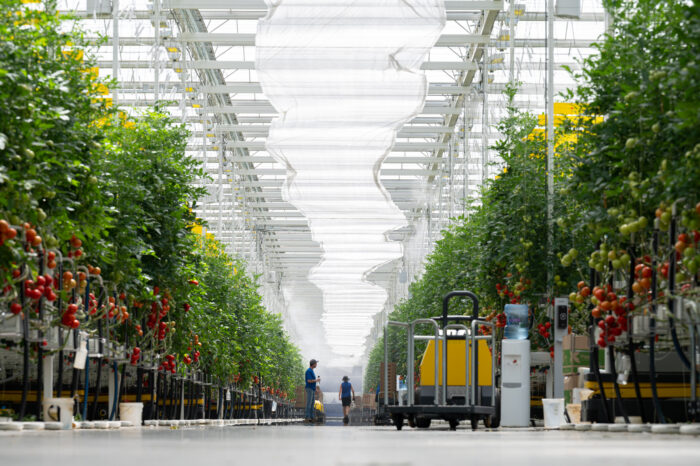
AppHarvest was touted as no less than the future of farming, but they filed for bankruptcy last year.Jon Cherry/Grist
Listen
Share this Article
When the farming start-up, AppHarvest, launched in Kentucky, it promised good jobs in coal country — but some workers called it a grueling hell on earth.
We also explore an island of Japanese culture in West Virginia called Yama.
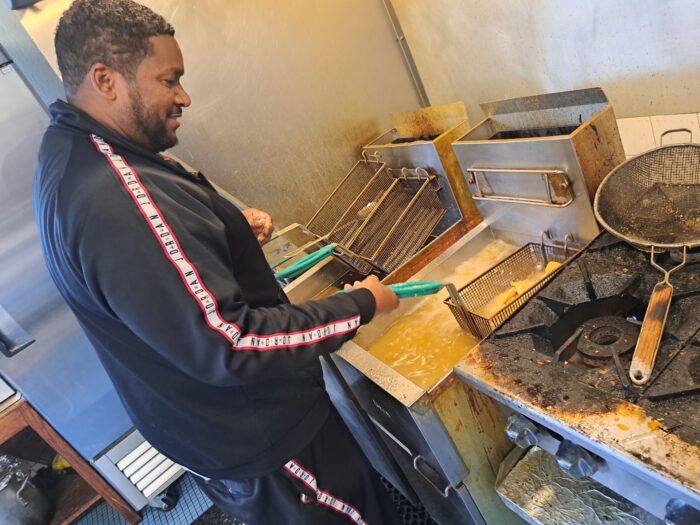
And fish fries have been a staple in Charleston, West Virginia’s Black community for years. We visit one and learn a little about what’s made them so popular.
You’ll hear these stories and more this week, Inside Appalachia.
When AppHarvest built its first greenhouse in 2020, it was touted as no less than the future of farming — and even Appalachia itself. The start-up would use cutting-edge technology and local workers to produce vegetables on an industrial scale. But then, last year, the company filed for bankruptcy.
Austyn Gaffney recently reported on the downfall of AppHarvest, in a story for Grist. Mason Adams talks with Gaffney to learn more.
Japanese Homestyle Haven In Morgantown
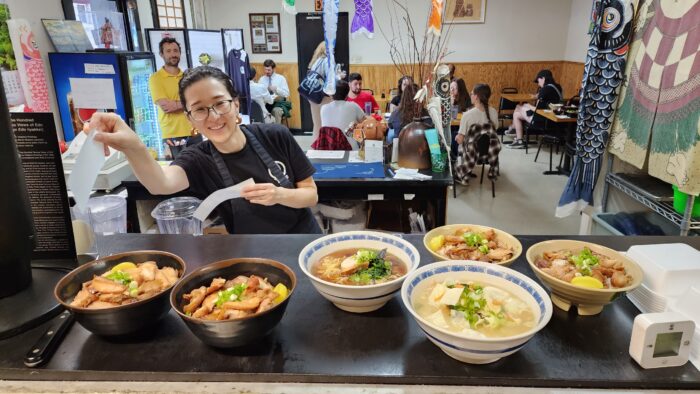
Staff member Ryoko Kijimoto serves up rich rice bowls and ramen in Yama’s diner atmosphere.
Credit: Min Kim
High Street in Morgantown, West Virginia is a bustling strip. Tucked away off the main drag is a place called Yama, a cozy diner that’s been serving up homestyle Japanese food since the 1990s. Japanese students and staff share their language, culture and food. It’s also a place of comfort and connection for everyone.
Folkways Reporter Lauren Griffin has the story.
Fish Fries, An African-American Tradition In Charleston, W.Va.
Andre Nazario
Credit: Leeshia Lee/West Virginia Public Broadcasting
Signs for fish fries are pretty common in Charleston, West Virginia, especially in the city’s Black community, where they’ve become a tradition.
Folkways Fellow, Leeshia Lee, grew up in Charleston and says friends and neighbors frequently hosted fish fries, often as a way to raise money for community needs. Lee has the story.
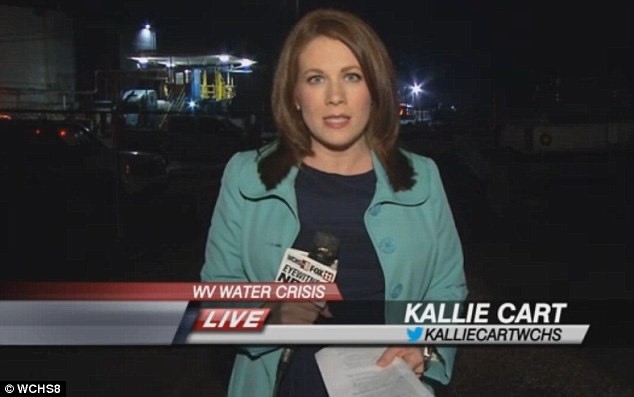
Remembering The W.Va. Water Crisis 10 Years Later
Kallie Cart reporting on the January 2014 West Virginia water crisis.
Credit: Kallie Cart/WCHS-TV
Ten years ago, a chemical spill in Charleston, West Virginia’s Elk River contaminated the drinking water of hundreds of thousands of people. The disaster became a national story, about corporate distrust and community action.
WVPB’s Randy Yohe spoke with Kallie Cart, a former broadcast reporter who covered the crisis and went viral after one particular exchange.
------
Our theme music is by Matt Jackfert. Other music this week was provided by Chris Knight, Tim Bing, Amythyst Kiah, Jeff Ellis and Bob Thompson.
Bill Lynch is our producer. Zander Aloi is our associate producer. Our executive producer is Eric Douglas. Kelley Libby is our editor. Our audio mixer is Patrick Stephens.
You can send us an email: InsideAppalachia@wvpublic.org.
A specific style of ballroom dance is helping disenfranchised young people find community in Appalachia. In our latest episode of Inside Appalachia, we explore LGBTQ ballroom culture and community in Roanoke, Virginia. Mason Adams has this excerpt.
Across the Appalachian Mid-South, local law enforcement is doing more to support U.S. Immigration and Customs Enforcement (ICE) in detaining people. Morgan Watkins with the Kentucky Center for Investigative Reporting analyzed the latest data on ICE arrests in Kentucky, Tennessee and West Virginia. Louisville Public Media's Bill Burton spoke with her about what she learned.
Many farmers in our region raise sheep for meat, but not so much for wool. There’s not a great market for it with textile companies overseas, but researchers at Virginia Tech have teamed up with farmers, to figure out how to use wool to insulate houses, potentially creating a new market.