West Virginia is the third most forested state in the country. The fall foliage projection map, a collaboration between the West Virginia Department of Tourism and the Division of Forestry, promotes the best places in West Virginia to see changing fall colors.
Home » WVPB Podcasts » Passing Down Holiday Traditions, Inside Appalachia
Published
Passing Down Holiday Traditions, Inside Appalachia
Listen
Share this Article
In this episode of Inside Appalachia we’ll hear stories about holiday traditions that have been passed down through several generations. We’ll travel to a toy maker’s workshop where toys are handmade — similar to what your grandparents might remember from Christmases past.
We’ll also explore the grief that sometimes comes with the holidays, as family members who created traditions are no longer with us, and look at Christmas tree farms in Appalachia trying to help preserve family traditions.
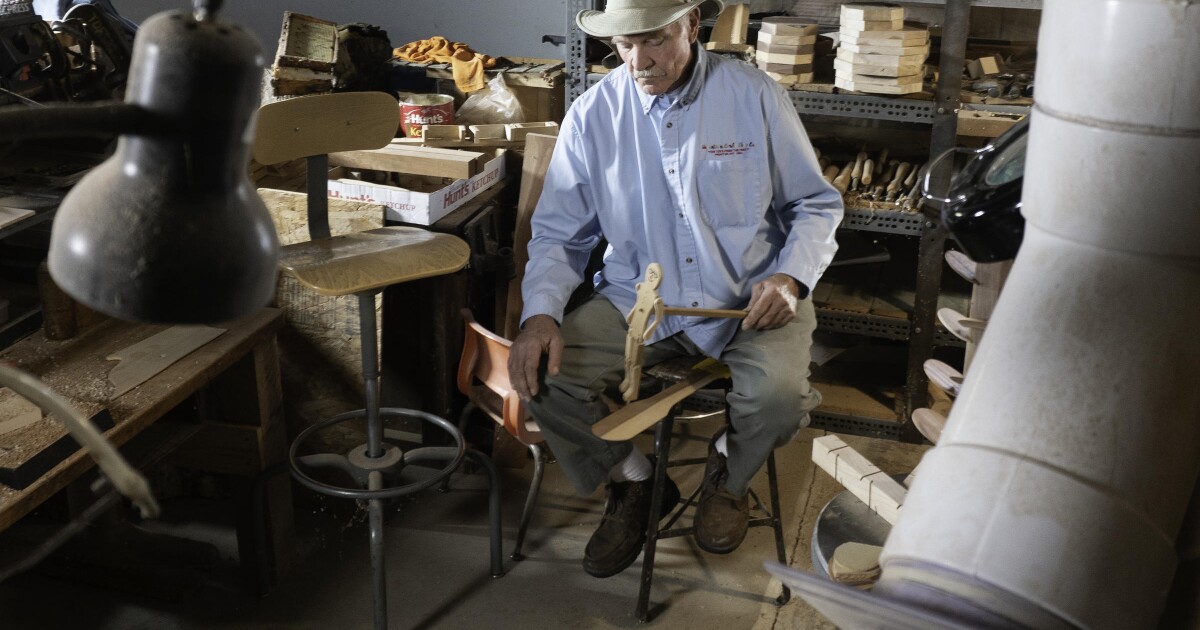
Toys are a big business across the country. Even though many big, brick-and- mortar stores, like Toys R Us, are going out of business, Americans buy billions of dollars worth of toys each year. Most of the toys we buy are made in China. And while video games are expected to increase in popularity, a different trend in toys is also on the rise — eco-friendly toys, made of a few basic materials and no plastic. There are still businesses here in Appalachia that make those old-time wooden toys.
Our Inside Appalachia Folkways Corps reporter Zack Harold visited the Mountain Craft Shop Company in Wetzel County, West Virginia, where they still make handcrafted toys the old-fashioned way.
This story is part of our Inside Appalachia Folkways Project. You can hear more stories of Appalachian folklife, arts and culture on our website (wvpublic.org/insideappalachia)
Grief Around The Holidays
The holidays are usually a time to be around family and friends, but when those loved ones are gone, the heartache can be particularly intense.
Reporter Molly Born originally sat down to write a story about missing a loved one around the holidays, but she realized that grief doesn’t follow a set schedule.
Loading…
Feast of the Seven Fishes Film
The Feast of the Seven Fishes is a holiday tradition in southern Italy and in Italian-American communities across the country. In north-central West Virginia, for example, where many Italians immigrated to work in the coal mines, there is a Feast of the Seven Fishes festival held each December in Fairmont.
A new movie, set just before Christmas, features an Italian West Virginia family as they prepare their own Feast of the Seven Fishes. It’s a romantic comedy, based on a graphic novel.
One of the producers for “Feast of the Seven Fishes” is Jeff Tinnel. His brother Bob wrote the graphic novel that the movie is based on. They grew up in the Fairmont area and set down with News Director Jesse Wright to talk about the project.
You can hear an extended version of their conversation on our website, wvpublic.org. “Feast of the Seven Fishes” is in select theatres, and available on DVD, Blu-ray and most streaming platforms.
Christmas Tree Farms
Credit Eric Douglas / WVPB
/
WVPB
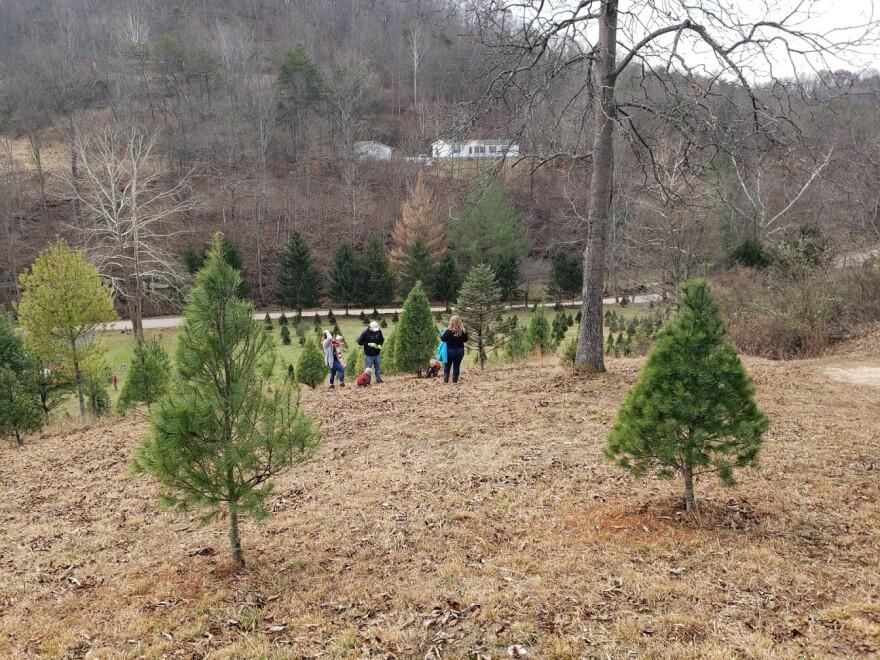
Families search for the perfect Christmas tree at Whipkey Tree Farm in Kanawha County.
People have been decorating Christmas trees in their homes since the 16th century. It’s a tradition that began in Germany and spread throughout Europe and the rest of the world.
You can buy trees on retail lots or at farmer’s markets, but another option is going to a tree farm and picking out a tree for yourself.
Producers Eric Douglas and Roxy Todd both spent some time talking to West Virginia farmers who grow Christmas trees. They compared notes after they visited two farms in West Virginia — one in Kanawha County and the other in Upshur County.
Mixing Traditions
Sunday Dec. 22 marks the beginning of Hanukkah —the Jewish celebration of lights. Linda Pickholtz Klein and her father Bob Pickholtz both grew up Jewish in a Pittsburgh neighborhood called Squirrel Hill. When they sat down to record their story with StoryCorps, Bob Pickholtz shared this memory with his daughter about recreating new holiday traditions with Jewish and non-Jewish friends.
We’re sad to report that Mr. Pickholtz passed away several months ago. Their interview was recorded as part of the American Pilgrimage Project, a partnership of the national nonprofit, StoryCorps, and Georgetown University’s Berkley Center for Religion, Peace, and World Affairs. Their story was recorded in Charleston, West Virginia, and is archived in the Library of Congress.
Goats Singing Carols
Credit COURTESY CONNIE BAILEY-KITTS
/
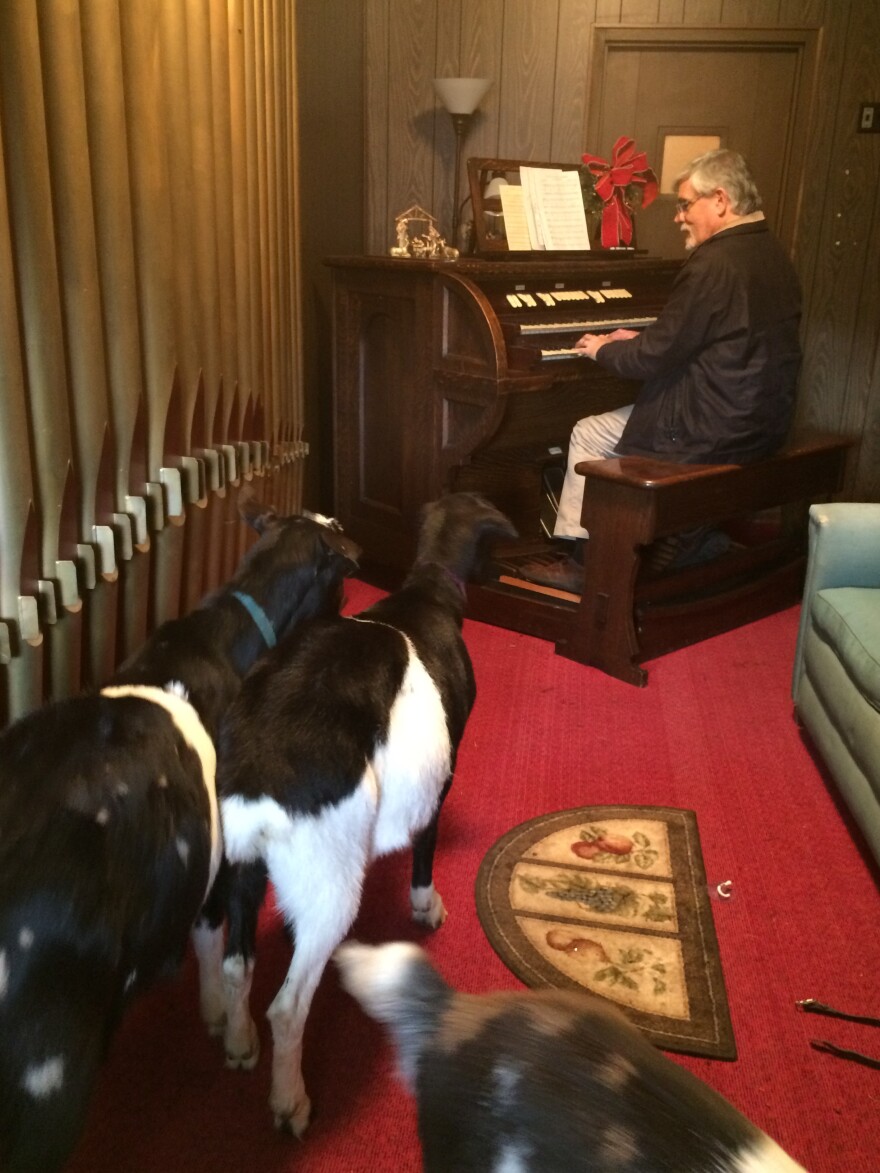
Goats listening to Christmas carols played on a pipe organ.
A herd of music-loving goats gathers each Christmas to listen to the sound of carols being played on a church organ. Their names are Cinnamon, Piano, Percy and Sledge. Really, what else do we have to say?
Our theme music is by Matt Jackfert. Other music this week was provided by Ritchie Collins, Vince Guaraldi, who plays piano on the Charlie Brown Christmas Album, and Bob Thompson.
Roxy Todd is our producer. Eric Douglas is our associate producer. Our executive producer is Jesse Wright. Kara Lofton edited our show this week. Our audio mixer is Patrick Stephens.
As developers rapidly propose data centers across Kentucky, their neighbors are struggling to find out what it will mean for them. For the Appalachia + Mid-South Newsroom, Sylvia Goodman reports that residents are calling for more transparency from developers and their own public officials.
On this West Virginia Week, plans for a new transmission line may be in trouble, a former state delegate is indicted, and the state has a new secretary of tourism.
This week, a new report finds the number of black lung cases is at its highest since the 1970s. The human cost is high. Also, the author of a new book says reintroducing nearly extinct animals back into the wild can boost damaged ecosystems, but they can't repair them. And, roadside attractions pay tribute to our enduring fascination with weird.
On this West Virginia Morning, a new book, “The Beasts of the East: The Fall and Rise of America’s Eastern Wilderness,” looks at the process to reintroduce large game to parts of Appalachia.