


Fourth Annual Women Warriors Summit To Feature High Profile Speakers
The fourth annual Women Warriors Summit will take place at the Marshall Health Network Arena in Huntington on Friday, Oct. 23, 2026.
Continue Reading Take Me to More NewsAlert (09/29/2026): Our Parkersburg TV transmitter is still undergoing maintenance and remains temporarily inoperative. We apologize for the inconvenience.
All our programming is available via our TV livestreams on our website and WVPB Passport. Thank you for your patience!




To Educate, Inform, and Inspire by Telling West Virginia's Story
Mountain Readers 2026 has concluded! Please fill out our volunteer post-survey.
Nominate an exceptional West Virginia K-12 teacher today!

On Demand

On Demand

Stream original productions from WVPB

Watch locally produced documentaries & more.

On Demand

On Demand






West Virginia Morning

Inside Appalachia

West Virginia Week

Mountain Stage

Us & Them

The Legislature Today

The Legislature This Week

Send us your comments and questions.

Stream our board meetings.

Check out the latest WVPB news.

Sign up for our newsletter and get weekly updates.

Meet the WVPB staff.

WV Educational Broadcasting Commission, the WVPB Foundation, and the Friends of WVPB.

Come work with us!

Read our annual report and learn how we educate, inform and inspire with your support.

Sponsor impactful and engaging media and entertainment.

Use your IRA to make a gift to WVPB.

Become a member with your gift of $1,000 or more.

Make WVPB part of your legacy.

Manage your membership account.

Learn how you can Protect and Sustain West Virginia Public Broadcasting.

This week on Inside Appalachia, we’re talking about food and some of the food we southern Appalachians are famous for.
We’ll travel to explore stories and the roots of some southern food, visit a historic salt mine in West Virginia that’s being revived and we’ll head over to a fried chicken festival in Virginia.
This show is sure to feed your appetite for stories about Appalachian food.
Subscribe to our Inside Appalachia podcast here or on iTunes here, or on Stitcher here.
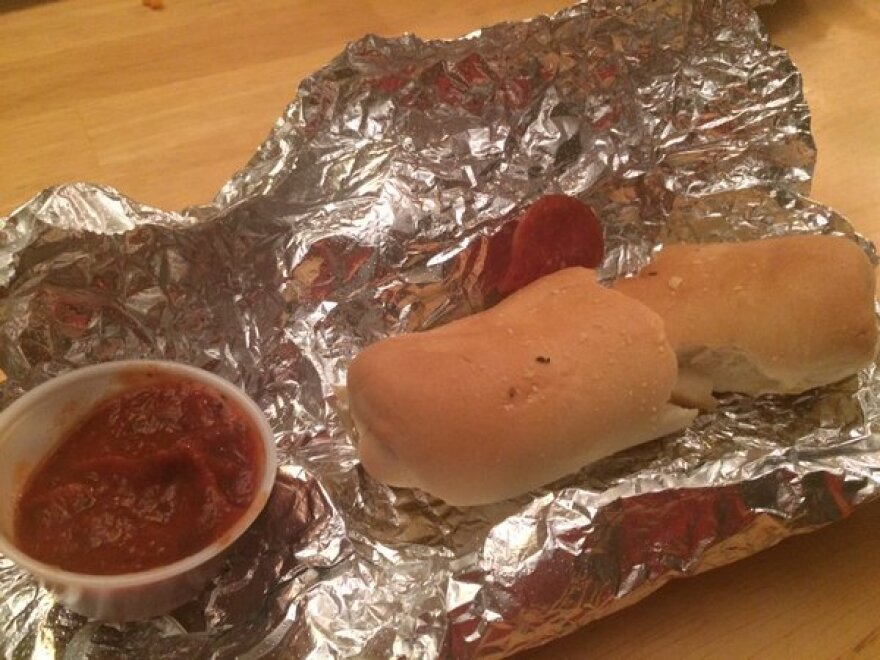
Across the coalfields, grocery stores are disappearing. McDowell County, West Virginia, just lost its Wal-Mart and people really don’t have a lot of options if they want to buy fresh food. It’s part of the reason why so many people in Appalachia get their food at gas stations -- a lot of hot dogs, chips and Slim Jims. We know that’s Appalachian food too, but it’s nice to have options.
There’s an older kind of cooking that’s not quite as popular here in rural Appalachia and across the south. The simple comfort food our grandparents ate. Oddly enough, it’s these foods that are starting to get more popular in urban areas across the country. Everything from gravy and grits to ramps, beans and cornbread, these dishes seem to keep appearing in restaurants in cities like New York, Richmond and Louisville.
With the rise in food deserts in the region, we think it’s important to cover stories about food. We found a podcast that tackles some tough topics, in a smart way … with food. We invited some special guests onto our show this week: The producers of a podcast called Gravy by the Southern Foodways Alliance.
A Salt Story: West Virginia Siblings Mine the Past to Build a Future

While West Virginia may be known for resources like coal, the country once turned to this mountain state for a culinary staple: salt.
Salt production started in this part of the Appalachian mountains in the late 1700s. It was an industry built on the backs of slaves, and one that proved destructive to the region’s environment. Now, a seventh generation salt-making family is reviving the business.
In this episode of Gravy, Caleb Johnson and Irina Zhorov bring us the story of one family’s attempt to reconcile its salt-making past with a more environmentally and socially responsible future.
Fried Chicken: A Complicated Comfort Food

It’s easy to love fried chicken. The light crunch of a crisped wing or leg, followed by the moist meat of the interior; it’s understandably beloved. But there is more going on with this comfort food than you might think.
Fried chicken has both been the vehicle for the economic empowerment of a whole group of people — and the accessory to an ugly racial stereotype. How can something so delicious be both? In this episode of Gravy, Lauren Ober goes from a Virginia Fried Chicken Festival to a soul food restaurant in Harlem to find out.
Music in today’s show was provided by Ben Townsend, Larry Groce, Hell For Certain String Band, Blue Dot Sessions, and David Shoulman and the Quiet Life Motel, Ryan Little, Digital Primitives and Diagram Collective. Our Appetite Appalachia theme music is by the Carolina Sunshine Trio.
We’d love to hear from you. You can e-mail us at feedback@wvpublic.org. Find us on Twitter @InAppalachia or @JessicaYLilly.
Inside Appalachia is produced by Jessica Lilly and Roxy Todd.
Subscribe to our Inside Appalachia podcast here or on iTunes here, or on Stitcher here.
Add WVPB as a preferred source on Google to see more from our team

With the midterm elections approaching, Us & Them host Trey Kay takes the Dinner Party to Huntington, where eight West Virginians from different generations and political perspectives gather around the table. Half the guests are under 30, and while they disagree on immigration, foreign policy, the media and the direction of the country, they also discover some unexpected common ground.
Continue Reading Take Me to More NewsAs we’re counting down to the midterm election, Us & Them host Trey Kay has invited a new group of guests to a Dinner Party – but this time, the table is in Huntington. Kay’s guests are a mix of conservative and progressive voters, half of whom are under 30 and they share a wide-ranging conversation over a potluck meal. We listen to an excerpt from this episode where a number of guests weigh in on immigration.
Continue Reading Take Me to More NewsThe nonprofit newsroom ProPublica has been reporting on the use of public money to fund private education. Earlier this month, ProPublica published a series of stories about how they, along with Mountain State Spotlight, opened a school in West Virginia. Reporter Jennifer Smith Richards spoke with Chris Schulz about the experience and what it says about modern education.
Continue Reading Take Me to More NewsAs people take a greater number of medications across years or decades, experts say the risk for adverse drug interactions increases. One way to advocate for yourself? Keep a list of your meds handy. We listen to the latest story from health series, HealthQ, a collaboration between Nashville Public Radio and KFF Health News, with reporters Cara Anthony and Blake Farmer.
Continue Reading Take Me to More News