


Tickets Now Available For Theatre West Virginia Summer Series
Theatergoers can choose from productions of the Civil War drama "Honey in the Rock" or "Shrek the Musical."
Continue Reading Take Me to More News



The submission period for the 2026 WVPB PBS KIDS Writers Contest has concluded! Winners will be announced soon.

Nominate an exceptional West Virginia teacher today!

On Demand

On Demand

Watch locally produced documentaries & more.

On Demand

On Demand






West Virginia Morning

Inside Appalachia

West Virginia Week

Mountain Stage

Us & Them

The Legislature Today

The Legislature This Week

Send us your comments and questions.

Stream our board meetings.

Check out the latest WVPB news.

Sign up for our newsletter and get weekly updates.

Meet the WVPB staff.

WV Educational Broadcasting Commission, the WVPB Foundation, and the Friends of WVPB.

Come work with us!

The nomination period for the Friends of WVPB Board of Directors is open until 11:59 p.m. on April 17, 2026.

Sponsor impactful and engaging media and entertainment.

Use your IRA to make a gift to WVPB.

Become a member with your gift of $1,000 or more.

Make WVPB part of your legacy.

Manage your membership account.

Learn how you can Protect and Sustain West Virginia Public Broadcasting.

If you live in Appalachia, you know that one of the most sensitive topics to talk about can be coal. In this episode of “Inside Appalachia,” we’ll hear liberal and conservative points of view, as we take on the complicated subject of the future of coal.
Subscribe to our Inside Appalachia podcast here or on iTunes here, or on Soundcloud here or on Stitcher here.
Writer Silas House says he doesn’t like what mountaintop removal mining does to communities and to the landscape. But that doesn’t mean he’s against coal miners. And we’ll hear why some people say coal industry jobs are declining because of the Environmental Protection Agency’s increasingly tougher environmental regulations.

In Coal Country, What’s Next for Miners?
Folks in the coalfields of Appalachia are going through a tough economic transition. The coal industry isn’t as reliable as it used to be. Change is difficult for many of us, especially for those of us whose family members have been coal miners for so long. After all, it takes determination and commitment to be a coal miner in the first place. But this family tradition seems to be fading.
Faced with competition from natural gas and increasing federal regulations, coal industry employment is facing a serious plunge. Layoffs and mine closings are becoming more and more common in regions throughout West Virginia and Kentucky.
Today we’re hearing stories about the future of coal. In our first story, reporter Catherine Moore went to find out what’s next for those most heavily impacted by the coal industry’s problems.
This report was supported by High Plains News. This story, and most of the stories in this episode, are part of a new collaborative series by The Allegheny Front, West Virginia Public Broadcasting and Inside Energy.
In Kentucky, A Prairie Made by Coal

Next we’re going to travel to Eastern Kentucky, where Allegheny Front reporter Reid Frazier went to see what will happen to the land once the coal is gone.
Appalachian Writer Silas House on the Double-edged Sword of Coal
Writer Silas House grew up in the hills of Eastern Kentucky. In his novels, plays and and non-fiction writing, he’s described life in coal country through rich, complex characters steeped in history and tradition. He is not only an observer, he’s also an activist in the fight against mountaintop removal coal mining. The Allegheny Front’s Reid Frazier spoke with him about coal and its legacy on the place where he grew up.
Federal Regulations Drive the Past and Future of Coal
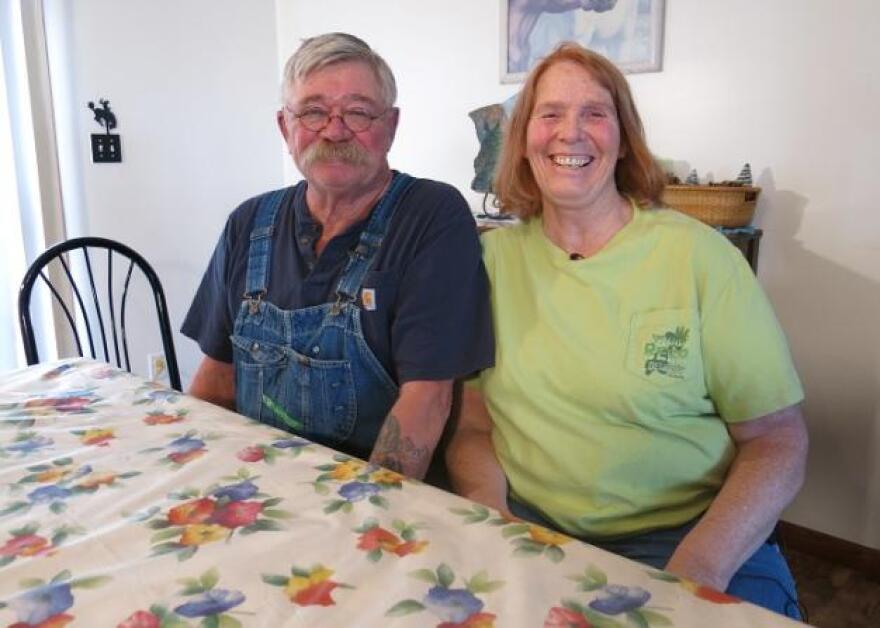
In this episode of Inside Appalachia, we’re exploring coal and its widespread impact on the Appalachian economy, environment, and, on those of us living in the coalfields. And also for those who are moving away. Now we turn our attention Westward: More than two decades ago, Kentucky lost its place as the nation’s number one coal-producing state. That honor falls now to Wyoming. Why did Wyoming become such a big coal producer? In a word? Regulations. And now a series of new regulations are changing the industry even more. Leigh Paterson of Inside Energy reports.
Inside Energy is a public media collaboration focused on America’s energy issues.
In the coalfields of Appalachia, there’s a lot of talk about the supposed “War on Coal” basically pitting the coal industry against environmental groups. Conservatives blame the current administration for the sharp drop in coal jobs. Families are desperate to hang onto their incomes and worry about their communities if the future does not include coal. Other groups are pushing for cleaner technologies and a more diversified economy in place of these family traditions. In this next segment, West Virginia Public Broadcasting’s executive director, Scott Finn, tackles this often heated debate in his first episode of a new podcast called “The Front Porch”.
Now for the last bit of our show, we’re turning our focus back to a childhood memory that stands out for Cynthia Rahn. She recorded this story for Storycorps. She grew up in rural Appalachia in the early 1960s. For kindergarten, Rahn went to school in town — but her family lived out in the country. Her family wasn’t rich- but her mother worked to make miracles happen, with what little they did have.
Most of the stories you heard in this episode were from a series called ‘The Future of Coal’ — a collaboration of The Allegheny Front, West Virginia Public Broadcasting, and Inside Energy. We also had help from StoryCorps. Music in today’s show was provided by Ben Townsend, Andy Agnew Jr., Little Sparrow, Kathy Mattea with “Hello my Name is Coal,” as heard on Mountain Stage from West Virginia Public Broadcasting.
Add WVPB as a preferred source on Google to see more from our team

On this West Virginia Morning, some unusual things are happening in the leadup to the state's primary elections next month. A Marshall political science professor shares some perspective.
Continue Reading Take Me to More NewsWith the war in Iran now in its second month, many questions remain about the motivations for and the objectives of the conflict. Ace Parsi’s family left Iran for the U.S. because of the Iran-Iraq war of the 1980s. He shared his perspective on the situation with reporter Chris Schulz.
Continue Reading Take Me to More NewsAmerica’s rural hospitals are closing at an alarming pace. That’s become a concern in many parts of West Virginia. We look at nearby Tennessee, which has the highest hospital closure rate in the nation – but also some shining examples of hope. WPLN’s Health Reporter Catherine Sweeney takes us to Linden – a Tennessee town where the shuttered hospital there has recently reopened.
Continue Reading Take Me to More NewsWe’ve long known that smoking can cause lung cancer. But what about air pollution? As The Allegheny Front reports, a new Appalachian study finds a connection.
Continue Reading Take Me to More News