A West Virginia cabinetmaker describes his journey to becoming an accomplished poet. Also, state lawmakers have taken an important step to funding the state’s EMS. And, the Trump administration announced it would roll back a rule on power plant emissions of mercury.
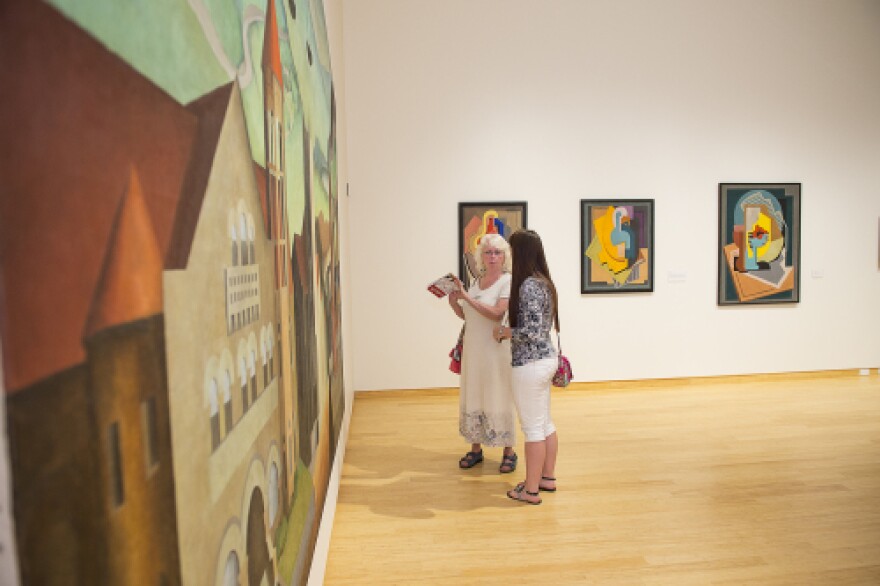
After waiting for over six years, Morgantown art lovers flooded the halls of the WVU Art Museum Tuesday to see the university’s diverse collection of modernist and contemporary art.
Robert Bridges, the museum’s chief curator says the WVU Arts Museum is the only art museum between Charleston and Pittsburgh as well as Cleveland and Washington D.C.
“Our job, I feel, is to bring art from the outside areas in here to give not only our students but the people of West Virginia a chance to see what’s happening in the greater art world,” says Bridges.
The exhibit is called Visual Conversations – Looking and Listening and it showcases artworks WVU has been collecting since the 1930’s. Over the years some of the works have been temporarily displayed at Stewart Hall, but for many of them, they are being seen by the public for the first time. The collection houses Appalachian, American and even international works.
“With this exhibition, we have paired up some of these artists so you see an artist that was working in the region along with artists that were more nationally known,” says Bridges
Credit WVU Today
/
Visitors view Blanche Lazzell’s mural
The museum’s pride and joy is the exhibition of the West Virginia artist, Blanche Lazzell. Born and raised in Monongalia County and a WVU alumna, many of Lazzell’s modernist works showcase West Virginia’s physical and social landscape. One of her most visually striking pieces is her untitled mural of Monongalia County that was painted in 1934 for the courthouse.
“The colors are just so vibrant and with the placement on the back of the gallery wall, people come in to the large gallery, they can see it and walk towards the space,” says Bridges.
After spending much of its life in storage, Lazzell’s mural is finally back on display.
Joyce Ice is the director of the WVU Art Museum and she says its opening isn’t just significant for the university but also for the state, “adding to the cultural vitality that makes Morgantown one of the best small cities in America while contributing to its wellbeing and that of our region and our state.
In an effort to make art more accessible, the museum is free and open to the public five days a week.
Add WVPB as a preferred source on Google to see more from our team
In December, West Virginia University art professor Joseph Lupo tagged Inside Appalachia in an Instagram post that showcased four-color reductive relief prints made by WVU students — each one inspired by a story or episode they heard on the show. Inside Appalachia host Mason Adams spoke with three of Lupo’s students and asked them to describe their work and its connection to the show.
This week, some of the stories on our show inspired college student art — including a vivid image of a bear smashing a clarinet. Also, a Hare Krishna community in West Virginia serves vegetarian food made in three sacred kitchens. And, COVID-19 exposed the contempt society has for marginalized people. One author says, these folks are anything but passive.
Our program, Inside Appalachia, in December was tagged in an Instagram post by WVU Professor of Art Joseph Lupo. The post showcased four-color reductive relief prints made by WVU students — each one inspired by a story or episode they heard on the show.