


Volunteers Take On Needed Repairs For Annual 'Day Of Caring'
More than 1,200 volunteers spent Wednesday in six counties of central West Virginia for the United Way's 21st annual Day of Caring.
Continue Reading Take Me to More NewsAlert (09/10/2026): Our Parkersburg TV transmitter is undergoing maintenance for a few days and will not be operational. We apologize for any inconvenience.
All our programming is available via our TV livestreams on our website and WVPB Passport. Thank you for your patience!




To Educate, Inform, and Inspire by Telling West Virginia's Story

Mountain Readers Week will be held Oct. 5-9, 2026! Sign up to read in your community!

Learn more about Be My Neighbor Day! And check out our recap from last year.

On Demand

On Demand

Stream original productions from WVPB

Watch locally produced documentaries & more.

On Demand

On Demand






West Virginia Morning

Inside Appalachia

West Virginia Week

Mountain Stage

Us & Them

The Legislature Today

The Legislature This Week

Send us your comments and questions.

Stream our board meetings.

Check out the latest WVPB news.

Sign up for our newsletter and get weekly updates.

Meet the WVPB staff.

WV Educational Broadcasting Commission, the WVPB Foundation, and the Friends of WVPB.

Come work with us!

Read our annual report and learn how we educate, inform and inspire with your support.

Sponsor impactful and engaging media and entertainment.

Use your IRA to make a gift to WVPB.

Become a member with your gift of $1,000 or more.

Make WVPB part of your legacy.

Manage your membership account.

Learn how you can Protect and Sustain West Virginia Public Broadcasting.

The United Mine Workers of America is joining the coal industry in a rare occasion to oppose proposed regulations meant to curb carbon emissions. The industry worries the regulations will financially cripple coal’s economy, as well as West Virginia and everyone dependent on a coal job.
With 95 percent of the energy produced in West Virginia coming from coal fired power plants, many within the industry feel the state will be the hardest hit by the new proposal.
Roger Horton, a retired miner from Logan County paints a grim picture already evolving in coal country.
He sees an EPA ignoring its economic impact on countless coal mining families.
“The uncertainty now that is created by these new regs is going to make even more people apprehensive about being able to keep their homes,” Horton said during a conference call, “and I’m sure there’s going to be more who lose their jobs and have to relocate. That’s just absolutely wrong.”
President of the West Virginia Coal Association Bill Raney told reporters during a conference that the regulations punish people and show no respect for the state.
“Every time we lose a coal miner’s job in this state we lose a piece of West Virginia,” Raney said, “because we lose payroll taxes, hospitalization and contribution to the miner’s retirement and health benefit funds.”
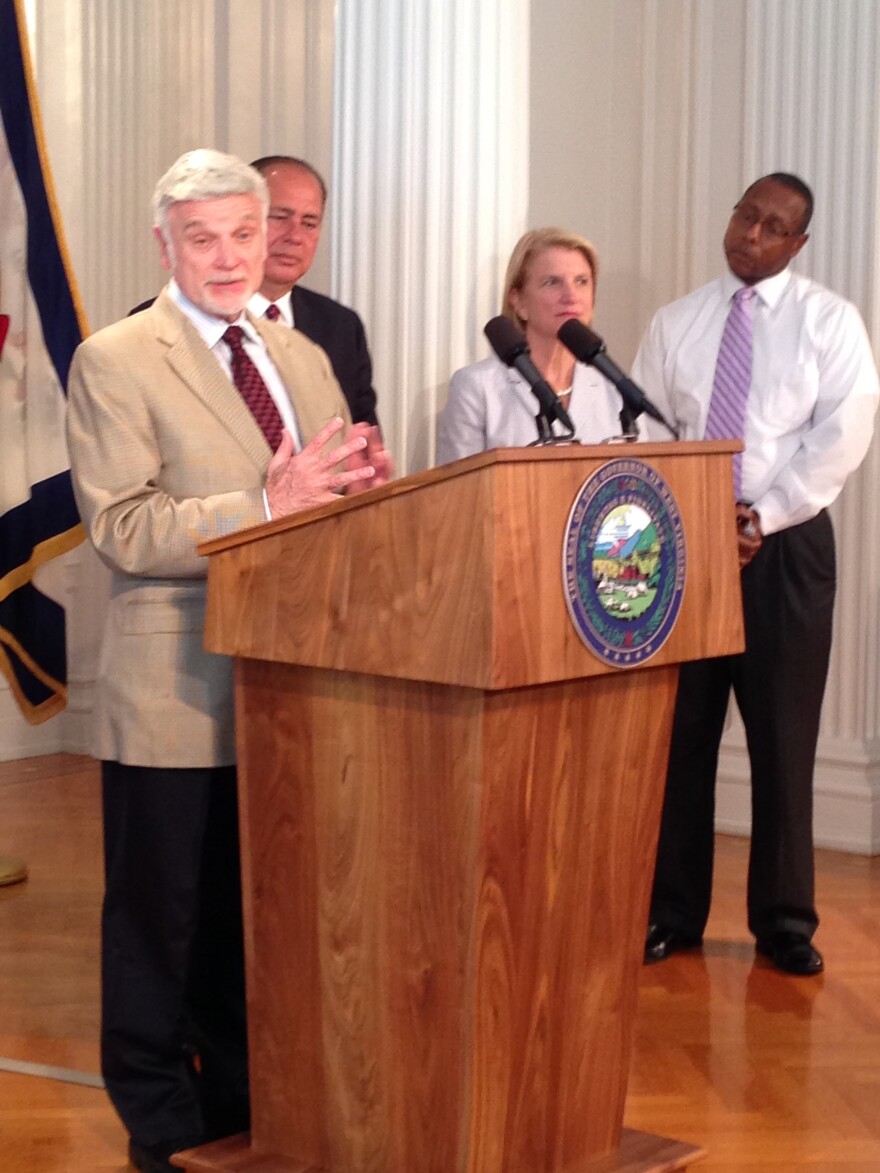
That also worries United Mine Workers of America President Cecil Roberts who told reporters that 94,000 people depend on health and retirement funds from the coal industry.
The union, often at odds with the industry, is joining in the fight opposing the regulations.
"Make no mistake about this, without a coal industry there is no one for me to bargain with to extract those kinds of benefits from," Roberts said.
It’s no surprise that coal jobs are disappearing. It’s a trend the state has been facing for years. Since 2012, thousands of West Virginia coal miners have lost their jobs. Some of them are finding relief through federal dollars that pay for training or school to start a new career.
Even without EPA regulations, reports indicate that coal jobs would decline anyway. It’s a finite resource, the coal seams are depleting and energy competitor natural gas is booming.
When introducing the regulations EPA Administrator Gina McCarthy said America can “lead this fight” but industry and the UMWA worries no one will follow.
Other reports indicate that China “has begun regional experiments with a more market-friendly approach” pioneered in the U.S. They’re looking at putting a cap on total emissions of sulfur dioxide from power plants, allocating tradable pollution permits to individual polluters.”
West Virginia has already started experimenting with ways to reduce carbon emissions with carbon capture and other technologies.
President and chief operating officer for Appalachian Power, Charles Patton says AEP the largest coal burner in the Western Hemisphere has reduced its carbon footprint by about 21 percent since 2005, and right now, that’s not cheap.
“In doing that we’ve spent across the AEP fleet somewhere north of $10 billion,” Patton said. “What we see is a carbon footprint that is shrinking. We see an industry that has invested billions of dollars and we see customers as a result of those investments that are seeing those electric bills increase 50 percent over a very short period of time.”
Appalachian Power serves about a million customers across West Virginia, Virginia and Tennessee.
The new regulations give flexibility to the states and Patton says he plans to work with Governors in both Virginia and West Virginia.
The EPA is the target of bi-partisan wrath. West Virginia’s congressional delegation is a mix of Democrats and Republicans and all but Senator Rockefeller have sharply critized the proposed regulations.
While lawmakers have talked about it in the past, there was no talk of diversifying the economy on the day the EPA released the proposed regulations.
Add WVPB as a preferred source on Google to see more from our team

More than 1,200 volunteers spent Wednesday in six counties of central West Virginia for the United Way's 21st annual Day of Caring.
Continue Reading Take Me to More NewsAfter years of complaints and proceedings with the Public Service Commission of West Virginia, three struggling Fayette County water and sewer systems will be sold to West Virginia American Water.
Continue Reading Take Me to More NewsA new book called "Appalachian Plants: In the Garden, In the Yard, and In the Wild" explores some of the history and lore of plants that have been used by many in the region. Inside Appalachia’s Mason Adams spoke with author Linda Hager Pack and illustrator Pat Banks about their book.
Continue Reading Take Me to More NewsState leaders including Gov. Patrick Morrisey and Sen. Shelley Moore Capito reacted positively to the announcement Monday that the U.S. Environmental Protection Agency will abandon Biden-era rules that force coal-burning power plants to capture most of their CO2 emissions.
Continue Reading Take Me to More News