Alert (09/10/2026): Our Parkersburg TV transmitter is undergoing maintenance for a few days and will not be operational. We apologize for any inconvenience.
All our programming is available via our TV livestreams on our website and WVPB Passport. Thank you for your patience!
This October, the Adaptive Climbers Festival will gather in Kentucky’s Red River Gorge for the fifth year. In 2023, Folkways Reporter Emily Chen-Newton covered the event for Inside Appalachia. Since then, the Adaptive Climbers Festival has grown. Organizers say they’re nearly at capacity, with 300 climbers, caregivers and volunteers. Ahead of the festival, the campground has made accessibility improvements. Volunteers with the ACF have also been sprucing up the trails.
U.S. DOT: Stronger Rail Cars Must Be in Place By 2020
Listen
Share this Article
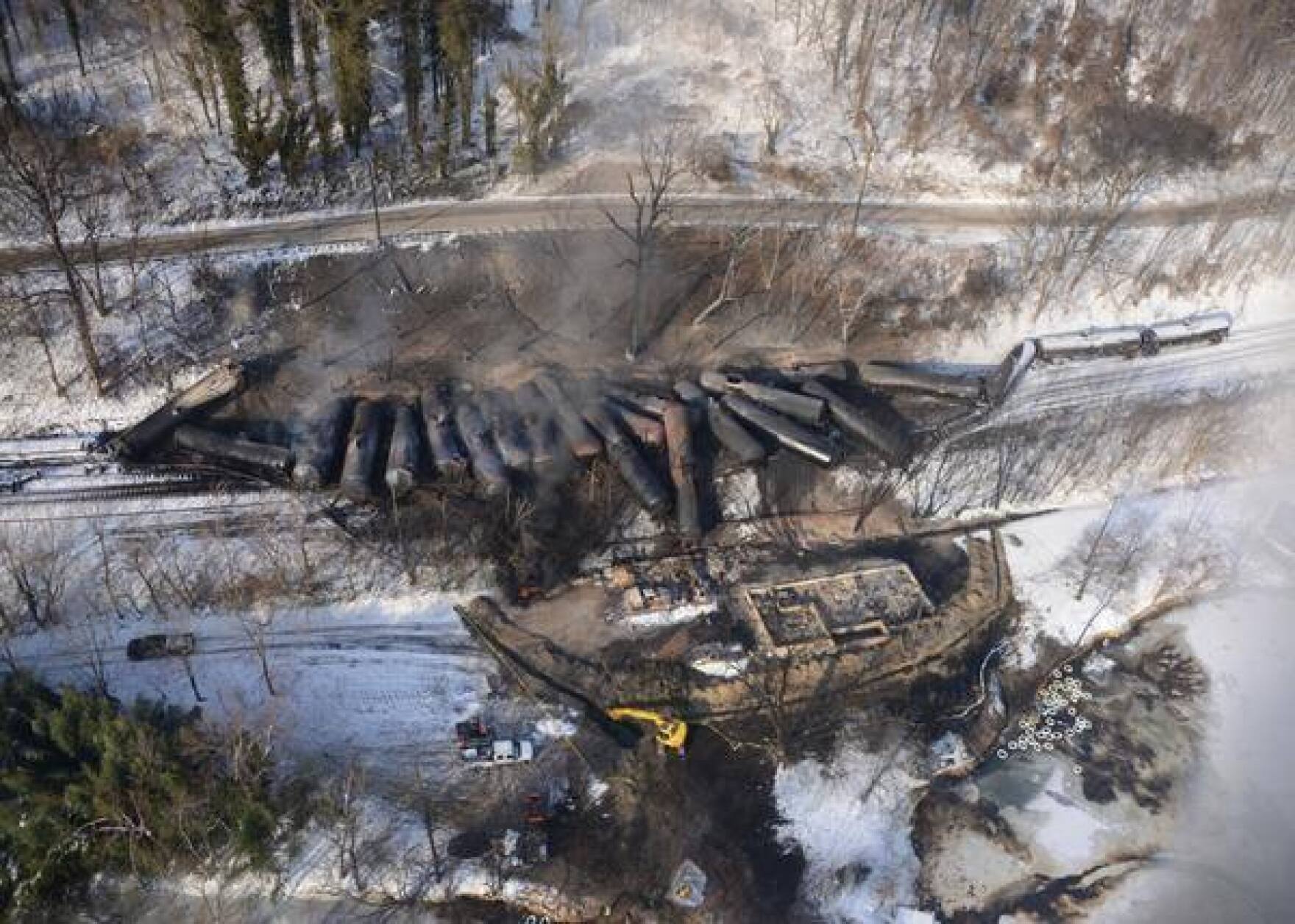
After several accidents involving trains carrying crude oil in the past few years, including one in southern West Virginia, the U.S. Department of Transportation has announced new rules to make rail shipping safer.
The new rules apply to rail shipments of flammable and hazardous materials, like crude oil and ethanol.
They include phasing out some of the most widely used rail cars in the industry, like the CPC 1232s involved in the February derailment in Fayette County. That crash resulted in a massive fire that evacuated dozens of people from their homes.
Cars like CPC 1232s must be retrofitted by 2017 or phased out of use by 2020. Manufacturers are also required to begin producing new cars with thicker steel walls and thermal jackets to prevent punctures and fires.
USDOT Secreatary Anthony Foxx at the announcement of new rules for train cars Friday.
“One of the challenges with this rule, quite frankly, is that we’re dealing with prospective risk,” U.S. DOT Secretary Anthony Foxx said at the press conference releasing the strengthened regulations, “an industry that continues to grow, a use of transportation that continues to expand and the fact that we’ve got to think ahead of the problem.”
“So, this rule is recognizing that we’ve got a growing risk and its attempting to put some brackets around that risk and reduce the risk to the public.”
The rules also require trains carrying flammable liquids at more than 30 miles per hour be equipped with specialty breaks and those traveling through densely populated areas slow to 40 miles per hour.
Add WVPB as a preferred source on Google to see more from our team
Two federally important facilities located in West Virginia require a strict limit on radio frequency interference. But for decades – increasingly as communication systems have become more advanced – those limits have made it difficult for emergency crews and first responders in Pendleton and Pocahontas counties to do their jobs as safely and effectively as possible. Now the results of a lengthy federal study show exactly how precarious the situation is. We caught up with Pendleton County Emergency Management’s Rick Gillespie to find out what the study shows and what happens next.
In recent years, physicians across the country have monitored surges of a condition known as Alpha-Gal Syndrome, which can cause allergic reactions to red meat. Hannah Saad with Appalachia + Mid-South Newsroom member station WKMS reports that, now, farmers, restaurateurs and the afflicted are flocking to a new source of protein.