This week, before emancipation, Appalachia provided pathways to freedom for enslaved people trying to escape bondage. A new project identifies more than two dozen previously unknown underground railroad sites. Also, the Fly Around Music & Arts Festival in North Carolina was inspired by the hard work that followed Hurricane Helene. And, a ballad about floods recorded a generation ago still provides solace for people today.
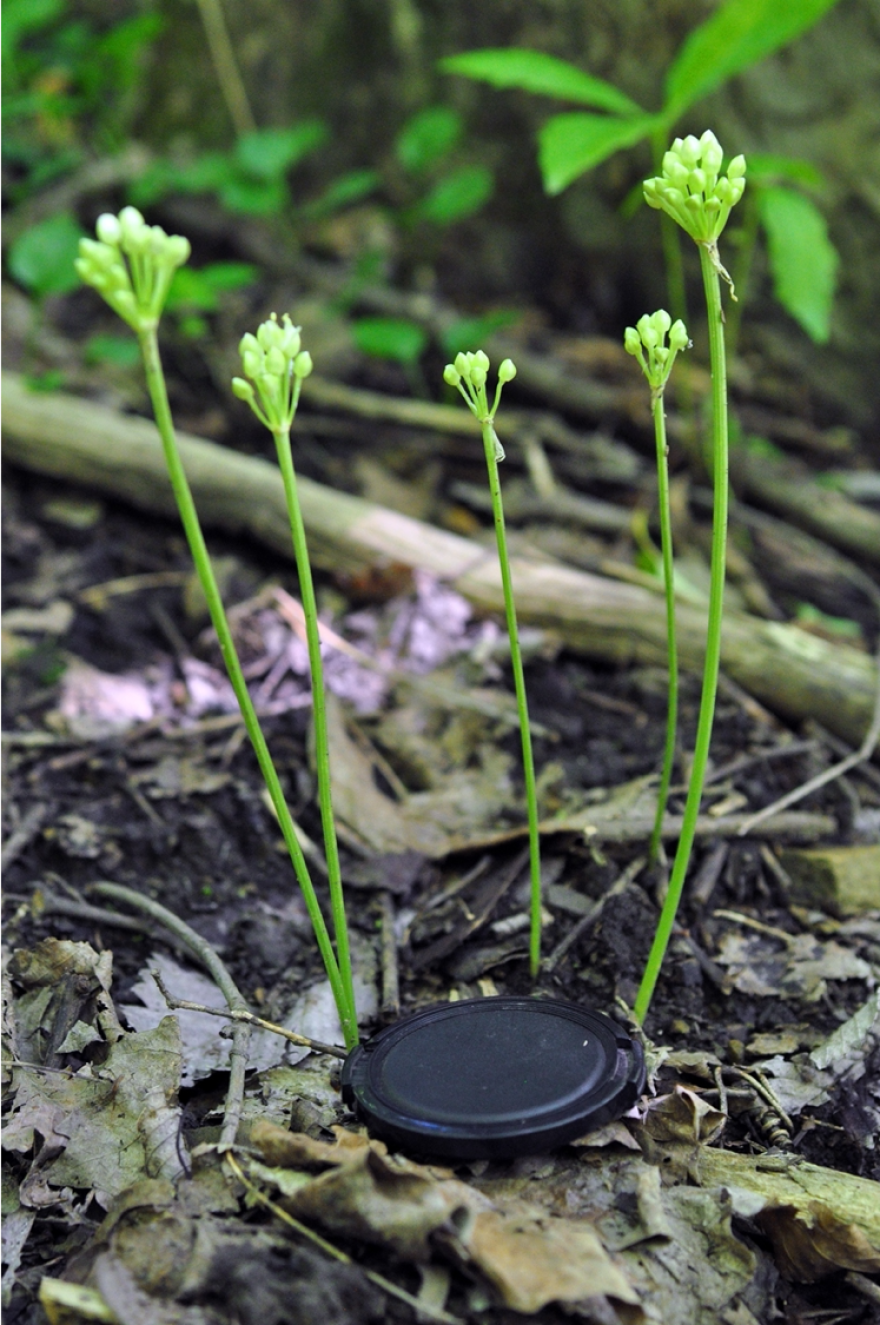
The Narrow-leaf Ramp (Allium burdickii)Chuck Kleine
Share this Article
If you’re from Canada, the eastern United States, or Appalachia, you’re probably very familiar with a local forest delicacy – the wild onion species of Allium triccocum – best known as ramps. From church hall pot-lucks to outdoor festivals, the wild ramp is widely celebrated this time of year.
But not much is known about a related species of the edible ramp, a species called the Narrow-Leaved Leek, or Allium burdickii. And this lesser known plant is often misidentified.
Eric Burkhart
/
Narrow-leaf ramp
Eric Burkhart, Ph.D., is Associate Teaching Professor of Ecosystem Science and Management at Penn State University and Program Director of Appalachian Botany and Ethnobotany at Shaver’s Creek Environmental Center. Burkhart is leading a team of researchers in a study of the lesser known plant at various sites in Pennsylvania.
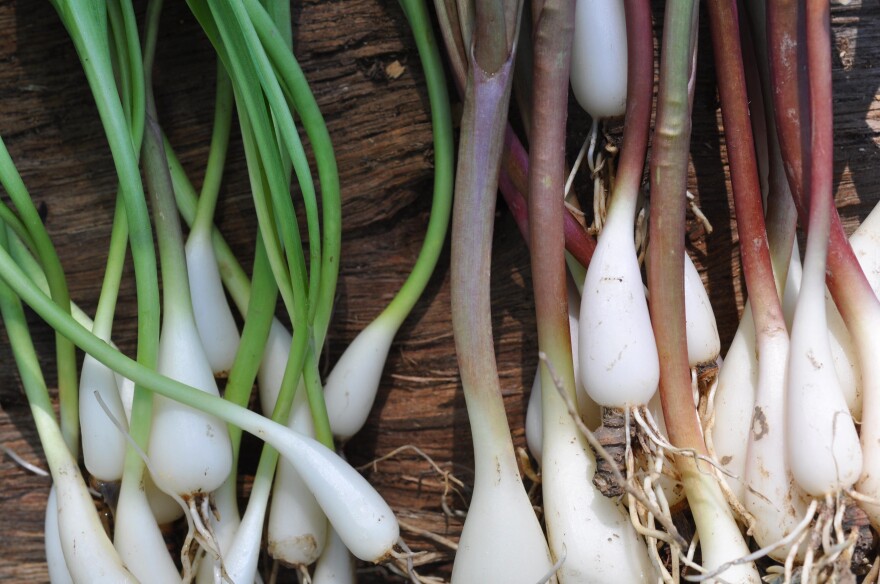
They point out that the Narrow-Leaved Leek (Allium burdickii) has a much stronger scent, even unpleasant, when compared to the variety of ramp (Allium triccocum) we harvest, cook and consume. They’re much smaller plants with more narrow leaves, and the stems are always green.The Allium tricoccum, in contrast, has broader leaves and the stems can be either green or red.
Eric Burkhart
/
The red and green stems of the common broad leaf ramp (Allium tricoccum)
Burkhart also notes the flower-heads of these plants are shaped differently. The broad leaf ramp has a round snow-ball shaped flower head when in bloom. The Narrow-Leaved Leek has a V- shaped flower head, and much fewer blooms.
Eric Burkhart
/
Flowering inflorescence of the common ramp
Eric Burkhart
/
Narrow-leaved ramp during its flowering stage showing its V shape inflorescence
The UP researchers will attempt to learn an array of distinguishing traits between the two varieties of plants. They’re growing their sample plants side-by-side in common garden sites, so comparisons will be made under identical environmental conditions. They’ll document the DNA of the 2 species, and test their phytochemistry (which are chemicals derived from plants).
Since documentation on Allium burdickii is so sporadic and there have been so few studies to date, Burkhart says we should not assume it is edible and we should not attempt to harvest it.
EDIBLE MOUNTAIN – Allium burdickii The Other Ramp
Add WVPB as a preferred source on Google to see more from our team
On this West Virginia Week, the board of education is in charge of rulemaking for schools according to a ruling from the Court of Appeals of West Virginia, Sen. Jim Justice is admonished and a rule to weaken silica limits in mines is proposed.
The Supreme Court of Appeals of West Virginia ruled Friday that rulemaking by the State Board of Education is within the meaning of 'general supervision' of state schools pursuant to the West Virginia Constitution and that a 2025 law interfering with that rulemaking is unconstitutional.
More than 1,600 counties in the U.S. are so-called news deserts - places with limited options for local news. Most of West Virginia’s 55 counties fall into that category. In this encore episode of Us & Them, host Trey Kay visits one online startup in Greenbrier County that’s bucking the trend.