Fourth Annual Women Warriors Summit To Feature High Profile Speakers
The fourth annual Women Warriors Summit will take place at the Marshall Health Network Arena in Huntington on Friday, Oct. 23, 2026.
Continue Reading Take Me to More NewsAlert (09/29/2026): Our Parkersburg TV transmitter is still undergoing maintenance and remains temporarily inoperative. We apologize for the inconvenience.
All our programming is available via our TV livestreams on our website and WVPB Passport. Thank you for your patience!




To Educate, Inform, and Inspire by Telling West Virginia's Story
Mountain Readers 2026 has concluded! Please fill out our volunteer post-survey.
Nominate an exceptional West Virginia K-12 teacher today!

On Demand

On Demand

Stream original productions from WVPB

Watch locally produced documentaries & more.

On Demand

On Demand






West Virginia Morning

Inside Appalachia

West Virginia Week

Mountain Stage

Us & Them

The Legislature Today

The Legislature This Week

Send us your comments and questions.

Stream our board meetings.

Check out the latest WVPB news.

Sign up for our newsletter and get weekly updates.

Meet the WVPB staff.

WV Educational Broadcasting Commission, the WVPB Foundation, and the Friends of WVPB.

Come work with us!

Read our annual report and learn how we educate, inform and inspire with your support.

Sponsor impactful and engaging media and entertainment.

Use your IRA to make a gift to WVPB.

Become a member with your gift of $1,000 or more.

Make WVPB part of your legacy.

Manage your membership account.

Learn how you can Protect and Sustain West Virginia Public Broadcasting.

Since the show began almost two years ago, A Change of Tune has highlighted some of the best up-and-coming artists out of these West Virginia hills with podcast-y chats ranging from Sean Richardson to Kyle Meadows, The Sea The Sea to Qiet and beyond.
But those interviews have been a bit infrequent, and since West Virginia Day was this month (and with A Change of Tune’s second birthday on the horizon), we thought we’d do something special: 30 days, 30 brand new #WVmusic interviews that range from Morgantown alt-rockers and Parkersburg singer-songwriters to West Virginia music venues and regional artist management and beyond, all of which contribute to this state’s wild and wonderful music scene.
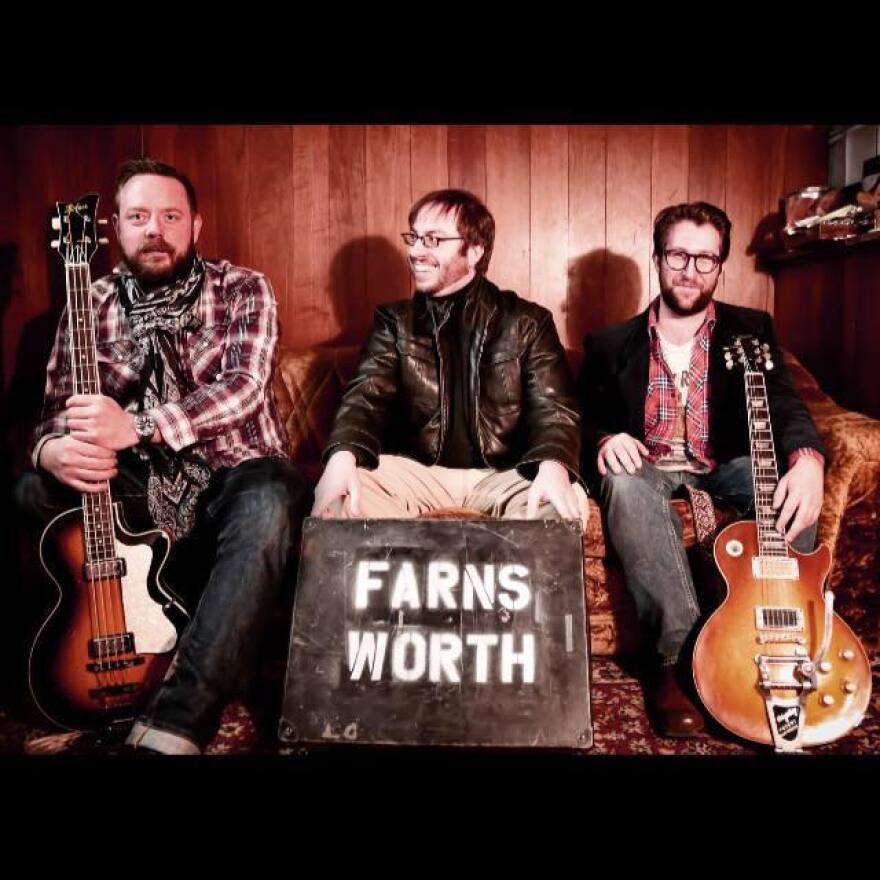
And today, we are chatting with Farnsworth, a home-grown rock trio out of Charleston, West Virginia whose sound is “equal parts The Black Keys and The Black Crowes.” This alternative band is sure to leave you rock’n and roll’n all night, but how did these West Virginians start making music in the first place? Let’s find out…
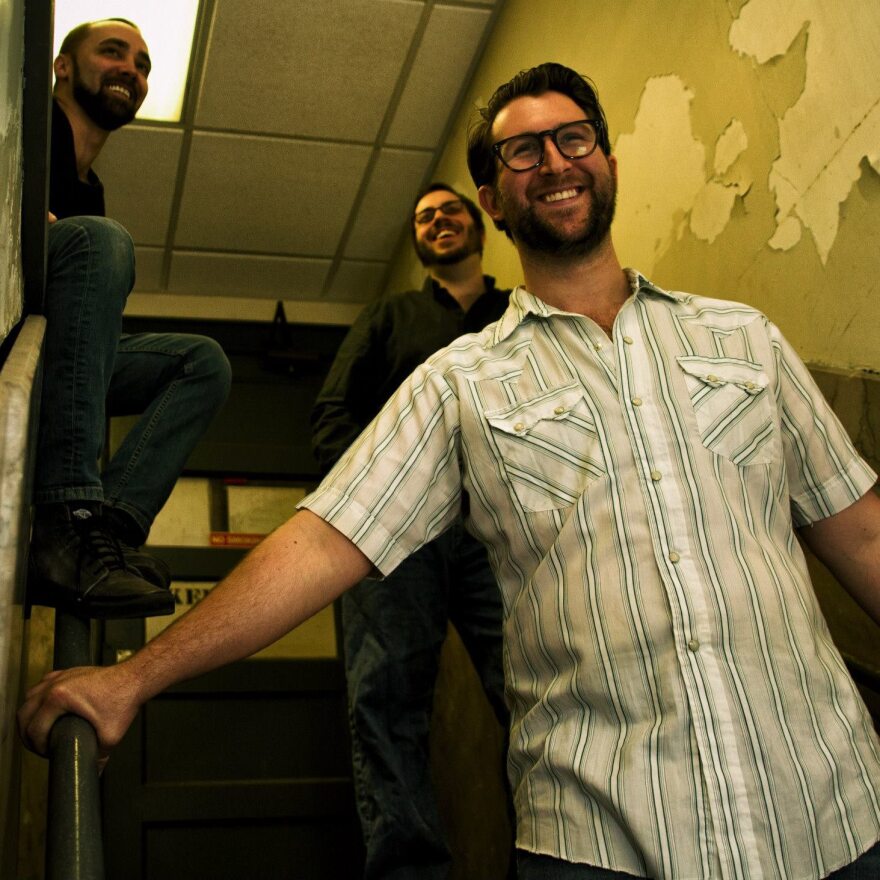
How did the band start playing music (when, where, why, etc.)?
The band started in early 2011 when C.W. Vance and Jason Reese met up at Budget Tapes and Records in Charleston to start discussing putting a band together. We both knew each other and we loved a lot of the same music, so we thought we could really do something awesome. We got Justin James to join us on bass and started practicing in Justin’s living room.
What previous bands have Farnsworth’s members been in?
C.W. came from the band Eva Elution. Jason came from the band Universes. Tim has been a longtime member of the area scene.
Where does Farnsworth’s name come from?
We named ourselves after Farnsworth Drive, a road which goes straight up to Spring Hill Cemetery in Charleston.
How has Farnsworth’s sound changed over time (if at all)?
We first started out playing a load of blues and rock covers with very little originals. We always loved riff rock, so our early sound as a band resembled a lot of Grand Funk, Free, etc. As we progressed, we started focusing more on songs as a whole. We began writing more melodically-driven songs and focused less on the riffs. With the addition of Tim Dorsey on bass a few months ago, our sound has become fuller.

Where does Farnsworth play in and around West Virginia (venues, festivals, etc.)?
We play a lot at The Empty Glass and Blue Parrot. We just had the honor of playing The Clay Center’s Sound Check Sessions. A few years ago, we played the Brew Skies Festival. We’ve played Live on the Levee several times. The V Club is another favorite of ours.
What’s been the highlight of the band’s musical journey?
In the early years of Farnsworth, we did a week tour ending up at The Trash Bar (now defunct) in Brooklyn, New York, then driving the 8 hours back to open for the Huntington Music & Arts Festival. We’ve also enjoyed being able to play at so many great venues (including The Clay Center and The Levee) and being able to tour through Ohio this past March. We’ve also been able to release our first full-length on vinyl, which has always been a dream of ours.
What’s it like making music in West Virginia?
It’s very unique. We have such a wide variety of musical genres and a wealth of talent that rivals anywhere in the country. You can walk into any bar or venue any given night and see amazing local musicians.
Do you feel held back by being in West Virginia or does it feel like a musically-supportive place?
Not at all. It’s a very supportive scene. Being in West Virginia really allows musicians to find and hone their own voices. Everyone has their own identity here.
What, in your opinion, needs to happen in the West Virginia music scene for it to move forward?
Having more artists gain regional or national exposure would be great. We certainly do have artists that are doing very well within our community.
What’s the band’s advice to anyone starting to make music?
Just be yourself and do what’s true to you. Don’t ever let anyone get in your way to making music.
<a data-cke-saved-href=”https://followfarnsworth.bandcamp.com/album/farnsworth-ep” href=”https://followfarnsworth.bandcamp.com/album/farnsworth-ep”>Farnsworth EP by Farnsworth</a>
Farnsworth’s latest release is the Farnsworth EP. Keep an eye on their social media for summer tour dates, not to mention an upcoming full-length (which will be recorded this summer at Musicol Recording Studios in Columbus, Ohio). To hear more #WVmusic, tune in to A Change of Tune, airing Saturday nights at 10 on West Virginia Public Broadcasting. And for more #WVmusic chats, make sure to go to wvpublic.org/wvmusic.
Add WVPB as a preferred source on Google to see more from our team

The fourth annual Women Warriors Summit will take place at the Marshall Health Network Arena in Huntington on Friday, Oct. 23, 2026.
Continue Reading Take Me to More NewsThe West Virginia Mine Wars Museum is getting a sizable donation from retired union leader Cecil Roberts.
Continue Reading Take Me to More NewsOn Oct. 23, Grammy Award-winning composer and conductor, Eric Whitacre, will release a new album for choir, cello, piano and live electronics called Eternity in an Hour via Decca Records. Listen to the entire interview between Whitacre and Matt Jackfert.
Continue Reading Take Me to More NewsA giant troll made of scraps and trash has been commissioned by Huntington-area economic developers as a way to increase tourism.
Continue Reading Take Me to More News