


Aluminum Plates For Deep Space Win W.Va. 'Coolest' Contest
Aluminum plates that helped keep astronauts on the Artemis II rocket safe won the first ever Coolest Thing Made In West Virginia competition.
Continue Reading Take Me to More NewsAlert (09/29/2026): Our Parkersburg TV transmitter is still undergoing maintenance and remains temporarily inoperative. We apologize for the inconvenience.
All our programming is available via our TV livestreams on our website and WVPB Passport. Thank you for your patience!




To Educate, Inform, and Inspire by Telling West Virginia's Story
Mountain Readers Week will be held Oct. 5-9, 2026! Celebrate and foster a love of reading in children across West Virginia.
Nominate an exceptional West Virginia K-12 teacher today!

On Demand

On Demand
Stream original productions from WVPB

Watch locally produced documentaries & more.

On Demand

On Demand






West Virginia Morning

Inside Appalachia

West Virginia Week

Mountain Stage

Us & Them

The Legislature Today

The Legislature This Week

Send us your comments and questions.

Stream our board meetings.

Check out the latest WVPB news.

Sign up for our newsletter and get weekly updates.

Meet the WVPB staff.

WV Educational Broadcasting Commission, the WVPB Foundation, and the Friends of WVPB.

Come work with us!

Read our annual report and learn how we educate, inform and inspire with your support.

Sponsor impactful and engaging media and entertainment.

Use your IRA to make a gift to WVPB.

Become a member with your gift of $1,000 or more.

Make WVPB part of your legacy.

Manage your membership account.

Learn how you can Protect and Sustain West Virginia Public Broadcasting.
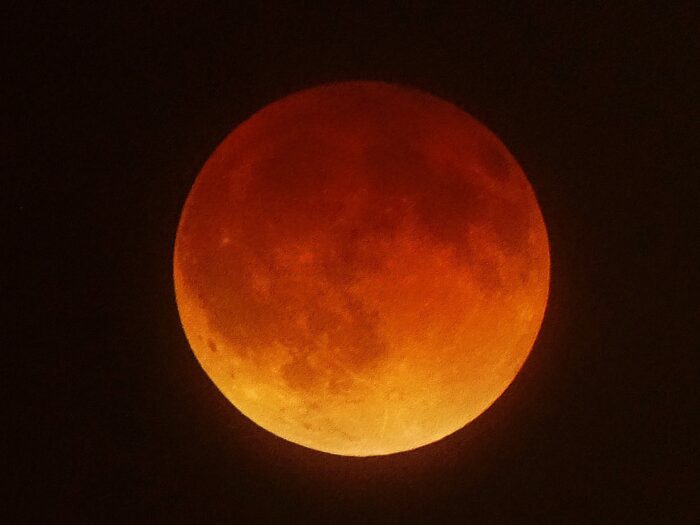
West Virginians will have an opportunity to watch a celestial show Thursday night.
A partial lunar eclipse will be visible for most of the Americas Thursday night into Friday morning as the moon passes through the Earth’s shadow.
“What makes a partial lunar eclipse is that the darkest part of the shadow never covers the full part of of the moon,” Jason Ybarra, director of the WVU Planetarium and Observatory said. “There can be anything from just a part or just a sliver of the moon that is not in what’s called the ‘umbra,’ which is the darkest part of the shadow. It will look dark in some parts, and then the rest will, to our eyes, appear just the same.”
He said although this eclipse will be partial, the moon will be almost fully covered by the Earth’s shadow.
“We’re not seeing a total lunar eclipse, but it’s very close,” Ybarra said. “About 96% of the moon will be in the darkest part of the shadow.”
At the peak of the eclipse, the moon will have a faint orange reddish tint as
the sun’s light filters through the Earth’s atmosphere.
“The actual color that you see depends on what is happening in our own atmosphere,” Ybarra said. “So, if for some reason, for example, if there were a lot of forest fires, wildfires, or a volcano went off and filled the atmosphere with more particulates, that would actually change how the color looks during a lunar eclipse.”
The partial lunar eclipse will begin around 10:30 p.m. Thursday and end close to 2 a.m. Friday morning, with the peak eclipse coming just after midnight.
“Because the eclipse for a lunar eclipse takes such a long time to happen, you can go out maybe at 10 o’clock, and you may not see something,” Ybarra said. “Really you want to go out at midnight because around midnight is when you have the maximum. The lunar eclipse takes a much longer time than a solar eclipse does.”
Weather may play a role in the ability to see the eclipse. The National Weather Service forecasts scattered showers and thunderstorms Thursday night, mainly between 8 p.m. and 10 p.m. with patchy fog after 1 a.m. and an increase in cloud coverage throughout the night.
West Virginians will have another chance to view a total lunar eclipse in 2029.
Add WVPB as a preferred source on Google to see more from our team

The West Virginia Extension service is asking volunteer firefighters why departments are struggling to recruit and maintain members and what support firefighters need.
Continue Reading Take Me to More NewsHuntington is one of eight communities nationwide to be awarded a $3-million federal grant to strengthen efforts to help struggling residents.
Continue Reading Take Me to More NewsWest Virginia Health Right (WVHR) will host its third annual #WeCareWV Day on Oct. 17, a free walk-in medical, dental, and vision clinic for anyone in need.
Continue Reading Take Me to More NewsDirect-to-consumer tests like full-body scans are marketed as a way to catch diseases early and establish a baseline. But there are financial, physical and psychological risks to all medical tests — and in some cases, not getting a test could be better for your health. From the Appalachia + Mid-South Newsroom, HealthQ hosts Cara Anthony and Blake Farmer speak with UCSF Cardiologist Dr. Rita Redberg.
Continue Reading Take Me to More News