In December, West Virginia University art professor Joseph Lupo tagged Inside Appalachia in an Instagram post that showcased four-color reductive relief prints made by WVU students — each one inspired by a story or episode they heard on the show. Inside Appalachia host Mason Adams spoke with three of Lupo’s students and asked them to describe their work and its connection to the show.
Floods Present Unique Challenges For Substance Use Recovery
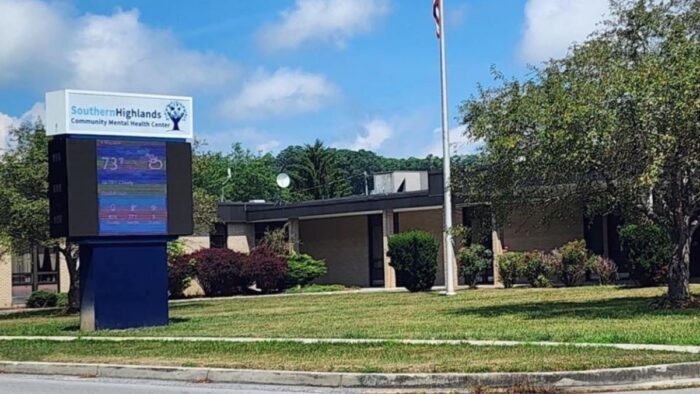
The new Southern Highlands Community Mental Health Clinic (SHCMHC) in Welch, West Virginia. Staff worked out of Mount View High School between the flood and the new building’s opening.Photo courtesy SHCMHC
Listen
Share this Article
Christy Dorado, director of the office-based medicated assistance treatment, often known as MAT, oversees Southern Highlands Community Mental Health clinics in Wyoming and McDowell counties. The clinics serve between 65 and 80 people per month dispensing suboxone, vivitrol, sublocate and brixol.
The Welch clinic lost its building in the February 2025 floods. Dorado recalls that terrible Monday after the flood.
“I walk in my office, and my desk is in front of my door, and I’m trying to get in, and I see Narcan laid out all over my floor with mud on it, and my thought was, how are we going to help people now?” Dorado said, shaking her head.
The clinic lost everything: refrigerators, hundreds of doses of medication, and computers holding addresses and appointment schedules. They discovered that at least two clients died in the flood. Staff began trying to check on the rest through home visits, but there were many barriers.
“You couldn’t get in and out of Welch the traditional way. I went around and over train trestles and through paths,” Dorada remembers.
Staff worked out of their cars until they could establish a base at Mount View High School, where they stayed for a month. Most of their clients were home and safe, dealing with flooding issues like carpets and food. But as soon as the staff reached out to them, they expressed concern about how to continue treatment.
Clients were afraid they would go into withdrawal without help. They weren’t wrong, said Sharon Mulcahy, coordinator for the Logan County Prevention Coalition. Her description of what happens in withdrawal pulled no punches.
“You’re taking your treatment, whatever your MAT program is, and you just went through this massive flood. Your road’s cut off. Your lifeline, everything’s cut off. You’re stuck. You’re going to start getting sick from withdrawals,” Mulcahy said. “If you’ve never seen someone go through that, it isn’t pretty. They’re very sick, and some people can’t handle that, so they’re going to go to the medicine cabinet. They’re going to go to find stuff to take, and that could start them right back down. Tragedies and traumas cause people to relapse.”
Calls to county health departments show that overdoses doubled in affected areas of Logan and Wyoming counties and tripled in McDowell after the floods. Relapses outpaced overdoses. Before the flood, an estimated 10 people at the Welch clinic screened positive for substance use at check-ins. Afterward, that number shot up to 20.
But at least one client found the flood simultaneously stressed her to the point of wanting to use, and prevented her from being able to, said Dorado.
“Their bridge washed away; they had to ration their food to their children because they didn’t know when somebody could get to them. She was talking about how she couldn’t get out, or she probably would have relapsed.”
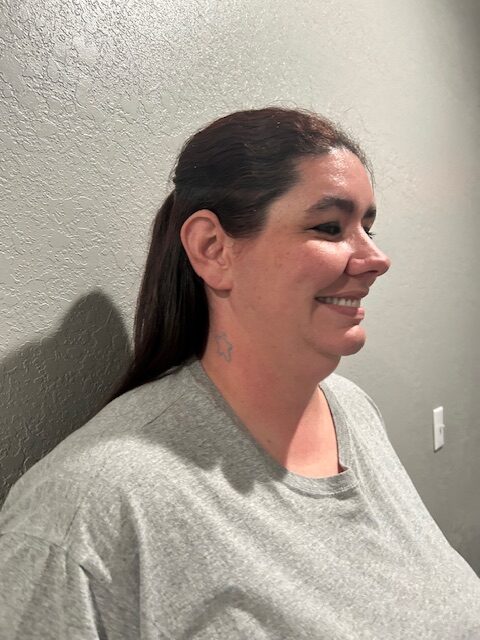
Caitlin Davis is a peer recovery specialist working in Oceana. She has experienced multiple floods as a peer specialist and said recoveries can be set back by such traumatic events.
Photo Credit: Wendy Welch/West Virginia Public Broadcasting
Over in Wyoming County, Caitlin Davis, a peer recovery support specialist with Mountain Laurel Integrated Healthcare based in Oceana, emphasized the same point.
“I’ve known disasters to push people to relapse after years of recovery, because that’s the only way they ever knew how to cope with everything is just to mask it so they don’t feel it,” Davis said.
People found flood realities hard to factor into their recovery journey. Some clients had no housing options but to move in with family members who were using, and soon disappeared from their programs.
“The ones that took it the hardest are probably the ones that were just starting to climb up the ladder; they made improvements and now they’re back in the valley on the bottom. All we could really do was explain to them that using is going to make it worse,” Dorado said.
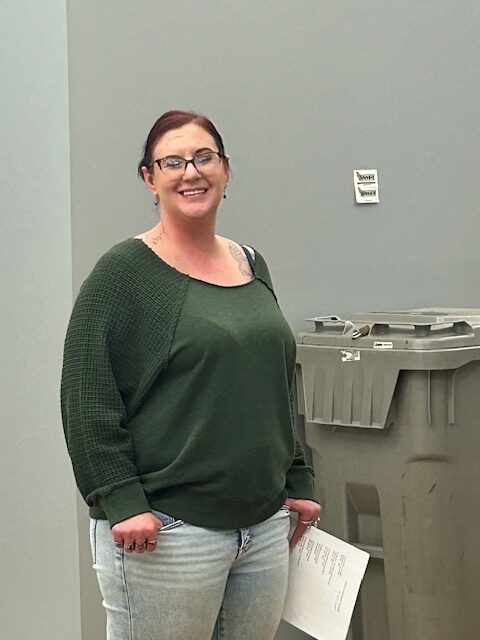
Christy Dorado directs office-based medical assistance treatment (MAT) for McDowell and Wyoming county clinics. She and other staff made one-on-one visits to flooded homes to check on clients.
Photo Credit: Wendy Welch/West Virginia Public Broadcasting
Dorado takes pride in people using coping skills they learned through clinic programs. The trapped mom began rearranging furniture, going through family photos and talking to her husband about what was happening, “using a support system and staying busy doing something positive.”
Some reached out to family, Dorado said. “They spent a lot of time with their kids. It’s going to help anybody to look at their 5-year-old and say, ‘I’m not going to do this today.’”
The flood even led to new intakes. People looking for food and water were told about the clinic’s wraparound services for substance use disorder. Several people came in asking for assistance with other things and stuck around to do intakes. Slowly and steadily, relapses went back to fewer than 10 per month.
Until December.
“In December, we had 33,” Dorado said with sadness in her voice. “There’s a lot of speculation as to why.”
Holidays are often a trigger. Another theory is that, as travel has become easier in flood-affected areas, drug routes are reopening. Whatever the reason, Dorado remains optimistic. Dorado uses herself as an example. She is 12 years out of the substance use disorder lifestyle after twenty years in it. She wants the same success story for clinic clients.
“We call people every single day and check on them if that’s what we need to do. I think people in West Virginia should know that a lot of people do get help if they would just give people a chance,” she said.
Photo Credit: Wendy Welch/West Virginia Public Broadcasting
Add WVPB as a preferred source on Google to see more from our team
Recovering from substance use disorder is hard at the best of times. How did people working on recovery during the February 2025 floods hold on to their sobriety? As we approach the one-year anniversary of those deadly floods, we wanted to check in on this often overlooked issue.
SENTRY, or the Smart Environmental Notification Threat Response System, is a proposal for a 36-month, $10 million pilot program aimed at improving flood prediction and response, being promoted by Gov. Patrick Morrisey.
A challenge lawmakers are struggling with this session is how to pay for public schools in a state where there’s falling enrollment, especially in rural counties. Also, the Appalachia + Mid-South Newsroom explains snow mold.