Alert (09/10/2026): Our Parkersburg TV transmitter is undergoing maintenance for a few days and will not be operational. We apologize for any inconvenience.
All our programming is available via our TV livestreams on our website and WVPB Passport. Thank you for your patience!
This week, it’s not easy to find a place to play hockey in Appalachia, and if you happen to be young and ambitious, it can be harder. Also, rappers and musicians across West Virginia come together for a song challenge. And, farmers learn to turn unwanted sheep’s wool into home insulation.
Early Data Shows Dramatic Fall In Overdose Death Rates; Advocates Advise Caution
tloventures/Adobe Stock
Listen
Share this Article
A Sept. 1 analysis of provisional overdose death rate data from the Centers for Disease Control and Prevention (CDC) shows a rapid decrease in the number of drug overdose deaths in the U.S. and this time West Virginia appears to be keeping pace.
However, advocates working on the ground directly with communities affected by the substance use disorder (SUD) crisis, say to be cautious of preliminary data and that there’s more work to be done and policy changes to be enacted.
“If you were to compare these numbers to pre-COVID, they’re still very massively up,” said Sarah Stone, co-director of the Charleston non-profit group, Solutions Oriented Addiction Response (SOAR). “So it feels to me like we’re still very much in the thick of everything.”
Stone also noted that this data is provisional, meaning, these are not finalized figures for the year.
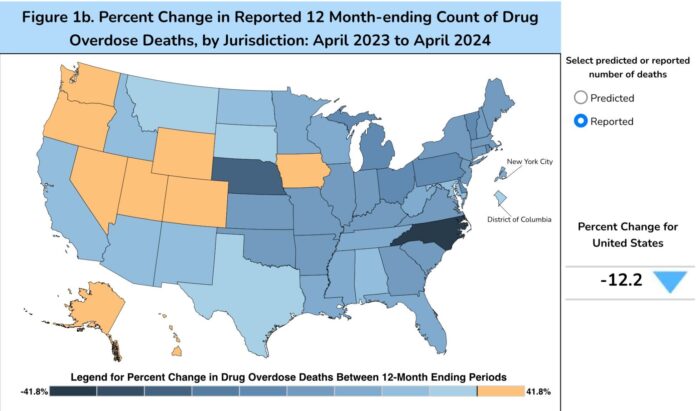
West Virginia’s drug overdose rate fell nearly 11 percent from April 2023 to April 2024, according to provisional CDC data. The same report showed the nation’s drug overdose death rate fell by a reported 12.2 percent during the same period.
A screenshot of the CDC’s Provisional Drug Overdose Death Counts. Accessed on Sept. 18, 2024.
While falling overdose death rates are good news, advocates like Stone say even one drug overdose death is too many.
“Every one of the numbers from the data that we’re looking at is someone’s kid, is someone’s mom, is someone’s somebody, somebody celebrated when that number was born,” Stone said. “Until that number is zero, which is a goal, I can’t celebrate it.”
Stone said SOAR considers every drug overdose death a policy failure and that community recovery advocates feel like they are working against the state of West Virginia to make drug overdose death rates fall.
“If numbers are going down, we want to feel good about that, right? And it’s easy to feel good about that if you don’t make the connection that the number as a person and the number as a policy fail,” Stone said.
Stone is referencing policy decisions that have challenged the goals of those who work in West Virginia harm reduction in recent years.
According to the Substance Abuse and Mental Health Services Administration (SAMHSA), harm reduction refers to an evidence-based approach to treating SUD with a set of practical strategies and ideas aimed at reducing negative consequences associated with drug use.
“People want to show up to keep themselves more safe, and we should be able to provide that for them, but because of restrictive laws, we cannot,” Stone said.
In 2021, the Legislature passed Senate Bill 334, which requires licensing for syringe distribution, programs offering syringe exchanges to host many other harm reduction services, made programs deny clean needles to those who did not return with their used needles and only allowed them to serve clients with state IDs.
“I do celebrate the wins,” Stone said. “I know how hard we’re working, but it’d be cool if lawmakers would make things more accessible to folks.”
SOAR hosts four naloxone boxes across the city of Charleston and holds monthly mutual aid fairs to distribute the supplies they legally can to help people suffering from SUD stay safe.
On Sept. 26, SOAR will participate in the largest day of naloxone distribution to date. Save-A-Life Day began in 2020 with a two-county pilot project in Kanawha and Putnam counties. By 2021, the project expanded to 17 counties, then all 55 counties participated in 2022.
Last year, all 13 Appalachian states participated, hosting more than 300 events and distributing more than 45,000 naloxone doses in a single day.
Just four years after the project’s two-county start, 2024’s Save-A-Life Day events will be held in every state east of the Mississippi River, and a few beyond.
“We’ve heard of same-day saves,” Stone said. “So that, of course, is impactful, getting naloxone out, but it’s also making people think, ‘How can we make this more available in our community? How can we like, go deeper? How can we get it to people who we don’t even see on Save a Life Day? So it’s energizing to folks, and it is a day to celebrate.”
Appalachia Health News is a project of West Virginia Public Broadcasting with support from Marshall Health.
Add WVPB as a preferred source on Google to see more from our team
Monday's action officially reinstates the first Trump Administration’s 2020 Title IX rule that includes “the interpretation of ‘sex’ to mean the objective, immutable characteristic of being born male or female.”
Artificial intelligence, or AI, is a hot topic right now. It seems everyone is using it – even if they sometimes don’t realize they are. Professor Ali Al-Sinayyid, an assistant professor and director of the West Virginia State University Cybersecurity Innovation Center answers the question "What is it?"
































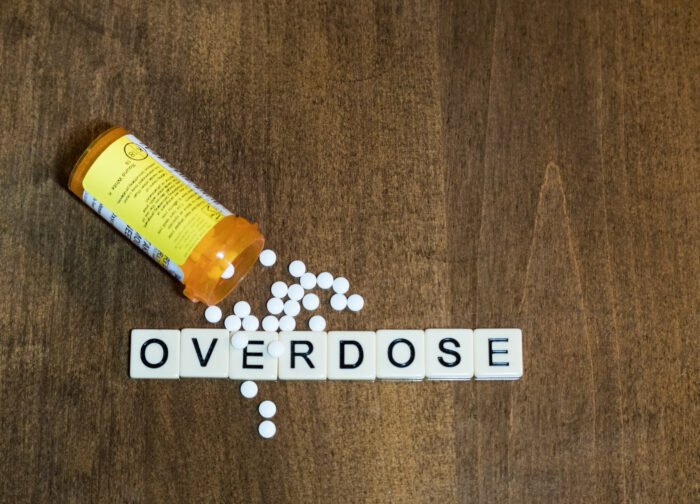 tloventures/Adobe Stock