As one of the hardest hit states in the country’s opioid crisis, communities across West Virginia have started spending their portion of the roughly $1 billion in settlements from pharmaceutical companies and distributors.
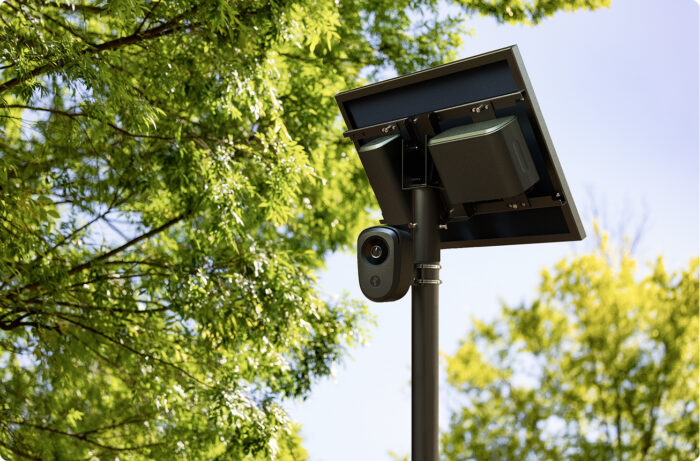
Schuyler Mitchell, assistant news director at nonprofit newsroom Mother Jones, reported last month on the use of the funds to purchase automated license plate readers, or ALPRs, from companies like Flock. She talked to reporter Chris Schulz about her findings.
This interview has been lightly edited for clarity.
Schulz: You identified opioid settlement funds being used to pay for these systems in 10 different states. What stood out to you about West Virginia specifically?
Mitchell: First of all, I found that 19 agencies in 10 different states spent nearly $1million from their opioid settlement funds on Flock and other ALPRs. But I do want to note that this is probably an undercount because there’s a lot of inconsistency in the tracking of opioid settlement expenditures. And one thing about West Virginia, because the funds have been historically dispersed through the West Virginia First Foundation, they have an annual expenditure report that anybody can look at. So I identified the West Virginia ones by looking through that report and seeing it goes into some granular detail, not just that the funds were dispersed to a city and then to a police department, but actually how those funds were then used by that city or police department. So I was able to get more insight into West Virginia I think than some other states where some of those expenditures might be more shrouded in secrecy.
Something that stood out to me about West Virginia is that West Virginia was hit very hard by the opioid crisis. And I spoke with a lot of people in northern West Virginia who have family members that were impacted. Basically, one person I spoke to said that there’s basically nobody in the state who doesn’t have some sort of connection to the opioid crisis, who hasn’t been impacted in some way. And so I think that even though spending opioid settlement money on ALPRs is a legitimate use in West Virginia of those funds – there’s a lot of flexibility in how funds get spent and law enforcement is one of those permitted uses – I think the hope when those payouts started happening was that the money would really be focused on addiction treatment, rehab prevention, harm reduction services.
For so many people who have personal stories or who’ve just seen the impact on their communities, realizing that money is going to something like an automated license plate reader is pretty disheartening because there’s actually evidence; I spoke with some addiction treatment specialists who emphasized that there’s plenty of research that shows that some of these more punitive responses from police don’t really go that far in reducing addiction, reducing opioid overdose deaths and addiction. In some cases, police responses can actually make it worse. So that was something that really stood out to me about West Virginia was just how many people were personally impacted and very up in arms about this issue.
Schulz: These funds and these settlements were touted as a response to the harm done by the opioid epidemic. So why is this money being spent on surveillance systems? What is the rationale or the logic that you found in your reporting?
Mitchell: The argument from police and sheriffs is that they need this technology to catch drug traffickers and drug dealers. In various city council and county commission meeting minutes that I looked through, I read transcripts of sheriffs and police chiefs talking about why ALPRs were a legitimate use of opioid settlement funds. And the main thing they said was that it would help catch drug traffickers and reduce drug related crimes. There were only a few cases where local officials pushed back on that and said, ‘Well, does this really address the root causes of the opioid crisis or go far enough in addressing addiction?’ But I think one argument that I also saw made was that if the police and local agencies pulled from the settlement funds, it wouldn’t be a burden to taxpayers. So instead of pulling from the regularly allocated budget, they could pull it from this pool of money they got and that was a very appealing idea to local officials.
There was one case, for instance, in Washington state that was a bit disheartening because the county where the city was located that spent some of their opioid funds on a flock camera, that county has some of the highest overdose deaths and has one of the highest overdose death rates in the state and also lacks a medical detox center. And the way that the council and the police talked about the ALPR in the city council meeting, they were talking about using it to reduce drug related crime. So I guess there was one area of a strip mall where there had been some activity and some overdoses. They were proposing putting in a camera basically as a deterrent to stop people from using in that area. But I think that critics of that practice would say that doesn’t really go far enough to address the root cause, it maybe shifts where that activity is happening just to somewhere else.
In my own reporting and looking at these different meeting minutes, I didn’t see a lot of pushback at all, really. The main thing was just: this is a legitimate use. We’re trying to find a way to use some of this money that’s in many cases just sitting there despite the fact that there are plenty of other uses that people say that money could be going to, looking to that as a way to be able to kind of take advantage of this sort of new technology. And it’s not a new technology, but I should say that Flock in particular has done a lot of outreach to police departments in the past several years and that’s part of why we’re seeing so much attention on Flock.
There’s been a lot more agencies that are entering into contracts with the company. And also a lot more cities now are canceling those contracts as they face a lot of pushback. But there’s a really great PR pitch that Flock has to law enforcement agencies, particularly in more rural or poorer areas where the budgets for the police department are smaller. Their pitch is that this AI powered software decreases the amount of work that you have to do to stop crime to catch perpetrators. I think that one of the things that I was seeing in different places was cops saying, ‘Well, this will reduce our workload and will make it so much easier to catch drug dealers.’ But it’s very unclear to me how far that’s really gone in reducing opioid overdose deaths or reducing the harm of the opioid crisis in these areas.
Schulz: At least here in West Virginia, this is considered a legitimate or approved use of opioid settlement funds under the auspices of public safety and law enforcement support. So why have you what have community members told you about why this is concerning?
Mitchell: For one, I think people are concerned about it furthering the criminalization of a population that was already really heavily impacted by the opioid crisis. The thing about these settlements is that these were settlements with major pharmaceutical companies and pharmacies and distributors. They were not settlements with drug traffickers. I think that the idea that this would be some form of reparation for a form of corporate-inflicted harm on these communities, that being the idea that people had, then seeing it shift onto further criminalization of people who are experiencing addiction related crises. There was one person I spoke to who has been tracking the installation of Flock cameras in Monongalia County, and she noted that there were cameras that were placed outside of places like a mobile home park or outside of a rehab facility in the area. And she was really concerned about the choice to place cameras in those places because of the fact that it seemed to be further surveilling and criminalizing people who are living in poverty or experiencing addiction.
And again, the spirit of the settlements, the settlement language itself permits these types of uses, like you said, under the auspice of public safety. But I think if the spirit of what people are really hoping to get out of it, thinking of it as this form of reparation for this kind of deep harm, they’re hoping that it would go further to things like increasing the amount of Narcan available or mental health services like youth outreach. I know someone who works in harm reduction services in the state of Illinois and she said that the funding that went to ALPRs in Illinois could have subsidized a significant amount of harm reduction work that she does there. And seeing that money get allocated to surveillance technology it was very disappointing for people I spoke to.
Schulz: What was it about this story that attracted you to it? Why do you think this is concerning or noteworthy?
Mitchell: I actually first learned that this was happening because of Monongalia County, West Virginia. I saw that in Mon County, commissioners had voted to spend $180,000 of the county’s opioid settlement funds on a Flock camera network. And when I learned about that, I thought to myself, ‘I bet there’s more places that have made that same decision.’ Pensacola, Florida had gotten a lot of attention as well. So much so that the city council has now voted that the next time their Flock contract comes up for renewal, they’re not going to allow the opioid money to be used on that renewal. So then I was just interested about how many other places that maybe hadn’t received as much coverage had been doing this. And then when I started digging, I started identifying kind of one-off mentions in various local reporting of, maybe it didn’t say Flock specifically. It said that, maybe it was license plate reader. And then I started submitting public records requests to find out exactly how much money had been spent and on what technology and looking through those invoices and contracts.
And actually the same day that my piece came out, KFF Health News published an investigation that was focused on Louisiana and just looking at how different sheriff’s departments in Louisiana had used their opioid settlement funds. It wasn’t specifically focused on ALPRs, but they mentioned that there was one parish where the sheriff’s department spent $465,000 on a Flock camera system. So again, that $920,000 that I initially found is likely even so much greater.
It’s been really interesting to see how many communities across the country, across the political spectrum, I think the big bipartisan issues right now are Flock cameras and data centers. And often people are also linking those issues because they are thinking about, ‘Okay, well, if we have these AI powered cameras, maybe then there will need to be more data centers built to power them.’ And that’s just what I’m hearing from people who are very activated around these issues. So I’ve been interested as someone who’s reported on surveillance for a long time in how popular it is to talk about surveillance now all of a sudden. I think for a long time it was sort of sidelined to a libertarian issue, or just it wasn’t something that was getting so much attention and energy. And then at the same time, I’ve also reported on public health and I’m really interested just in the stewardship of public funds and police accountability. This was a story where it was really at the intersection of three things: accountability and public funds, public health and surveillance. And it’s not often that all those things are linked in my reporting that I’ve done. It was definitely just, once I learned about it and started identifying more and more places, it was something I wanted to dig into.
Schulz: Is there anything else that I haven’t given you a chance to discuss or something that we did touch on that you’d like to highlight at this time?
Mitchell: I might just also say that police spending, the way that police departments and sheriff’s offices have used opioid settlement funds, isn’t just limited even to ALPRs. There has been a lot of great reporting on how police have used the funds to buy things like tasers or drones, or throw public awareness concerts that spend many tens of thousands of dollars nebulously connected to addressing the root causes of the opioid crisis. One thing I found in my research was when these companies started entering into the settlement agreements, there were a lot of experts who were pointing out some of the failures of the tobacco settlements years prior and really hoping that we wouldn’t repeat the mistakes of the tobacco settlements where there was a lot of reporting about how funds were misused or not really put towards the uses that people have been hoping for when those tobacco settlements were reached. I think that this is still an opportunity. The funds will continue being dispersed over many years and there’s a lot of power that city councils and county commissions have in making decisions around how they allocate those funds and. I think as time goes on, there’s a lot of opportunity and there are a lot of lessons that can be learned from the tobacco settlements as well when kind of thinking forward about how to make the most impact in addressing the opioid crisis.