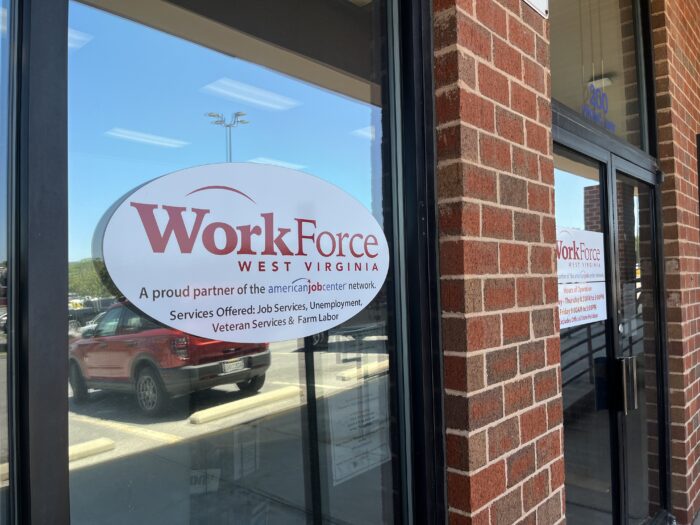
For more than 50 years, West Virginia’s labor force participation has remained at, or near the bottom of, national rankings. Labor force participation is defined as the number of those eligible to work who are working or looking for work.
At a legislative interim meeting Sunday, Jeff Green, deputy executive director of WorkForce West Virginia, showed numbers that the state’s civilian labor force is shrinking.
“We have the highest rate of mortality in the country,” he said. “We have had since at least 2020, and in 2023 we had the sixth lowest birth rate in the United States per the Center for Disease Control.”
There are roughly 780,000 West Virginians currently working or seeking work. That is down 15,000 since just before the COVID-19 pandemic.
“We start seeing a decline in the available workforce towards the end of 2023, early 2024 and that decline has continued on through to this year, but it has leveled off here in 2025 and so we expect pretty much that it will stay at this level, at least for the near term,” Green said. “And as long as this trend continues, we expect the unemployment rate to stay pretty steady where it is in the upper 3%, low 4%, barring any unforeseen economic events that we do anticipate.”
Labor force participation is a defined statistic from the Bureau of Labor Statistics. It is percent of the state’s population that is age 16 and older, and they’re not institutionalized — that means they’re either not incarcerated, or serving in the military. They’re not in any situation that prevents them from participating that are either actively employed or actively seeking employment.
There is also a Prime Age Labor Force Participation that runs from age 25 to 64. West Virginia is also below the national average there, Green said.
Add WVPB as a preferred source on Google to see more from our team