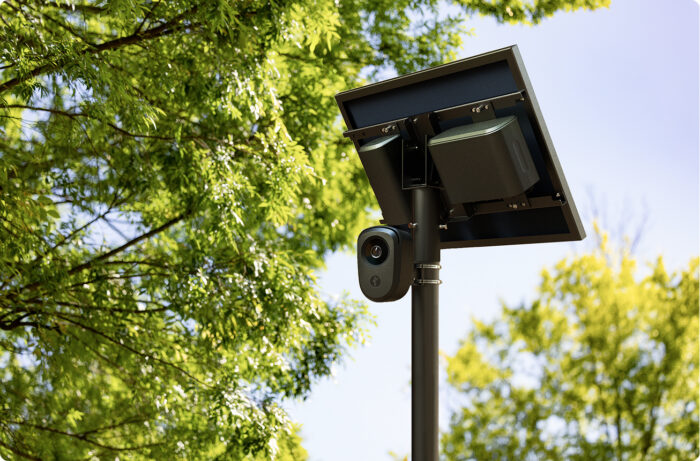
Lawmakers heard this week from the head of Flock Safety, the company that makes automated license plate reader systems (ALPRs).
Flock’s chief legal officer, Dan Haley, told the Joint Committee on Government Organization Monday his company saves lives and helps find missing people.
“Just last week, our technology was instrumental in the recapture of an escaped convicted murderer in Tennessee,” Haley said.
He said that includes West Virginia, too.
“In August in Monongalia County deputies reported that a fFlock camera alert helped them locate the vehicle in which a missing nine-year-old boy was traveling. Deputies found the vehicle in Morgantown, recovered the child unharmed, and took the suspect into custody,” he said.
But the company has also faced concerns about privacy and misuse of data. Lawmakers have expressed interest in regulating the technology.
Del. Tristan Leavitt, R-Kanawha, led off with a list of more than a dozen questions he sent the company last month, and repeatedly expressed frustration that their answers were at times incomplete.
“In Monongalia County, if I have a hot list alert come in and it says that it matches a plate and then it turns out that is inaccurate, how would you as a company know that individual hot list alert had pinged inaccurately?” Leavitt asked
“I don’t mean to be trite here when I say we know when we’re told,” Haley said. “People think that Flock employees are able to just log in and, I don’t know, do a search for a neighbor or whatever. I understand the concern. It’s simply not the case.”
Of particular concern to lawmakers: can Flock clients share their data? And, who monitors which employees access that data?
“We look at things like, are they logging in outside of their normal shift hours? Are they searching for things over the same plate multiple times with multiple cases?” Flock Security Director Matt Fanto said. “We use those signals to look for suspicious patterns.”
Flock has approximately ten customers in West Virginia, mostly law enforcement agencies. The city of Huntington recently voted to install the cameras, but a local group is trying to stop that. Morgantown is considering removing their cameras.