

Aluminum Plates For Deep Space Win W.Va. 'Coolest' Contest
Aluminum plates that helped keep astronauts on the Artemis II rocket safe won the first ever Coolest Thing Made In West Virginia competition.
Continue Reading Take Me to More NewsAlert (09/29/2026): Our Parkersburg TV transmitter is still undergoing maintenance and remains temporarily inoperative. We apologize for the inconvenience.
All our programming is available via our TV livestreams on our website and WVPB Passport. Thank you for your patience!




To Educate, Inform, and Inspire by Telling West Virginia's Story
Mountain Readers Week will be held Oct. 5-9, 2026! Celebrate and foster a love of reading in children across West Virginia.
Nominate an exceptional West Virginia K-12 teacher today!
On Demand
On Demand

Stream original productions from WVPB
Watch locally produced documentaries & more.

On Demand
On Demand

West Virginia Morning

Inside Appalachia
West Virginia Week
Mountain Stage
Us & Them
The Legislature Today
The Legislature This Week

Send us your comments and questions.

Stream our board meetings.

Check out the latest WVPB news.

Sign up for our newsletter and get weekly updates.

Meet the WVPB staff.

WV Educational Broadcasting Commission, the WVPB Foundation, and the Friends of WVPB.

Come work with us!

Read our annual report and learn how we educate, inform and inspire with your support.

Sponsor impactful and engaging media and entertainment.

Use your IRA to make a gift to WVPB.

Become a member with your gift of $1,000 or more.

Make WVPB part of your legacy.

Manage your membership account.

Learn how you can Protect and Sustain West Virginia Public Broadcasting.
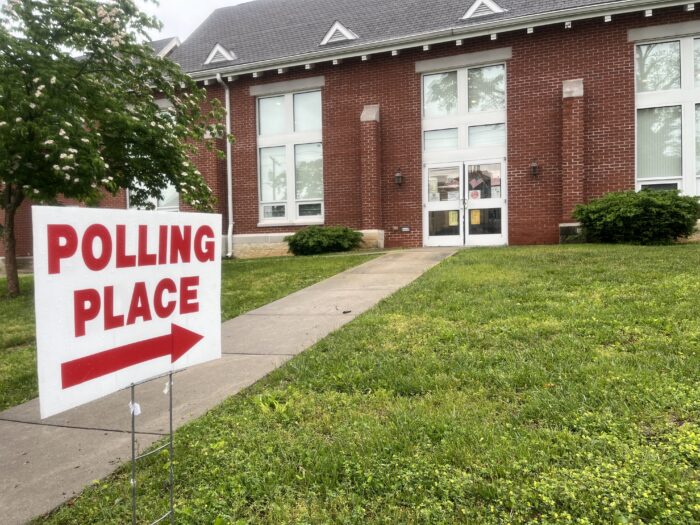
Find Disability Rights of West Virginia’s polling place accessibility survey here.
Disabled voters have specific rights to access polling places — but not all voters are familiar with those rights, and not all polling places are equally accessible.
“If you are a disabled voter, you have the right to an accessible polling place in the same precinct where you are registered,” Keeley Wildman, an Advocate at Disability Rights of West Virginia, said.
Wildman said rights include voting curbside if a polling place is physically inaccessible, the right to voting inside if it is physically accessible, the right to help from any designated person, the right to cast your vote privately if desired, the right to a service animal in the polling place and the right to an accessible voting machine.
During election season, Disability Rights is conducting an accessibility survey that is available online or by mail, which voters can request at (304) 346-0847.
“Hearing from voters who experience issues at polling places, having those personal reports is incredibly important to making changes and getting those accessibility issues corrected,” Wildman said.
Disability Rights of West Virginia is hosting a polling place accessibility survey this election season, after working to educate poll workers and compile past accessibility reports, evaluating past noncompliance at different county precincts.
Disability Rights has previously conducted county-by-county accessibility reports of physical polling places throughout the state, which have found issues like uneven paths into the polling place or misplaced signage.
For those with intellectual or developmental disabilities, Wildman said it is “very likely” individuals under guardianship are still eligible to vote despite “stigma and confusion.” Referencing state code, West Virginians are eligible to vote if they are a resident of their county, are not currently serving time for a felony, are not declared mentally incompetent by a court and are over 18.
Disability Rights Legal Director Mike Folio wrote to WVPB that the organization has also helped 140 individuals with disabilities register to vote from Oct. 1, 2023 to Oct. 28, 2024.
If voters need immediate help accessing polls on election day, they should contact their local county clerk or call the Secretary of State’s office at (304) 558-6000.
They should also record violations with Disability Rights either by email at contact@drofwv.org or by phone at (304) 346-0847, although it will not be staffed for urgent assistance. Voters can also call the ACLU of WV’s voter protection hotline at (304) 712-4640, which will be available Saturday 9 a.m. to 5 p.m. and Tuesday 7:30 a.m. to the close of polls.
Add WVPB as a preferred source on Google to see more from our team
Direct-to-consumer tests like full-body scans are marketed as a way to catch diseases early and establish a baseline. But there are financial, physical and psychological risks to all medical tests — and in some cases, not getting a test could be better for your health. From the Appalachia + Mid-South Newsroom, HealthQ hosts Cara Anthony and Blake Farmer speak with UCSF Cardiologist Dr. Rita Redberg.
Continue Reading Take Me to More NewsMany of the devices we use in our daily lives run on rechargeable lithium-ion batteries. Be aware that damaged or incorrectly charged batteries can overheat, start a fire, or even explode.
Continue Reading Take Me to More NewsThere are several deadlines to consider before Election Day next month.
Continue Reading Take Me to More NewsTwo cases about whether the West Virginia Board of Education can mandate vaccines to students entering school without allowing for religious exemptions have been combined by the state Supreme Court of Appeals.
Continue Reading Take Me to More News