


Fourth Annual Women Warriors Summit To Feature High Profile Speakers
The fourth annual Women Warriors Summit will take place at the Marshall Health Network Arena in Huntington on Friday, Oct. 23, 2026.
Continue Reading Take Me to More NewsAlert (09/29/2026): Our Parkersburg TV transmitter is still undergoing maintenance and remains temporarily inoperative. We apologize for the inconvenience.
All our programming is available via our TV livestreams on our website and WVPB Passport. Thank you for your patience!




To Educate, Inform, and Inspire by Telling West Virginia's Story
Mountain Readers 2026 has concluded! Please fill out our volunteer post-survey.
Nominate an exceptional West Virginia K-12 teacher today!

On Demand

On Demand

Stream original productions from WVPB

Watch locally produced documentaries & more.

On Demand

On Demand




West Virginia Morning

Inside Appalachia
West Virginia Week
Mountain Stage
Us & Them
The Legislature Today
The Legislature This Week

Send us your comments and questions.

Stream our board meetings.

Check out the latest WVPB news.

Sign up for our newsletter and get weekly updates.

Meet the WVPB staff.

WV Educational Broadcasting Commission, the WVPB Foundation, and the Friends of WVPB.

Come work with us!

Read our annual report and learn how we educate, inform and inspire with your support.

Sponsor impactful and engaging media and entertainment.

Use your IRA to make a gift to WVPB.

Become a member with your gift of $1,000 or more.

Make WVPB part of your legacy.

Manage your membership account.

Learn how you can Protect and Sustain West Virginia Public Broadcasting.
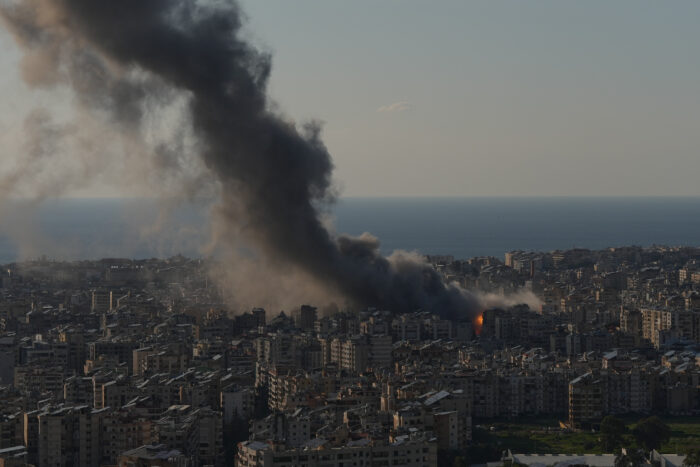
With the war in Iran now in its second month, many questions remain about the motivations for and the objectives of the conflict. Ace Parsi’s family left Iran for the U.S. because of the Iran-Iraq war of the 1980s. He shared his perspective on the situation with reporter Chris Schulz.
Parsi is also running for Congress in West Virginia’s second district.
This interview has been lightly edited for clarity.
Schulz: I understand you were born in Iran. Can you tell me a little bit about your connection to that country?
Parsi: I was born there, and the first eight years or so of my life was spent during the Iran-Iraq War. It was a stark reminder, because a supreme leader there, without any voice of the people, chose to take people into that war and keep them in war. It was one of the main reasons we fled that authoritarian regime in Iran.
My youngest memories were actually going to a windowless room in our apartment when there were alerts of bombings coming. And I think about that now looking back at the fear that my parents and their friends had for the lives of their children. And so, what’s happening right now hits really, really close to home in that way, both in terms of why we fled and why we treasure the freedoms here in the United States, but also the very human reality that’s being faced in that country.
Schulz: How did you end up in West Virginia?
Parsi: My wife grew up here, she was born here, and when we had our daughter, we wanted to live in a place that would be supportive of families. Ironically, you know, I’m running for Congress to represent West Virginia in DC, but I moved from Washington, DC. And what we loved about West Virginia is that here you were treated as a human being and not just as a professional kind of, like status climbing type thing. So we thought that it would be a service to our daughter to raise her in this in this state, and it was the best decision that we ever made.
Schulz: As an Iranian American, how did you feel when news came out in March of the initial attacks by the United States against Iran?
Parsi: I was crushed because as someone who’s running for the U.S. Congress, as someone who is a deep believer in the United States Constitution, not as a theoretical thing, but as something that is, again, to be cherished: the power to declare war is not with the President, it’s with the Congress. So it brought back this notion that a supreme leader gets to choose these things, and I didn’t think that would happen in America.
I think it’s also so hard. I have a next door neighbor who has two sons in the military, and to have at the same moment my mother worried about the fate of her brothers, my uncle and and my aunts there, and having this mother, my next door neighbor, worried about the fate of her two sons, and to know that there was never a Congressional declaration of war, we never had a conversation nationally about whether this should be done. That felt like that is who Iran is and their leadership. It just felt like it should never have been who we are and our leadership.
Schulz: We’ve heard a lot of reporting about the reaction to the death of Ayatollah Khamenei in the early days of of this war. As someone who was directly impacted by some of the choices that he and his predecessor made, did you have any particular reaction? Did that really register when the news came out of his death?
Parsi: I mean, believe me, Iranians are no fans of the Ayatollah. Let’s just say that, like, be very, very direct about that. And at the same time, I think people deeply wanted democracy and knew that there was never a plan to deliver it. So every single time, now, you know, we bombed a school, killed over 150 kids. That becomes a terrorist recruitment video, and that becomes a recruitment video to say by those leaders there that, look, this is what you’re against. This is what’s at the gates. So the poor planning of this actually set movements that were happening there, I believe, back. That is something that I think, again, like just the lack of planning and what they did, and the lack of accountability for civilian deaths has been, just to be totally frank, heartbreaking.
Schulz: I’ve heard analysis that categorize the late Ayatollah as in fact, being more moderate than some of the people that have currently risen to power in the Iranian state. Do you give any credence to that?
Parsi: I think politicians sometimes claim expertise in areas that they don’t want, and I don’t have that expertise of the geopolitical situation and that of the leaders. I just know that a game of musical chairs of which of these people is in power is not going to give a democratic right to a single Iranian. And so realistically, Americans need to ask themselves, what have we accomplished here? Like the nuclear threat is still there. The leaders are still there, different leaders, but they’re still the same agenda.
To bring it back home for people, I’ve talked to so many people struggling with gas prices, and I don’t want to undermine any of those realities. But if you think about the other aspect of this, we are spending over a billion dollars a day on this war. Let’s put that in context. It would cost around $250 million to give clean and safe drinking water to West Virginians here in the state. Right? So with one day’s expense on that war, we could have fixed this problem that has been an enormous issue for our neighbors four times over.
And so we have to ask, when they put the agenda “America first,” what have we actually accomplished here for America, and why? We’re cutting social programs that serve our most vulnerable neighbors. We have no problem spending a billion dollars a day on that, on something that has no plan and has had no authorization. Every West Virginian should be asking yourself, themselves, whenever we have said that we need clean and safe drinking water, and they said that it’s too expensive and we don’t have it in the budget, like, what the hell, you know? That’s real.
Schulz: We hear about the media blackout, the internet blackout that’s happening right now in Iran. Is any information getting to you about your family and your friends?
Parsi: They apparently are safe right now, because they fled the country and they went to the countryside. But now, when they get back, whether their housing and everything will be there, is unclear right now. So we haven’t heard of any deaths at this moment of our broader family. But you know, this is not over yet. And so I think that every single day that this continues, every single missile that we launch in that we should just know, it matters. This is not, this is not a video game. This is actual human beings’ lives.
Schulz: Is there anything that your family has communicated to you about that experience over the past month? How often are you receiving updates from them?
Parsi: My mother is the one that’s receiving updates. And I think, every few days I think we hear. I’ll say, there was an apartment complex that I grew up in. I think it was called, and again, like I’m talking as an 8-and-a-half-year-old, called Ek Baton, and my uncle lives there now. And so my uncle experienced the same sort of, to hear that he similarly had to go to the windowless room. It struck a chord that wow, this is what this is. We would hope that we would have evolved as a society, that we would have cared about human beings more than what we’re showing and and the type of bluster, and just like war game talk like that, that our Secretary of Defense provides in that is just irresponsible. It’s cruel.
And then, when so many of our elected officials — I think this is actually like something that offends me most, I would say about all this — when so many of our elected officials claim to do this in the name of God or a Christian faith. I’m a Christian. A lot of our elected officials even say like we’re praying for the Christians in Iran. And it just makes me think, like I’ve read my Bible back and forth and I practice my Christianity. Where did it ever say that a human being, be they Christian, be they Muslim, doesn’t have worth, and that we can do that to people, that human being, when they’re there, that is maybe not Christian, is not made in the image of God? So it really bothers me to see the rhetoric and the way we talk about people right now, because it dehumanizes them, and when you dehumanize people, it makes it easier for you to justify killing them.
That should never be OK under any circumstance, and we should be calling that out very, very directly and forcefully.
Schulz: What do you see as the path forward right now?
Parsi: I have no love for the Iranian government. Frankly, I don’t have any love for the American government at this moment, right now. I think that there’s people here, there’s American people and Iranian people, and increasingly, it feels to us, the people, that they’re being used as pieces on a chessboard, that they’re not the primary actors, that things are happening against their will. Now, people in Iran have no voice in that, but because that is not a system that’s set up to be a democracy to give them any sort of voice. We do have that. I think that there’s a greater responsibility for us to say: Are we OK with a billion dollars being spent in this sort of way? Are we OK with the fact that there hasn’t been a single plan? Are we OK with this bluster language that has accomplished nothing, and it’s alienated our allies?
Basically, I feel like, if you are a reasonable human being that thinks that you should not say you’re going to wipe out a civilization — that’s, again, his words. I’m not making it, exaggerating it — then we should be raising our voices right now loud and clear. I think the ‘No Kings’ rallies that we saw eight, nine million people attend was another indication of that. And I’m finding increasingly that the people going to those events are not just progressive Democrats. They’re people that are just like, “This is not the country we signed up for.”
Schulz: Is there anything else that I haven’t given you a chance to discuss? Or is there anything that you’d like to highlight at this time? Do you have any closing thoughts?
Parsi: I think this is a really important year for our country. This is the 250th anniversary of the Declaration of Independence, a movement that has inspired freedom in countries around the world — including with Iranians — for 250 years. And so it is an important year for us to have this conversation, to think about who we want to be as a people, and who we are.
The actions are not just logistical, they’re moral in nature. Is this the moral? Is this what we want to be morally? Is this, for those of us who are people of faith, a reflection of our faith? We have to decide today who we want to be. I feel greatly encouraged that here, even in what’s considered a deep red state in West Virginia, that I’m able to make these sorts of friendships and engagements across the political spectrum, and I’ve been getting that sort of support that means something to me as a human being doing this, and it means something to me as somebody who loves American democracy and loves it so much that I wanted to run for office this year to preserve it.
Add WVPB as a preferred source on Google to see more from our team

The fourth annual Women Warriors Summit will take place at the Marshall Health Network Arena in Huntington on Friday, Oct. 23, 2026.
Continue Reading Take Me to More NewsRyan Saxe, superintendent of Berkeley County Schools, said the suit is about whether West Virginia school funding system adequately supports what school districts are responsible for providing their students.
Continue Reading Take Me to More NewsThe West Virginia Mine Wars Museum is getting a sizable donation from retired union leader Cecil Roberts.
Continue Reading Take Me to More NewsA new study ranks West Virginia in the middle of the states when it comes to measures of freedom.
Continue Reading Take Me to More News