


Aluminum Plates For Deep Space Win W.Va. 'Coolest' Contest
Aluminum plates that helped keep astronauts on the Artemis II rocket safe won the first ever Coolest Thing Made In West Virginia competition.
Continue Reading Take Me to More NewsAlert (09/29/2026): Our Parkersburg TV transmitter is still undergoing maintenance and remains temporarily inoperative. We apologize for the inconvenience.
All our programming is available via our TV livestreams on our website and WVPB Passport. Thank you for your patience!




To Educate, Inform, and Inspire by Telling West Virginia's Story
Mountain Readers Week will be held Oct. 5-9, 2026! Celebrate and foster a love of reading in children across West Virginia.
Nominate an exceptional West Virginia K-12 teacher today!

On Demand

On Demand

Stream original productions from WVPB

Watch locally produced documentaries & more.

On Demand

On Demand






West Virginia Morning

Inside Appalachia

West Virginia Week

Mountain Stage

Us & Them

The Legislature Today

The Legislature This Week

Send us your comments and questions.

Stream our board meetings.

Check out the latest WVPB news.

Sign up for our newsletter and get weekly updates.

Meet the WVPB staff.

WV Educational Broadcasting Commission, the WVPB Foundation, and the Friends of WVPB.

Come work with us!

Read our annual report and learn how we educate, inform and inspire with your support.

Sponsor impactful and engaging media and entertainment.

Use your IRA to make a gift to WVPB.

Become a member with your gift of $1,000 or more.

Make WVPB part of your legacy.

Manage your membership account.

Learn how you can Protect and Sustain West Virginia Public Broadcasting.
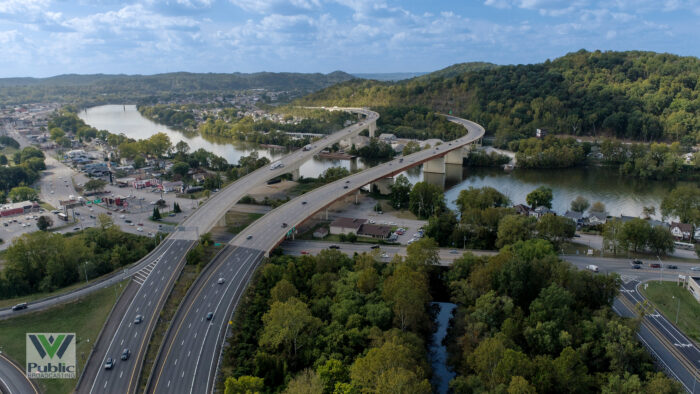
After two trials, seven years and thousands of pages of court documents, a lawsuit against Union Carbide may be over.
The Fourth U.S. Circuit Court of Appeals has upheld a decision by a lower court in Courtland Company v Union Carbide.
In a 14-page unpublished opinion, a three-judge panel affirmed the U.S. District Judge John T. Copenhaver Jr.’s decision to fine Union Carbide $200,000 for violating the Clean Water Act.
Courtland sought significantly higher penalties for Union Carbide’s contamination of groundwater and streams surrounding its property in South Charleston.
The appeals court found that Copenhaver had not erred in his decision, writing that the 100-year-old judge was “thorough, detailed, rational and patient.”
In addition to the civil penalty, Union Carbide is cleaning up the South Charleston site under state supervision and applied for a stormwater discharge permit it previously lacked.
Courtland originally brought its case to the U.S. District Court in the Southern District of West Virginia in 2018.
In response to Copenhaver’s ruling last year, Union Carbide, a subsidiary of Dow Chemical, said it was “confident the court correctly rejected the Courtland Company, Inc.’s demands for excessive penalties and excessive remedial efforts.”
Union Carbide then said it would continue to work with the West Virginia Department of Environmental Protection to remediate the site.
Courtland has until Oct. 20 to request a rehearing with the full Fourth Circuit.
The most recent ruling was delivered unanimously by a three-judge panel consisting of judges Paul Niemeyer, Steven Agee and Julius Richardson.
In oral arguments last month, the judges seemed skeptical of Courtland’s case and deferential to Copenhaver, who has served on the federal bench for half a century.
Copenhaver, who turned 100 last month, was appointed in 1975 by President Gerald Ford.
Add WVPB as a preferred source on Google to see more from our team

Two cases about whether the West Virginia Board of Education can mandate vaccines to students entering school without allowing for religious exemptions have been combined by the state Supreme Court of Appeals.
Continue Reading Take Me to More NewsThe suit, filed with the support of the American Civil Liberties Union of West Virginia, asks the court to declare the state’s school funding system unconstitutional and order the state to meet its duty to provide a thorough and efficient education to every child in West Virginia.
Continue Reading Take Me to More NewsIt’s time to get your group together and sign up for the Adopt-A-Highway Fall Statewide Cleanup.
Continue Reading Take Me to More NewsAs one of the hardest hit states in the country's opioid crisis, communities across West Virginia have started spending their portion of the roughly $1 billion in settlements from pharmaceutical companies and distributors. Schuyler Mitchell, assistant news director at nonprofit newsroom Mother Jones, reported last month on the use of the funds to purchase automated license plate readers, or ALPRs, from companies like Flock. She spoke to Chris Schulz about her findings.
Continue Reading Take Me to More News