


Aluminum Plates For Deep Space Win W.Va. 'Coolest' Contest
Aluminum plates that helped keep astronauts on the Artemis II rocket safe won the first ever Coolest Thing Made In West Virginia competition.
Continue Reading Take Me to More NewsAlert (09/29/2026): Our Parkersburg TV transmitter is still undergoing maintenance and remains temporarily inoperative. We apologize for the inconvenience.
All our programming is available via our TV livestreams on our website and WVPB Passport. Thank you for your patience!




To Educate, Inform, and Inspire by Telling West Virginia's Story
Mountain Readers Week will be held Oct. 5-9, 2026! Celebrate and foster a love of reading in children across West Virginia.
Nominate an exceptional West Virginia K-12 teacher today!

On Demand

On Demand
Stream original productions from WVPB

Watch locally produced documentaries & more.

On Demand

On Demand






West Virginia Morning

Inside Appalachia

West Virginia Week

Mountain Stage

Us & Them

The Legislature Today

The Legislature This Week

Send us your comments and questions.

Stream our board meetings.

Check out the latest WVPB news.

Sign up for our newsletter and get weekly updates.

Meet the WVPB staff.

WV Educational Broadcasting Commission, the WVPB Foundation, and the Friends of WVPB.

Come work with us!

Read our annual report and learn how we educate, inform and inspire with your support.

Sponsor impactful and engaging media and entertainment.

Use your IRA to make a gift to WVPB.

Become a member with your gift of $1,000 or more.

Make WVPB part of your legacy.

Manage your membership account.

Learn how you can Protect and Sustain West Virginia Public Broadcasting.
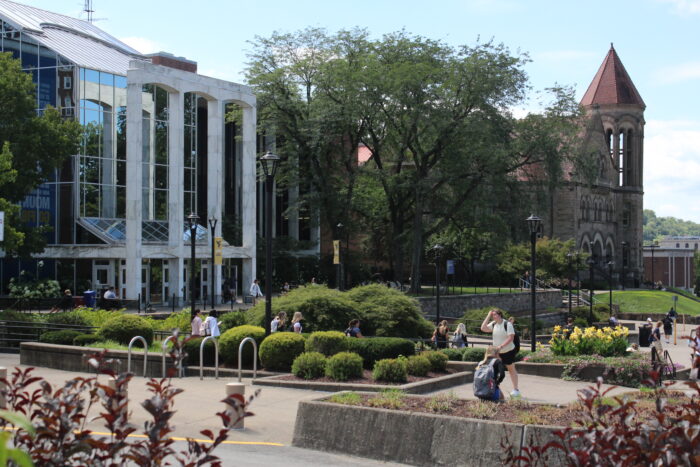
A bill being considered by the House of Delegates would end state funding for degrees with low-earning potential for graduates.
Under a provision of the One Big Beautiful Bill Act, colleges will lose access to federal student loans if graduates do not earn more than people with only a high school diploma.
House Bill 4587 aims to bring West Virginia’s state funding of post-secondary education in line with those new federal standards.
The bill’s sponsor Del. Adam Burkhammer, R-Lewis, told the House Education Committee Monday that tax dollars should be spent to set up the next generation and the state’s workforce.
“I think this is another prudent step in ensuring that when we’re making those investments as a government, that it has return on investment for those students.
Matt Turner, vice chancellor of the West Virginia Higher Education Policy Commission, told the committee that the state’s existing higher education outcomes-based funding model is already designed to reward institutions for placing graduates in high demand fields in West Virginia.
Several delegates in the committee questioned the bill’s intention for rewarding earnings over the state’s needs. Delegates like Rolland Jennings, R-Preston, questioned how the graduates’ earnings were calculated.
“I don’t know where you come up with this salary at $22,000. If they’re a teacher, they would start at $41,000,” he said.
Jennings also questioned why a history degree from Fairmont State University would be considered low-earning when the same degree from other state universities was not. That was far from the only question that seemed to perplex several committee members, including how graduate degrees would be considered for the state’s calculus.
The committee will need to take up the bill a second day before it advances to the full House of Delegates.
Add WVPB as a preferred source on Google to see more from our team

Direct-to-consumer tests like full-body scans are marketed as a way to catch diseases early and establish a baseline. But there are financial, physical and psychological risks to all medical tests — and in some cases, not getting a test could be better for your health. From the Appalachia + Mid-South Newsroom, HealthQ hosts Cara Anthony and Blake Farmer speak with UCSF Cardiologist Dr. Rita Redberg.
Continue Reading Take Me to More News"Mountain Moves” is a new educational board game designed by the West Virginia Department of Tourism and West Virginia Department of Education to engage eighth-grade students in West Virginia history, tourism and career opportunities.
Continue Reading Take Me to More NewsMany of the devices we use in our daily lives run on rechargeable lithium-ion batteries. Be aware that damaged or incorrectly charged batteries can overheat, start a fire, or even explode.
Continue Reading Take Me to More NewsThere are several deadlines to consider before Election Day next month.
Continue Reading Take Me to More News