Activists who are concerned about the risks coal mining poses to endangered species in Appalachia notched a courtroom victory last week.
The U.S. District Court for the District of Columbia determined Friday that the federal government’s attempt to streamline how coal mines comply with the Endangered Species Act is unlawful.
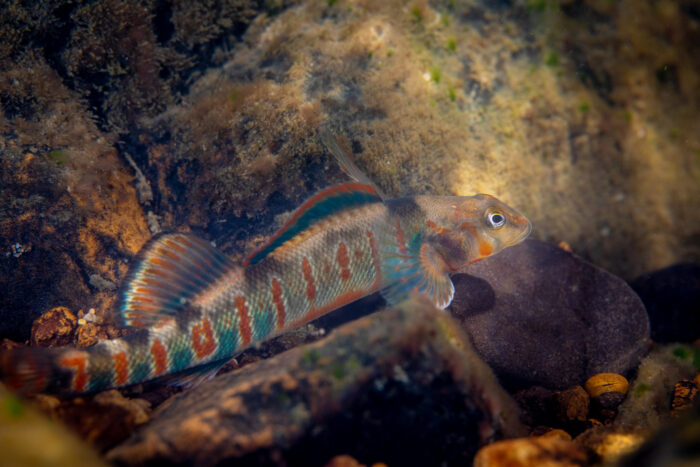
In their suit, environmental nonprofits The Center for Biological Diversity and Appalachian Voices argued that the U.S. Office Of Surface Mining Reclamation And Enforcement and the U.S. Fish and Wildlife Service failed to implement required protections for imperiled species like the endangered Guyandotte River crayfish and candy darter.
“This is an incredibly important victory for the streams and rivers of Appalachia and the people and wildlife who rely on them,” Jared Margolis, a senior attorney at the Center for Biological Diversity said in a press release. “For too long, regulators have allowed coal mining to devastate wildlife. This decision will require coal mines to fully account for their threats and harms and do more to ensure that imperiled wildlife aren’t pushed to extinction for dirty fossil fuel profits.”
The case is about whether the Endangered Species Act permits those agencies to delegate certain authorities and responsibilities to state regulators in the field of coal mining. Specifically, the suit opposes a written Biological Opinion by the U.S. Fish and Wildlife Service finding that the mining regulatory program administered by the Office of Surface Mining Reclamation and Enforcement is unlikely to jeopardize the continued existence of threatened species.
“The Endangered Species Act only works if federal regulators properly enforce it,” Willie Dodson, coal impacts program manager for Appalachian Voices said in the same press release. “The judge made the right call. The 2020 biological opinion set up a ludicrous and extra-legal scheme enabling coal companies to evade the law and engage in wildly destructive surface mining in watersheds where species like the Guyandotte River crayfish and the candy darter are just barely hanging on. These species are bellwethers for all of us. They need clean water. We need clean water.”
The document issued by Judge Sparkle Sooknanan is a memorandum opinion, briefly reports the court’s conclusion but usually cannot be cited as precedent. A formal written opinion is expected later.
Add WVPB as a preferred source on Google to see more from our team