Lawmakers learned about a broad range of issues facing education in West Virginia Sunday afternoon.
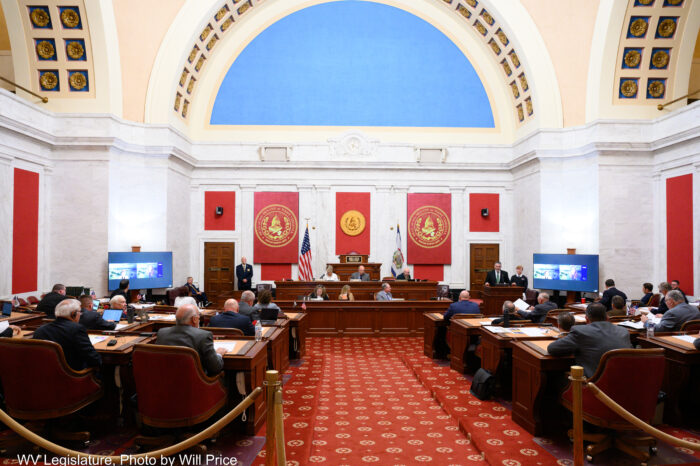
State legislators kicked off October interim meetings Sunday with several hours of meetings, ranging in topics from hiring retired teachers to fill critical needs and shortages, to an academic partnership with Ireland.
State deputy Superintendent Sonya White told the Legislative Oversight Commission on Education Accountability that during the 2024-2025 school year, the state Board of Education approved 167 retirees to work critical need areas statewide without losing retirement benefits.
“That’s 67 fewer retired teachers than last year,” White said. “However, there were five more retired bus operators than last year.”
White clarified that those 167 retired teachers covered 276 content areas because some teachers were approved to teach multiple subjects.
“Special education continues to be the most critically needed content area for certified teachers, followed by pre-K/elementary,” she said. “The special education category increased by one while the number of critical needs necessary for pre K/elementary decreased by 21. All other categories showed only a slight increase or decrease from [2023-2024].”
White said more data, notably fall enrollment data, is expected in the coming weeks that will better contextualize the critical needs and shortages of the state.
Joint Ed
Later in the afternoon, the Joint Standing Committee on Education learned more about the state’s WV Ireland Transatlantic Partnership, linking West Virginia University and Marshall University to the Dundalk Institute of Technology.
Dr. Brian Hoey, dean of the Honors College & Professor of Anthropology at Marshall University, emphasized the program’s goals: workforce readiness, global trade, and expanding access to underserved students.
“Why Ireland? On the surface, it’s an easy choice, our shared heritage and Appalachian-Irish cultural ties,” Hoey said. “But the deeper reason is this: in the past 50 years, Ireland has transformed itself from one of the poorest countries in Europe into a global hub of technology, invention and entrepreneurship. All while preserving its cultural heritage. This combination of innovation plus heritage is exactly why we want West Virginia students to experience how a place that is rooted in such tradition can also embrace change and thrive globally.”
The committee also heard from Heather Tharp, career development consultant for the Southern Educational Services Cooperative’s (SESC) Adult Education Program.
She told lawmakers about the life-changing effects of the program, which has been federally funded for 14 years. But adult education programs were zeroed out in President Trump’s proposal for fiscal year 2026.
“It’s been great up to this point, she said. “We are struggling this year, too. We’re advocating for our funding to continue due to the different types of administration issues we’re having.”
Tharp said West Virginia adult education served over 10,000 individuals last year and has served even more this year.
House Public Education
Sunday evening the House Public Education Subcommittee reviewed the implementation of School Day Wraparound Services.
According to the West Virginia Department of Human Services, wraparound service is a comprehensive, holistic, youth- and family-driven way of responding when children experience serious mental health or behavioral challenges.
White told the subcommittee the Department of Education reached out to the Department of Human Services to determine which court-ordered wraparound services could be provided during the school days and soon discovered wrap around services could be implemented in the school for all children.
“We thought, why just work with the court ordered ones? Why not all of the ones? Because many of the wraparound services help with student behavior. We wanted to make sure that if we’re going to do this, let’s do it for as much as we can, to help as many kids as we can.”
Interim meetings are scheduled to continue through Tuesday afternoon.