Alert (March 11, 2026): Our TV translator in Flatwoods is experiencing technical issues. Our engineers are troubleshooting the problem. Thank you for your patience.
The hillbilly stereotype is frequently used to shame mountain people, but there are gentler versions, like Snuffy Smith, the long-running comic strip character. Snuffy Smith originally started out as a supporting character in his comic strip, which first launched in 1919 when Billy DeBeck created Barney Google. Artist Fred Lasswell was brought in during the ‘30s to create Snuffy Smith and his friends. And now the strip is written and drawn by John Rose, who lives in Virginia’s Shenandoah Valley.
Raising W.Va. Labor Force Participation To National Average Would Means Thousands More Workers
Listen
Share this Article
West Virginia’s unemployment numbers are at record low levels — currently it stands at 3.7 percent. But a nagging problem remains the low labor force participation numbers — that is the number of people who are eligible to work, but aren’t working or not even trying to find a job. Our labor force participation is among the lowest in the country.
Eric Douglas spoke with WVU economist Heather Stephens about the state’s labor force, and what just raising our labor force to the national average would mean for the state.
This interview has been lightly edited for clarity.
Douglas: Below about 4 percent unemployment is generally considered full employment, right?
Courtesy photo
/
Courtesy Photo
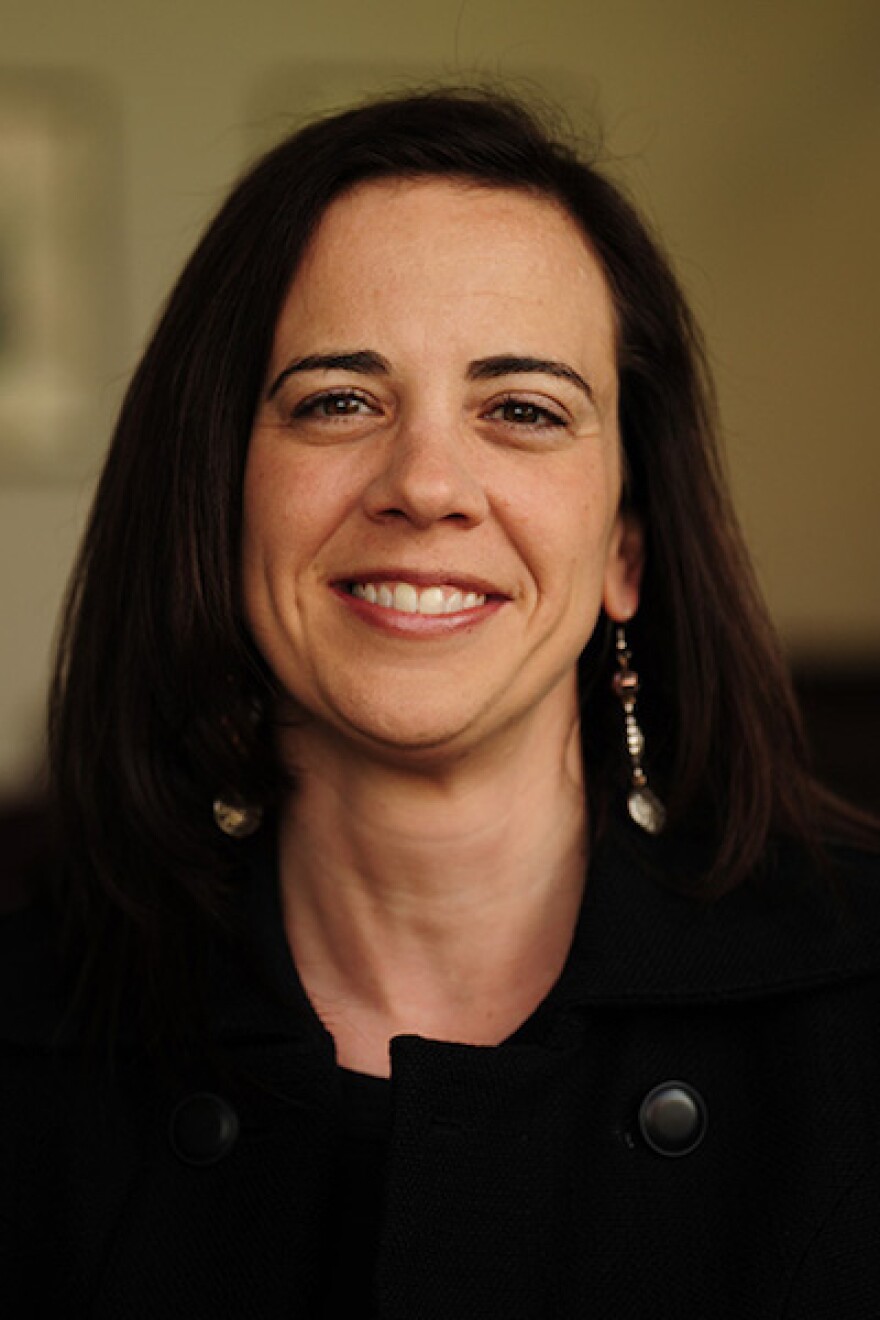
WVU economist Heather Stephens.
Stephens: People don’t know the exact number, but you’re right, once you get into this kind of range, it’s statistically close to full employment. That means that most people who have decided they want to work are able to find a job. It doesn’t say anything about the quality of the jobs. So there could be still people in the state that are underemployed, meaning that they’re working, but they’re not working full time or are not making enough money to offset the rising inflation that’s happening.
Douglas: We’re at 55 percent labor force participation and the country’s at 62 percent. So there’s theoretically 7 percent of the state population that could be working.
Stephens: The whole idea of the civilian population that is used to calculate the labor force participation rate is that technically even more of that population could be eligible to work, but there’s always going to be reasons people aren’t in the labor force. This has been an ongoing challenge for West Virginia. We’ve had historically these lower levels of labor force participation that can’t really be explained by the demographics of our population. It’s a big challenge to deal with. I agree, perhaps that needs to be the focus, especially if there are these new employment opportunities. It’s also possible that relatively high paying new jobs would be the stimulus that would bring people who haven’t been in the labor force back in. In economics, we talk about this reservation wage or reservation opportunity, which it’s different for every person, but below which people really don’t want to work. It’s not worth my time, or it could be the cost of childcare, the cost of commuting, there’s all kinds of reasons, right? So the right opportunities might be enough to bring people back into the labor force.
Douglas: Is there a way to quantify that number of people just to get labor force participation in the state up to the national average.
Stephens: Right now, the labor force of the state is at about 789,900. So if we were to go to 61.9 percent of our population, we would go up about 888,000. That would be an increase of almost 100,000 people.
Douglas: If we were at national levels of labor force participation, there’d be 100,000 more people in the labor force.
Stephens: If we use that to apply our unemployment rate, 94,000 more people would actually be working, if we assume that once those people entered the labor force, that only 3 to 4 percent would be unemployed. Even if unemployment was a lot higher, you’d still be talking about a significant number of people working or eligible to work in the state.
Douglas: That’s pretty incredible numbers actually, and we’re not discussing pie in the sky dream labor force participation, you’re just talking the national average.
Stephens: That’s a national average. Yeah, there are places that are much higher. Honestly, even just like a couple percent increase, if you only had like 1 or 2 percent, you’d still get thousands of new people working in West Virginia.
West Virginia’s labor force has lagged behind the national average for at least 46 years, according to statistics from the Bureau of Labor Statistics.
Add WVPB as a preferred source on Google to see more from our team
Fluorspar is a little-known mineral used to make everything from steel, aluminum and gasoline to uranium fuel and batteries. For the Appalachia Mid-South Newsroom, WKMS’ Lily Burris reports the largest known deposit of the critical mineral in the U.S. is in western Kentucky – and its applications in artificial intelligence (AI) could reawaken the region’s mining industry.
The economy is everything we buy or sell and the services we use. The show "Planet Money" from NPR dives into those topics and attempts to make sense of it all. And now, the show has published a book called "Planet Money: A Guide to the Economic Forces That Shape Your Life." We speak with the book's author and one of the show's hosts to break it down and learn more about what readers and listeners can gain.
The economy is everything we buy or sell and services we use. It can be a broad category and most of us struggle to understand what it all means. The show "Planet Money" from NPR dives into those topics and attempts to make sense of it. And now, the show has published a book called Planet Money: A Guide to the Economic Forces That Shape Your Life. We speak with the author and one of the program's hosts.
On this West Virginia Week, Gov. Patrick Morrisey vetoed 12 bills that made it through the legislative process. We also hear the latest in the battle over which vaccines are required for school attendance in the state. And, a growing interest in data centers has the attention of people around West Virginia – both for and against.
































![[safety body construction] Working at height equipment. Fall arr](https://npr.brightspotcdn.com/dims4/default/471c644/2147483647/strip/true/crop/5760x3840+0+0/resize/1760x1174!/quality/90/?url=http%3A%2F%2Fnpr-brightspot.s3.amazonaws.com%2F4f%2F37%2Faa5b86fa49d5abe6c0b7ec0d9755%2Flabor-workforce.jpeg)