

Aluminum Plates For Deep Space Win W.Va. 'Coolest' Contest
Aluminum plates that helped keep astronauts on the Artemis II rocket safe won the first ever Coolest Thing Made In West Virginia competition.
Continue Reading Take Me to More NewsAlert (09/29/2026): Our Parkersburg TV transmitter is still undergoing maintenance and remains temporarily inoperative. We apologize for the inconvenience.
All our programming is available via our TV livestreams on our website and WVPB Passport. Thank you for your patience!




To Educate, Inform, and Inspire by Telling West Virginia's Story
Mountain Readers Week will be held Oct. 5-9, 2026! Celebrate and foster a love of reading in children across West Virginia.
Nominate an exceptional West Virginia K-12 teacher today!

On Demand

On Demand

Stream original productions from WVPB

Watch locally produced documentaries & more.

On Demand

On Demand

West Virginia Morning
Inside Appalachia
West Virginia Week
Mountain Stage
Us & Them
The Legislature Today
The Legislature This Week

Send us your comments and questions.

Stream our board meetings.

Check out the latest WVPB news.

Sign up for our newsletter and get weekly updates.

Meet the WVPB staff.

WV Educational Broadcasting Commission, the WVPB Foundation, and the Friends of WVPB.

Come work with us!

Read our annual report and learn how we educate, inform and inspire with your support.

Sponsor impactful and engaging media and entertainment.

Use your IRA to make a gift to WVPB.

Become a member with your gift of $1,000 or more.

Make WVPB part of your legacy.

Manage your membership account.

Learn how you can Protect and Sustain West Virginia Public Broadcasting.
Updated on Wednesday, October 23 at 10:10 a.m.
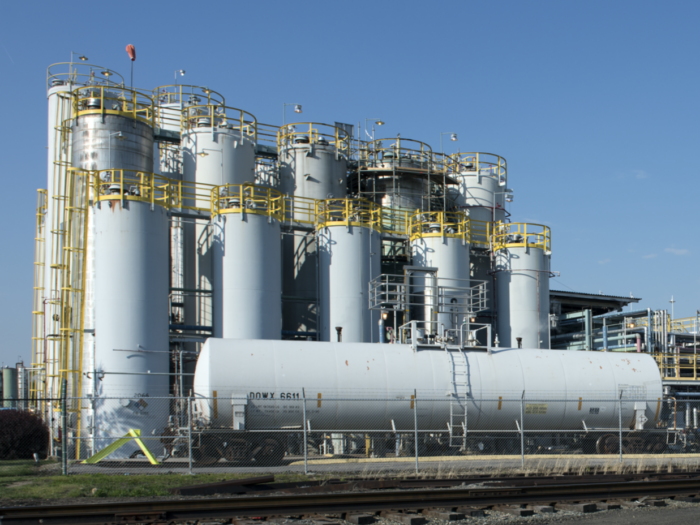
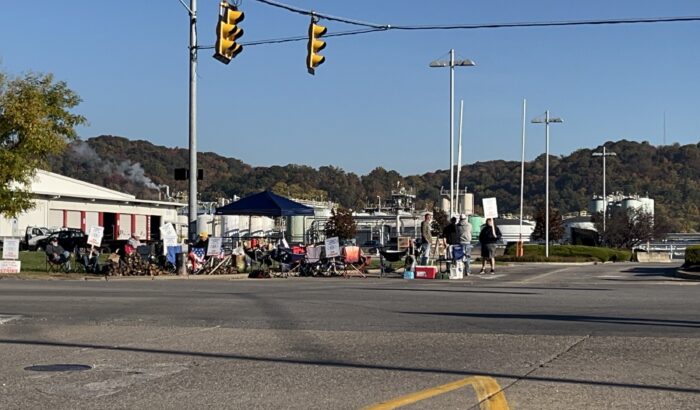
Nearly 80 employees at a Kanawha County chemical plant have gone on strike over pay and benefits concerns.
Workers at the South Charleston Manufacturing Site Plant voted to strike Monday, according to a press release from the International Association of Machinists and Aerospace Workers (IAM). The South Charleston-based IAM Local 598 chapter represents workers on site.
The chemical plant is operated by Union Carbide Corporation, a subsidiary of the Dow Chemical Company. Union Carbide was obtained by the multinational corporation in 2001, according to its website.
The union members’ previous contracts expired Sunday. Then, 77 IAM members began striking “to secure fair wages and protect their right to holidays and vacations as part of their benefits package,” according to a Monday statement from IAM District 54 President and Directing Business Representative T. Dean Wright Jr.
Wright’s district represents members in Ohio, West Virginia and northeastern Indiana. IAM represents roughly 600,000 members across different industries nationally, according to the union’s website.
“Our members working at Dow Chemical perform dangerous jobs that demand appropriate compensation and respect for their labor,” Wright continued in a Monday IAM press release. “They are simply asking for what is fair — recognition of the value they bring to the company.”
A media representative from Union Carbide wrote in an email to West Virginia Public Broadcasting that the company is actively meeting with union representatives “to conduct a productive and fair negotiation.”
“We are committed to continuing these discussions in good faith and are hopeful that we will reach a resolution soon,” they wrote. “Union Carbide Corporation remains committed to offering a competitive total rewards package, which includes fair wages and adequate holiday and vacation days. Our goal in these negotiations has always been to reach a mutually beneficial agreement that supports both our employees’ well-being and the company’s operational needs.”
Meanwhile, the representative said Union Carbide is “confident” it will be able to continue safely operating the site during the strike.
Representatives from Dow Chemical did not respond to phone call or email requests for comment from West Virginia Public Broadcasting.
IAM and its local South Charleston chapter also did not respond to email or phone call requests for further comment. Strikers at the South Charleston facility declined to provide a comment to West Virginia Public Broadcasting Tuesday.
Emily Rice contributed reporting to this story.
**Editor’s Note: This story was updated to include a written statement from Union Carbide Corporation, which was emailed to West Virginia Public Broadcasting after publication on Tuesday, Oct. 22.
Add WVPB as a preferred source on Google to see more from our team

Local leaders continue to promote the state's aviation industry as the country continues to face a shortage of specialized workers including mechanics, technicians and air traffic controllers.
Continue Reading Take Me to More NewsMany farmers in our region raise sheep for meat, but not so much for wool. There’s not a great market for it with textile companies overseas, but researchers at Virginia Tech have teamed up with farmers, to figure out how to use wool to insulate houses, potentially creating a new market.
Continue Reading Take Me to More NewsToyota West Virginia broke ground on its Buffalo plant 30 years ago and has expanded 11 times since then.
Continue Reading Take Me to More NewsThe votes are in – more than 3,200 of them – and the winner of the inaugural Coolest Thing Made In West Virginia competition will be announced next week. It’s down to the final five. Assistant News Director Maria Young caught up with Bill Bissett, president of the West Virginia Manufacturers Association, which is hosting the contest, to find out more about the finalists.
Continue Reading Take Me to More News