


Aluminum Plates For Deep Space Win W.Va. 'Coolest' Contest
Aluminum plates that helped keep astronauts on the Artemis II rocket safe won the first ever Coolest Thing Made In West Virginia competition.
Continue Reading Take Me to More NewsAlert (09/29/2026): Our Parkersburg TV transmitter is still undergoing maintenance and remains temporarily inoperative. We apologize for the inconvenience.
All our programming is available via our TV livestreams on our website and WVPB Passport. Thank you for your patience!




To Educate, Inform, and Inspire by Telling West Virginia's Story
Mountain Readers Week will be held Oct. 5-9, 2026! Celebrate and foster a love of reading in children across West Virginia.
Nominate an exceptional West Virginia K-12 teacher today!

On Demand

On Demand
Stream original productions from WVPB

Watch locally produced documentaries & more.

On Demand

On Demand






West Virginia Morning

Inside Appalachia

West Virginia Week

Mountain Stage

Us & Them

The Legislature Today

The Legislature This Week

Send us your comments and questions.

Stream our board meetings.

Check out the latest WVPB news.

Sign up for our newsletter and get weekly updates.

Meet the WVPB staff.

WV Educational Broadcasting Commission, the WVPB Foundation, and the Friends of WVPB.

Come work with us!

Read our annual report and learn how we educate, inform and inspire with your support.

Sponsor impactful and engaging media and entertainment.

Use your IRA to make a gift to WVPB.

Become a member with your gift of $1,000 or more.

Make WVPB part of your legacy.

Manage your membership account.

Learn how you can Protect and Sustain West Virginia Public Broadcasting.
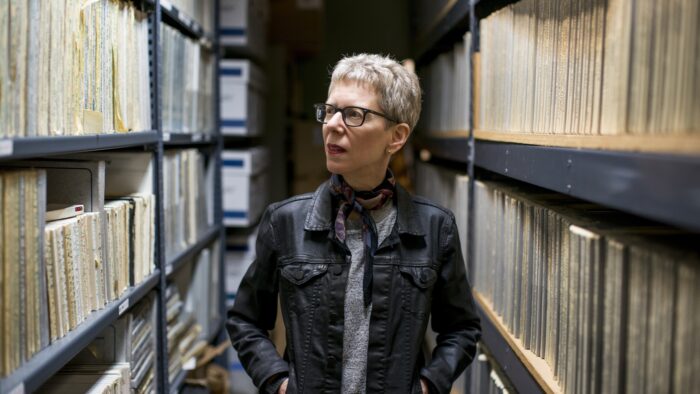
Regular listeners to our afternoon programming will immediately recognize the voice of Terry Gross. She has been the host of Fresh Air for 50 years, well before it became a national staple.
News Director Eric Douglas spoke with Gross recently about her career, her style and the uniqueness of public radio.
This interview has been lightly edited for clarity.
Douglas: What I’m really intrigued about, first off, is your ability to interview. As somebody who does this kind of thing for a living myself, I’m really curious about your technique.
Gross: What is my technique? That’s a good question. I do as much research as I can, whether it’s like watching, listening, reading. No matter what the interview is, I do a lot of reading, as much as I can, and I take notes on what I’m watching, listening and reading, and those notes become my memory bank. And when it’s time to write the questions, I read through all my notes and then try to organize them in my brain and come up with like, a narrative way of asking the questions, so that the questions follow in some kind of narrative form. So instead of it sounding like a questionnaire, it sounds like a larger story where each answer builds on what was said before.
Douglas: So you do actually write out questions? I would almost think at this point you would kind of freelance it a little bit.
Gross: Well, I can. I’m welcome to, but once I have a structure on paper, I’m free to leave that. I’m free to totally throw it aside. Or I’m free to take detours, but then have a structure to come back to. It’s really helpful for me to have a structure.
Douglas: I understand that completely.
Gross: And in terms of, if I write out my questions, I write out the gist of the question, because unless I’m quoting, I don’t want to, or unless it’s a really complicated fact, which is often the case like in nonfiction books and interviews with journalists, I’ll sometimes write out questions, so I have it reasonably clear in my mind what the essence of this question is, but usually I just write out the gist of the question.
Douglas: Bullet points, notes, that kind of thing?
Gross: Yeah, exactly. I don’t want it to sound like “now I will do my next question.”
Douglas: I was skimming through some things, and I stumbled upon this quote about you, “Terry Gross is almost certainly the best cultural interviewer in America, and one of the best all around interviewers, period.” How does that land with you? How do you feel about that?
Gross: Oh, very good. Did you expect me to say, “Oh, that’s horrible”?
Douglas: There’s a lot of people who have been in that space, a lot of people who conduct interviews for a living, and for you to be thought of as the best, certainly that’s got to feel pretty good.
Gross: It does, no it really does. Because when I started in public radio, I had no experience at all. I was a volunteer, and I sounded like it. I think listening back, it sounds very alarming. I’m really grateful that when I started in public radio in the mid 1970s, we had very few listeners, so I was actually able to learn on the air without anybody firing me. They realized that I could improve.
Douglas: We, West Virginia Public Broadcasting, use the Q&A format a lot of the time. I think it’s something unique to public media. It’s not something that you would hear in a lot of commercial TV radio, other than maybe the Sunday morning talk shows, and that’s politicians. But I think you and by extrapolation the rest of us, it gives us a chance to offer something that our listeners may not be able to hear anywhere else.
Gross: I don’t interview politicians, except for rare exceptions, because I think if you interview somebody in office, they typically have a way of embellishing their personal story and embellishing their accomplishments in office and denying criticism. I don’t know enough, since I’m not a political reporter, I don’t know enough to catch them in false statements or embellishments, because you really have to be following somebody closely. In order to do that, you have to be following the White House or state or local politics. So I stay away from that, because I think I’m not worthy of catching anything that should be caught, because politicians really need to be fact checked by somebody who knows their stuff.
Douglas: I understand that completely. I think what I was trying to get to, though, was that the Q&A format, the interview format, is something that’s fairly unique to public media. Whether it’s arts, culture, history, politicians, professors, that’s something that we do, that we can do, that gives us an opportunity to offer something that commercial media doesn’t have the time or the inclination to touch.
Gross: I think shows like Morning Edition, All Things Considered, regional news shows, you know, reporters like you, you don’t get a mix like that anywhere on the radio and even on podcasts, because it’s too expensive. NPR has reporters around the world, and then All Things Considered and Morning Edition also rely on regional reporters from local public radio stations to cover the issues from that region, because they’re the ones who really know the region. So you know, it’s a two way network. The stations receive shows from NPR, but they also contribute to those NPR shows.
Douglas: Why do you think public media is important to the country? What’s so important about public media?
Gross: I’ll stick to public radio, because that’s what I know best. Shows like All Things Considered and Morning Edition, which comes from NPR, they keep us informed with reporters around the world and, like I said, regional reporters from other public radio stations about what’s happening that day.
They also interview comics and musicians, actors and directors. So they’re both very rich shows that nothing else provides in the audio sphere. That is really important.
You have people covering the region, covering the arts of that region, local theater, music, so we in the audience rely on that, but then the people who are covered rely on it, too. There are so many musicians and authors and movies that are too idiosyncratic or too out of the mainstream to survive without outlets like public media. So in supporting their work and connecting them with audiences, when you support public radio, when you support stations like West Virginia Public Radio, you’re supporting those artists as well as supporting everyone who listens.
And I think that’s important, because some of the best artists, and by artists, I mean everybody in arts and pop culture, some of them end up being the real innovators that later become the foundation of the mainstream. You know, the Avant-garde often becomes the foundation of the mainstream, the people who seem unusual become the foundations of what later is the mainstream. So there’s so many functions public radio performs.
Douglas: Terry, thank you. It’s a pleasure talking to you.
Gross: Thank you, Eric, it was a pleasure to talk with you, and I hope your listeners support West Virginia Public Radio.
Add WVPB as a preferred source on Google to see more from our team

Aluminum plates that helped keep astronauts on the Artemis II rocket safe won the first ever Coolest Thing Made In West Virginia competition.
Continue Reading Take Me to More NewsFor LGBTQ youth in Appalachia, estrangement from their families of origin can be a common and heartbreaking experience. So, some LGBTQ people rely on “chosen family." In Roanoke, Virginia, the culture of ballroom offers the safety and stability of family, along with traditions that are handed down — traditions like vogueing. Mason Adams reported this Folkways story, in collaboration with Brad Kutner and Kelley Libby.
Continue Reading Take Me to More NewsMountain Stage is changing locations for its final two live events of 2026. The Sunday, Nov. 15 show will now take place at the Charleston Theater at the Convention Center, and the Sunday, Dec. 6 show will be held at the Capitol Theater in Downtown Charleston.
Continue Reading Take Me to More NewsDuring spooky season, popular attention turns toward ghosts and goblins – or if you live in Appalachia – cryptids. For the Appalachia + Mid-South Newsroom, Bill Lynch, producer of Inside Appalachia, brings us the story of the Flatwoods Monster.
Continue Reading Take Me to More News