Alert (09/29/2026): Our Parkersburg TV transmitter is still undergoing maintenance and remains temporarily inoperative. We apologize for the inconvenience.
All our programming is available via our TV livestreams on our website and WVPB Passport. Thank you for your patience!
Through early October, the Blowing Rock Art and History Museum in North Carolina is hosting an exhibit celebrating one of the region’s most notable fiber artists – Barbara Grennell. The exhibit does more than expose people to great art; it asks people, what makes art, art? Folkways Reporter Wendy Welch reports.
More than one million Americans have died from COVID-19, but those deaths aren’t evenly distributed across lines of race, age and class. Inequities that were already making life harder for some people played out during the pandemic, too.
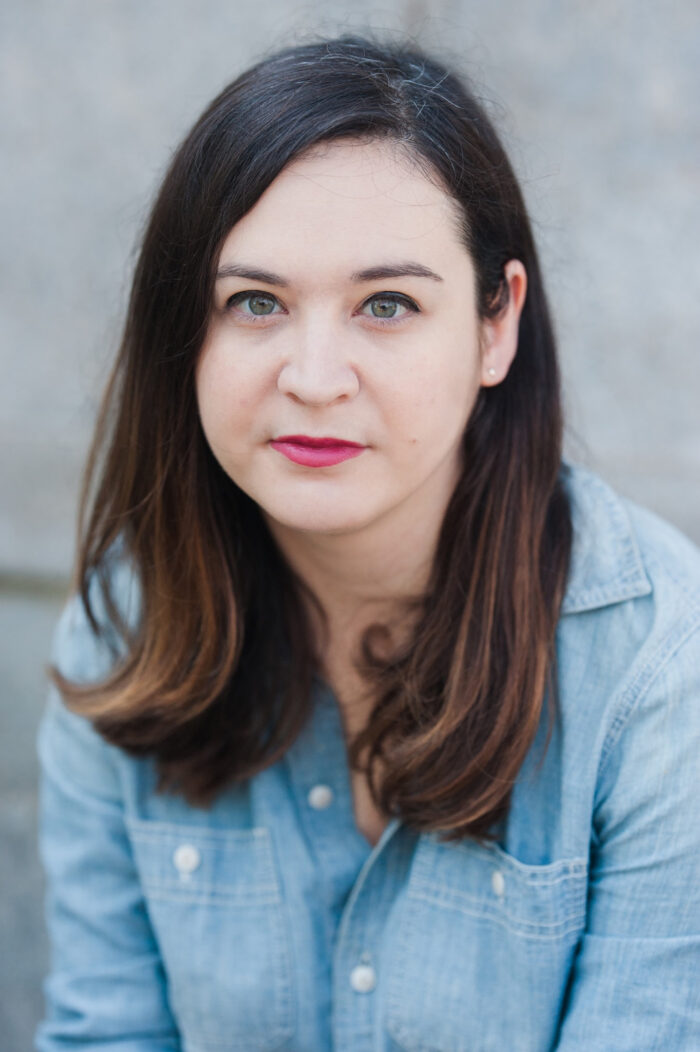
Sarah Jones is a senior writer at New York Magazine and author of Disposable: America’s Contempt for the Underclass.
Photo Credit: Anna Carson DeWitt
The transcript below has been lightly edited for clarity.
Adams: Disposable unpacks how systemic inequities in the U.S. played out during COVID-19, and you start the book with a couple of anecdotes, but pretty quickly pivot to your own family. Would you mind sharing a little bit about your pandemic experience?
Jones: In 2020, I was working on a lot of labor and workplace stories for New York Magazine, trying to get a handle on how COVID was affecting people who are working for Amazon, people who are working at grocery stores — people who were really on the front lines of the pandemic. Then, I was in the process of doing that when my grandfather, who lived in Damascus, Virginia, at the time, contracted COVID when he was in a rehab facility, and unfortunately ended up passing away from the virus.
It was the combination of those two events — COVID [and] talking to folks who were trying to protect themselves and their families while making ends meet during COVID, and then my grandfather dying from COVID in a way that made me wonder if it could have been prevented, right? If we could have afforded care for him at home, would he have been safer? And it just got me thinking about his own life, as he’s a working class person from Maine, who moved down to Washington County, Virginia, to be with us as he got older, and the circumstances of his life, and how that may have made him vulnerable to COVID infection in ways that were not identical, but overlapped a little bit with what I was hearing from other folks at the time.
That was really the impetus for writing the book in the first place: just thinking about a death like my grandfather’s as obviously a tragedy for my family, but it’s also political. I wanted to really dig into the vulnerabilities that I was seeing, and treating them not as naturally occurring phenomenon, but [as] the result of political choices that this country has been making for a very long time.
Adams: You’ve spent years writing about class disparities in America, for Scalawag, for the New Republic, and now New York Magazine. The pandemic seemed like a point where the rubber really hit the road on that, and you explore that in Disposable. When you got into reporting this book, what did you find about how the pandemic exposed class lines in the U.S.?
Jones: One thing that I really wanted to get across in the book is that the American workplace has often been dangerous over the years for me, particularly as someone who grew up in Southwest Virginia. That was something I was acutely aware of, not just from growing up there, but from reading about the history of organized labor in the region. If you do that, then you know workplace safety has life or death stakes attached to it, and organizing against those circumstances can have life or death stakes attached to it. So that was on my mind when COVID hit.
Then, when I started writing the book, I really wanted to situate the events of COVID in that longer history. Where I think the facts take us is [to] this conclusion that no one is responsible for COVID existing or happening. If it wasn’t COVID, I think it would have been a different virus. But what happened during COVID, the way we reacted to COVID, and what made us vulnerable as a society to certain events during COVID — those were all human choices, and that, to me, could have been prevented.
The cover of Sarah Jones’ new book Disposable: America’s Contempt for the Underclass.
Photo Credit: Sarah Jones/Simon & Schuster
Adams: You alluded to your background in southwestern Virginia. How did your childhood growing up in Appalachia shape your approach to reporting this book?
Jones: It had a big influence. I didn’t want the book to be a memoir, although my family’s experiences do appear in it. But growing up where I did, and specifically learning about the history of the region when I was a little bit older, when I was a young adult, was really important. Not just reading about labor, but the observations you have as a kid, right? “Okay, my family is struggling, and a lot of the families around us are struggling.” Then you get a little bit older, and you realize people who don’t live in this area have all kinds of ideas about people who do, and why so many of us might be poor [and] working class.
I wanted to sort of understand why that was a situation, and I wanted to understand what could be done about that situation. I was going through that when I was in my early to mid 20s. I always had an interest in journalism, but it really shaped my interest in journalism because I was curious about it. I’m not an academic, but this seemed like a way to investigate the problem when I thought about the stories I wanted to tell and what interested me, and what my approach to covering politics was perhaps going to be.
I didn’t really want to be a White House correspondent. I wanted to talk to regular people, so it had a huge influence on me. Then, going into COVID and writing this book, it was very much present for me, and something I thought about a lot.
Adams:Disposable is a pretty damning indictment of the society in which we live. It comprehensively explores inequities in a variety of realms that touch every aspect of our lives, from health care to elder care to differences in race. There’s a chapter on how the political class has exploited and made this even worse. A lot of this seems really hard-baked into our society and culture and economy. Do you have ideas for how we can overcome some of these issues?
Jones: That’s something that was certainly on my mind, and particularly in the concluding chapter of the book. I didn’t want to leave people on doom and gloom. I wanted to think about what could be different, because for me, pointing out what’s wrong is half the story. It’s important to identify these cracks in our society and how they got there, and maybe the forces and the people that are responsible for putting them there — but we don’t just do it to sort of point fingers, right? If you’re doing that, the hope is that we could do something about it.
So when I was writing the book, and in my own life and my work as a reporter, I knew very well that the people I write about as being “disposable” are not passive people at all. They’ve always organized. They’ve always fought. Whether it was labor organizing, whether it was a civil rights movement, or feminism or the welfare rights movement, or the disability rights movement.
People have always really resented the status of being “disposable.” They’re conscious of it, and imagine and fight for a better life. Although I’m not an organizer myself, I’m a journalist, and I want to be humble about my limitations there. I wanted to include those stories so we can look at what people have done in the past, and think about ways that can inform what we’re doing now.
When I was writing the concluding chapter of the book, I write about this notion of solidarity, which I don’t think is a panacea, necessarily, but is really important — fighting back against what I see as a status quo that encourages a certain level of acceptance of preventable and unnecessary death in this country. What does it mean to feel solidarity with people? And how do you act on that? I think it can be really subversive in a meaningful way. That’s become more important now when you look at the political climate in this country at the moment.
Adams: Speaking of the political climate in this country at the moment, COVID is still killing people, but a lot of people are eager to put the pandemic in the rear view, and some people deny it ever happened. When you look at the country now in 2025, what’s changed since you were reporting your book?
Jones: This amnesia that I write about in the book is something that I still wrestle with, and something I know my sources still wrestle with when they think about the people they’ve lost and how they lost them, and why they lost them, and the reactions they’ve encountered by relatives friends, who might say, “Well, your your mom was overweight, and that’s why she died from COVID, and it has nothing to do with anything else, whether somebody was masking or unvaccinated. Forget that.” A refusal to reckon with not only the reasons for the mass death, but also the consequences. I keep asking myself why that is.
I wrote the book before Donald Trump was reelected. Now, looking back with the benefit of hindsight, it does seem to me that we are incentivized to move on and not wrestle with it or reckon with it because, as I write in the book, reckoning with it is not just this active memory or thinking about the deceased, it’s taking active steps to remaking the political climate in this country. A society where people aren’t disposable at all might be a more robust and more resilient society when [a] natural disaster does happen. We’re just not there.
As a political reporter, I’ve spent a lot of time thinking about why that is, but also the roots of Donald Trump’s appeal and how those two trends might overlap with each other. I think it’s pretty clear from the polling and from what’s been reported that Trump was able to promise people, in a persuasive way, that he was going to bring jobs, he was going to bring prosperity, he was going to bring security. People believed that because many of them don’t have it. We saw him make inroads with new groups of people, new demographics, based on that appeal. That’s something that is not solely due to the pandemic or what happened during the pandemic, but I think you’re hard-pressed to argue that it had no influence at all.
More than $4 million in funding through the Rural Health Transformation Program will be used to improve healthcare access in rural communities, Gov. Patrick Morrisey said Wednesday.
Across the Appalachian Mid-South, local law enforcement is doing more to support U.S. Immigration and Customs Enforcement (ICE) in detaining people. Morgan Watkins with the Kentucky Center for Investigative Reporting analyzed the latest data on ICE arrests in Kentucky, Tennessee and West Virginia. Louisville Public Media's Bill Burton spoke with her about what she learned.
Through early October, the Blowing Rock Art and History Museum in North Carolina is hosting an exhibit celebrating one of the region’s most notable fiber artists – Barbara Grennell. The exhibit does more than expose people to great art; it asks people, what makes art, art? Folkways Reporter Wendy Welch reports.