


High Profile W.Va. Movies Highlight Growing Film Industry
Two high profile films made in West Virginia are calling attention to the state's growing film making industry.
Continue Reading Take Me to More NewsAlert (March 11, 2026): Our TV translator in Flatwoods is experiencing technical issues. Our engineers are troubleshooting the problem and expect it to be down for a couple days.
Thank you for your patience.




The 2026 WVPB PBS KIDS Writers Contest is underway! Submissions are due by March 31, 2026.
Nominate an exceptional West Virginia teacher today!

On Demand

On Demand

Watch locally produced documentaries & more.

On Demand

On Demand






West Virginia Morning

Inside Appalachia

West Virginia Week

Mountain Stage

Us & Them

The Legislature Today

The Legislature This Week

Send us your comments and questions.

Stream our board meetings.

Check out the latest WVPB news.

Sign up for our newsletter and get weekly updates.

Meet the WVPB staff.

WV Educational Broadcasting Commission, the WVPB Foundation, and the Friends of WVPB.

Come work with us!

Sponsor impactful and engaging media and entertainment.

Use your IRA to make a gift to WVPB.

Become a member with your gift of $1,000 or more.

Make WVPB part of your legacy.

Manage your membership account.

Learn how you can Protect and Sustain West Virginia Public Broadcasting.
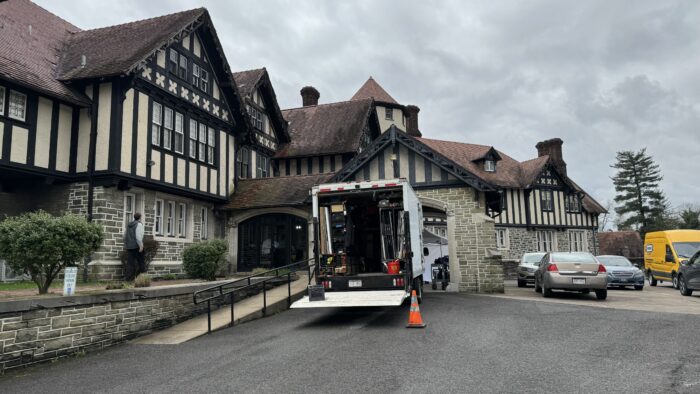
Two films that made the Netflix Top Ten list this month were shot in West Virginia and produced by the same West Virginia film company.
As it turns out, the film industry in the state has been quietly growing in recent years, thanks in part to financial incentives the state put into play just a few years ago.
Robert Tinnell spent years in California getting his film making career off the ground. But eventually he had a longing to return to his home state, West Virginia, where he said he had the kind of childhood Norman Rockwell might have painted.
“When we knew we were having our first child, I just knew that I needed the kind of a support system that you get from family. And I felt like my kids had a better shot at a quality of life here,” Tinnell said.
Today he lives on what he calls a wannabe farm in Preston County, and leads, with his brother Jeff, the Allegheny Image Factory production firm. The two most recent films they produced are “The Bad Guardian” and “Gaslit By My Husband: The Morgan Metzer Story,” two Lifetime thrillers that peaked on Netflix this month.
What’s really thrilling, Tinnell said, is being able to showcase a hidden gem his industry is beginning to discover: West Virginia.
“What’s compelling to networks and studios and independents right now is that we have a film tax incentive. That is a win-win for everybody. I mean, this thing really works. It benefits the state and it benefits the producer,” Tinnell said. “I’m telling people you, you cannot imagine the level of support from state, county, local governments, from law enforcement, from institutions. It’s phenomenal.”
So phenomenal, that the West Virginia Film Office, with two part time staffers, brought in more than $26 million last year from the tax expenditures alone, plus millions more from films and commercials that were shot here.
“I call this the ‘Let’s Make a Deal’ era in filmmaking,” Dave Lavender, one of those two staffers, said. He’s employed by the state’s Division of Economic Development. The funding package is a big draw.
“At one time, all of the filmmaking was pretty much like strictly in Los Angeles and Hollywood, and then also in New York,” Lavender said.
But now? It’s a whole different story.
“Let’s be frank. If you don’t have a tax credit, nobody’s coming to film in your state, even if you have great locations. And on July 1, 2022 the state put into play what is one of the top 10 tax credits on the books in the United States,” he said.
Moviemakers get a 27% tax cut on any funds they spend in the state. Make that 31% if they hire ten or more West Virginians. The diversity of locations and settings is also huge.
“Especially, like, over in the Eeastern panhandle, where you can’t throw a stone and not hit a stone fence or a stone building that’s built in the 1800s,” Lavender said.
The film office database includes six ski resorts, the most runnable miles of white water in the nationnation, and 500 miles of mountain and biking trails. The same $9 billion tourism industry that attracts tourists also attracts filmmakers.
“We’re kind of a geographical chameleon, right? Are we north? Are we south? Are we Mid Atlantic? We’re kind of a little bit of everything. So we have a lot of looks. And that makes us able to be used as not only a movie set in West Virginia, but a movie that can be set in Ireland or anywhere else,” Lavender said.
The other draw, though, comes from simpler settings like small, quaint towns with quiet streets and neighborhoods that aren’t so easy to find.
And then there’s the darker side of available scenes here.
“We had Disney and 20th Century here last summer shooting a reboot of the pilot for the TV show “Prison Break,” and they’re going to be coming back to shoot some of that at the Moundsville prison. It’s not easy to find some place like the Moundsville prison. Also the Trans Allegheny Lunatic Asylum in Lewis County. And, you know, we can’t keep people out of there.” Lavender said.
For Robert Tinnell, it’s about showcasing his state – and changing the perceptions some people may have about West Virginia.
“I just love when people come here, like from Hollywood, New York or whatever, and it’s nothing like they thought it would be. And you know, when you have movie stars posting on social media about how great this place is and how warm and welcoming the people are, and how it’s way cooler than they thought it was going to be,” Tinnell said. “I really like that, because I deeply resent when people mischaracterize this place.”
As for what’s next for the Allegheny Image Factory, Tinnell is pretty tight lipped. Except to say he’s working on a sequel to another popular Netflix flick, “The Feast of Seven Fishes,” and hoping to work on the sequel to “October Sky.”
All of it, naturally, to be filmed in the place he calls home.
Add WVPB as a preferred source on Google to see more from our team

Two films that made the Netflix Top 10 list this month were shot in West Virginia and produced by the same West Virginia film company. As it turns out, the film industry here has been quietly growing in recent years, thanks in part to financial incentives. But the state is also home to some picture-perfect settings that aren’t easy for movie makers to find.
Continue Reading Take Me to More NewsTwo films shot and produced on location in West Virginia are at and near the top of this week's list of most popular films on the streaming service Netflix.
Continue Reading Take Me to More NewsEnrollment in West Virginia’s public schools continues to decline, while school requests for safety and security investments far outstrip spending.
Continue Reading Take Me to More NewsHalloween may be over, but mountain state spookiness continues on with a new film called “Self-Help.” Shot in locations near Huntington, the horror movie follows a college student who infiltrates a dangerous self-actualization community after her mother becomes entangled with its leader.
Continue Reading Take Me to More News