


Lease A Piece Of History In Thurmond
You can now submit a proposal to lease three historic structures in the historic town of Thurmond in the New River Gorge National Park and Preserve.
Continue Reading Take Me to More News



To Educate, Inform, and Inspire by Telling West Virginia's Story

Mountain Readers 2026 has concluded! Check out our classroom resources.

Nominate an exceptional West Virginia K-12 teacher today!

On Demand

On Demand

Stream original productions from WVPB

Watch locally produced documentaries & more.

On Demand

On Demand




West Virginia Morning

Inside Appalachia

West Virginia Week
Mountain Stage
Us & Them

The Legislature Today
The Legislature This Week

Send us your comments and questions.

Stream our board meetings.

Check out the latest WVPB news.

Sign up for our newsletter and get weekly updates.

Meet the WVPB staff.

WV Educational Broadcasting Commission, the WVPB Foundation, and the Friends of WVPB.

Come work with us!

Read our annual report and learn how we educate, inform and inspire with your support.

Sponsor impactful and engaging media and entertainment.

Use your IRA to make a gift to WVPB.

Become a member with your gift of $1,000 or more.

Make WVPB part of your legacy.

Manage your membership account.

Learn how you can Protect and Sustain West Virginia Public Broadcasting.
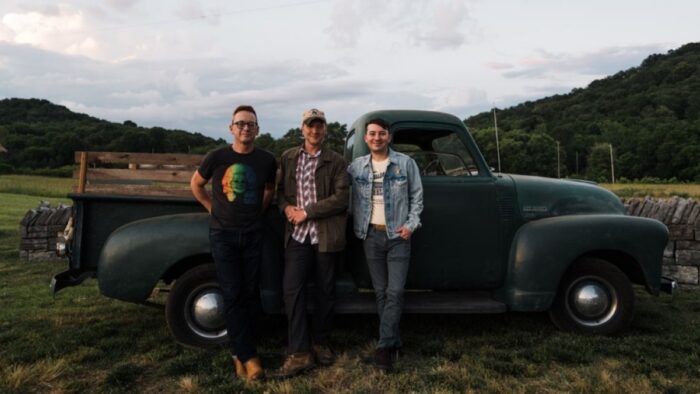
This conversation originally aired in the Oct. 25, 2026, episode of Inside Appalachia.
Silas House is a prolific writer who is a vital voice in Appalachia.
The Kentucky native has written more than 15 books, served as the state’s poet laureate, done music journalism and even wrote and directed a music video for Tyler Childers.
House’s new book is The Tulip Poplars. It’s a sweeping novel that chronicles the lives of four people as they navigate friendship and forbidden love in 20th century Kentucky.
Inside Appalachia Host Mason Adams recently spoke with House.

The transcript below has been lightly edited for clarity.
Adams: I am sorry to hear about your mother’s passing. I wonder, was she an influence on your writing?
House: She was an influence in everything, you know. She was a big influence on me as a storyteller, as somebody who’s an example of social justice and action. She shaped everything for me. So, it’s a tremendous loss, and I will be writing about that for the rest of my life, probably.
Adams: I did want to ask about The Tulip Poplars. Did you intentionally set out to write the “Great Appalachian Novel” with this book?
House: Well, I didn’t have that in mind as much, as I just wanted a generation-spanning, sweeping family saga that covers a lot of ground. I looked at a lot of epic storytelling, things like Dr. Zhivago, for instance, or David Lean films.
I just wanted it to have that big scope. I always wanted the reader to be aware of a big canvas. There’s lots of big vistas in the book, lots of train travel. I really wanted to have that feeling of covering the 20th century. As the book goes on, it does reveal quite a bit of Appalachian history, but I’m not doing that as much as having an agenda as just allowing the world to play out behind my characters. Some big things do come up in the novel, like for instance the Mine Wars, and the way that clear-cutting affected the region, and things like that.
Adams: The Tulip Poplars is so rich with the sense of place. Whether it’s small-town Kentucky or the speakeasies of New York City in the 1920s, I certainly felt swept away. How did you come on this idea, to take us as readers to so many different places?
House: One thing I wanted to do was really challenge the escape narrative that happens in so much popular media when it comes to rural people. There’s this idea that if you are from a rural place, or if you live in a rural place, that you must escape if you’re different; if you’re a person of color, if you’re a queer person, etc.
And I think that is true for some people. They do need to go to a place where they have more anonymity. Some people don’t feel safe in their hometown, but I wanted to challenge that, and look at the way that a lot of people do leave home, but then they feel a calling to go back home. So, a lot of it is about sometimes you don’t realize how important the place is to you until you leave it, and then it draws you back. And also, if you leave Appalachia physically, it never leaves you spiritually. It’s just part of you.
So, that was one thing I was examining. Another thing was I just wanted to have a big story that involved a lot of travel. Again, that big canvas: I not only wanted it to be big in the amount of years it covered, but also geographically. I wanted to look at different places. And I wanted it to be active imagery. I wanted things to be moving.
It’s a big novel. It’s about 400 pages. I wanted it to be a page turner. Some of the chapters are really short and it’s about five different points of view. So I do think it moves despite being a big doorstop of a novel.
Adams: Part of the novel involves what we now call conversion therapy. And in the acknowledgements, you write that you found some historical records about that. Can you share some more about that history and what led you to include it in The Tulip Poplars?
House: Well, the main seed for this novel is that I found out about a distant relative of my mom. I came upon his admission papers to Eastern State Asylum, which was the main mental institution serving eastern and central Kentucky. And the reason for admittance was “unnatural desire.”
That sent me down a path of finding out more about him and putting a few things together. It became clear that he was a gay man and that he had been admitted to an asylum for that in the 1920s. So, then I had to start looking at how he would have been treated during that time for this “unnatural desire.” That was right at the beginning of conversion therapy being used in the United States.
I played with time a little bit in my book. I’m using conversion therapy that came about 10 years after, for complicated reasons, but mainly the conversion therapy that would have been used in the United States at that time for him would have been really intrusive surgery that would have changed his life — and I couldn’t let that happen to this character. So I had to use something a little bit less intrusive even though it’s equally horrifying.
Adams: You’ve reached a point in your writing career — some time ago, I imagine — where you’ve established a readership that will follow you. You’ve done a lot to give back to Appalachia and its people, particularly creatives. So, do you feel that calling, a responsibility to Appalachia?
House: Yeah, I think when you’re from the region, you feel that responsibility — partly because everywhere I go in the country and even in the world, people have these misconceptions about where I’m from. I want to be part of changing those misconceptions, and one way to do that is by providing stories that tell complex stories about the place. But also, I just think, I don’t know, there’s something about being an Appalachian writer that makes you feel as if you have to pay it forward.
I think one reason for that is because of the other writers who have done that, who are influences. I’m thinking especially of Denise Giardina, who is such a social justice role model for me in the way that she stood up against the coal industry. I mean, she ran for governor on an anti-mountain top removal platform, knowing she couldn’t win, but she did it to bring visibility to the issue.
I’m thinking of people like Barbara Kingsolver, who has always been an outspoken social justice warrior as well as a fiction writer. I think one way of being of service is just speaking up and being visible, but it’s also important to usher in the next generation and make sure that our story keeps being told in complex ways. One way that I’m really proud to do that right now is I have an imprint at the University Press of Kentucky. Each year, I’m publishing four books about the working class experience. Sometimes that’s rural, sometimes it’s urban, most of the time it’s Appalachian, but not always. So there are lots of ways to give back.
Adams: This new book The Tulip Poplars is fantastic, and I hope you pick up even more readers from it. It’s wonderful.
House: I put everything that I have — my whole heart and soul and a pound of flesh on the page in this book, and you’re one of the first people to read it to hear back from. So, thank you so much.
Adams: You’re from Corbin, Kentucky, which was the site of a race riot. And that makes it into the book. I’m interested in hearing more about that.
House: One thing I really wanted to do in this book was write about racism and race. That’s something that I have never done. I’ve been published for almost 30 years now. And I am from a sundown town.
I’m from a town that was really identified as a racist place due to a white riot that happened in the early 1900s, and it has taken a long time for that town to recover from that and to really make an effort to be a welcoming place. And so I feel like I was finally old enough to tackle that, and to write about it.
This is a book about bigotry, period, and so I wanted to look not only at discrimination against queer people but also against people of color. Some of it is very historical. There’s a whole chapter in the book where I’m describing this white riot, that is sort of the impetus for a lot of action in the novel. It’s not a book [just] about race or racism or orientation or any of those big social issues. I think it’s a book about love and people who are in love, and face a lot of obstacles because their love has been legislated.
Adams: The town I’m from, Clifton Forge, Virginia, — I did not realize until I saw a map on social media about lynchings. It was probably 10 years ago. Now, four miners were lynched in my hometown in Clifton Forge — and I did not know that until I was in my 30s. It just blew my mind that, that history has been so covered up.
House: Yeah, on one hand I was nervous and hesitant to write about race as a white man. I would certainly never want to try to tell somebody else’s story or take that from them. The last thing I ever want to do is hurt any reader.
My intention was that I’m writing this story over the course of the 20th century, and I didn’t see a way around tackling racism as well, because that was such a part of the story of the region — and not only of the region but of the whole country. Most of the book takes place during the time of Jim Crow. It was just too big a thing to not write about. I couldn’t ignore it. And I think too many of those stories have been erased and forgotten, and we need to make sure they’re not forgotten.
--
The Tulip Poplars is out now from Hachette Book Group.
Add WVPB as a preferred source on Google to see more from our team

You can now submit a proposal to lease three historic structures in the historic town of Thurmond in the New River Gorge National Park and Preserve.
Continue Reading Take Me to More NewsEvery year, NPR's StoryCorps organizes The Great Thanksgiving Listen and encourages people to capture family histories before it is too late.
Continue Reading Take Me to More NewsEvery year, NPR's StoryCorps organizes The Great Thanksgiving Listen and encourages people to capture their family stories before it’s too late. WVPB spoke with Dave Isay, one of the founders of StoryCorps, to find out more.
Continue Reading Take Me to More NewsThis week, before emancipation, Appalachia provided pathways to freedom for enslaved people trying to escape bondage. A new project identifies more than two dozen previously unknown underground railroad sites. Also, the Fly Around Music & Arts Festival in North Carolina was inspired by the hard work that followed Hurricane Helene. And, a ballad about floods recorded a generation ago still provides solace for people today.
Continue Reading Take Me to More News