This week, we’re revisiting our episode “What Is Appalachia?” from December 2021. Appalachia connects mountainous parts of the South, the Midwest, the Rust Belt and even the Northeast. That leaves so much room for geographic and cultural variation, as well as many different views on what Appalachia really is.
The audio above is from the Oct. 2, 2025 episode of West Virginia Morning. Scroll below to listen to a longer version of this conversation, and click here to listen to this story in Inside Appalachia.
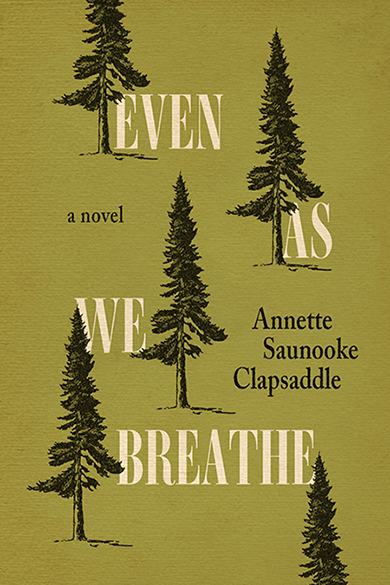
Even As We Breathe was a finalist for the Weatherford Award and the first novel published by an enrolled citizen of the Eastern Band of Cherokee. It is also this year’s One Book, One West Virginia Common Read.
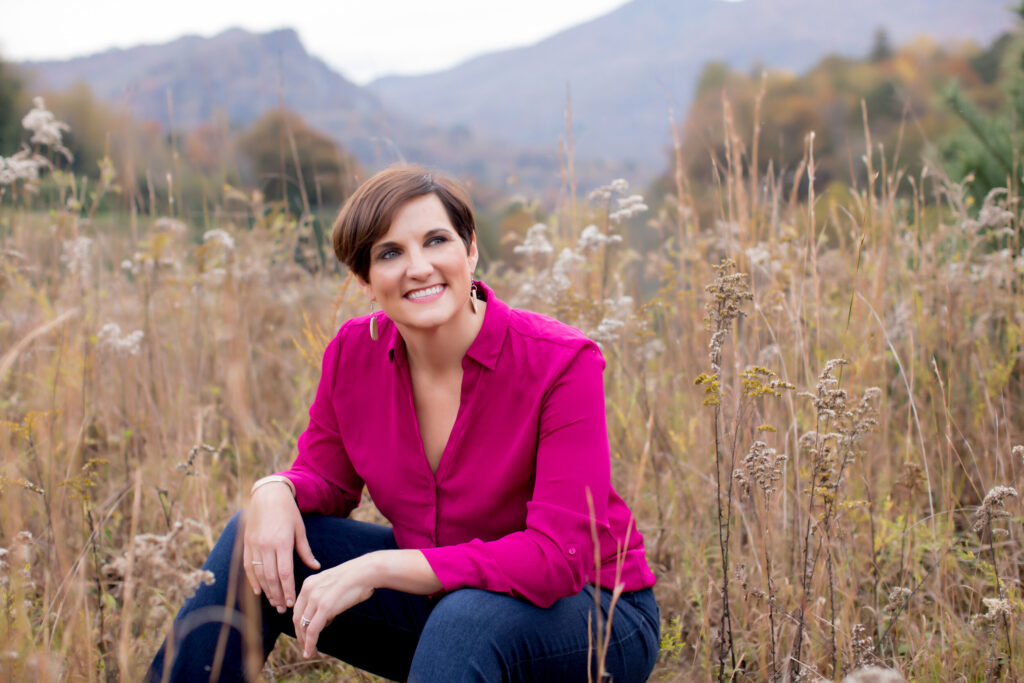
Clapsaddle sat down with Eastern Panhandle Bureau Chief Liz McCormick to discuss her background, her debut novel and the importance of reclaiming Cherokee identity through literature.
Listen to theExtended Interview
Interview Highlights
McCormick: Talk about what it was like for you growing up and learning about your culture and your heritage.
Clapsaddle:I often tell people that growing up in Cherokee is not that different in a lot of ways from growing up anywhere in a rural community in Appalachia. I’m from western North Carolina, the far western part of the state, so my youth was spent largely outside. My parents had a gift shop in Cherokee, so while everybody else was at the beach in the summer, I was in the river, the Oconaluftee River, behind the shop, with my cousins and my brother playing until I was old enough to see above the counter in the gift shop and then be working there.
I spent a lot of time outside, and that’s not uncommon for any childhood in western North Carolina. The difference being that it’s constantly peppered with elements of culture that I didn’t even realize until I went away. You know, that’s the point where I realized I’m from a different culture.
I didn’t realize how little the rest of the country knew about indigenous populations. I didn’t realize I’d spend the rest of my life explaining who we are, which is fine, and it’s a responsibility I’m happy to have. I grew up hearing a little bit of the language. I’m not fluent. That’s something that we are working hard as a tribe. Actually, all three Cherokee tribes are working really hard to revitalize our language. But the stories are a little bit different than Appalachia; the arts are a little bit different. And then today we have a huge artistic renaissance of Cherokee arts going on that’s really exciting.
It’s not all that different of a childhood, but then you start recognizing the special parts of it when you go away and come back.
McCormick: Talk with us about your debut novel. Why did you write it, and why was it titled Even As We Breathe?
Clapsaddle: Even As We Breathe was an idea that came about when I saw a newspaper article in the Asheville Citizen Times newspaper about the role of the Grove Park Inn the summer of 1942. The newspaper article was largely about Asheville’s role, in general, during World War II, talking about the Biltmore House safeguarding works of art, but there was this little paragraph that described how the Grove Park [Inn] held Axis diplomats and foreign nationals as prisoners of war [for] just one summer.
It was fascinating to me, because I’m from the area, I’ve lived there most of my life, and most folks were not very familiar with that history. So it allowed me to write a fictional narrative to fill in the gaps. And that’s exciting to me when there’s some grounding in history, and then I get to create a story around it. But it also was this really cool place and time to talk about really contemporary issues; race, class, citizenship, all of these questions are coming up during this time at this place.
So I realized that I could take Cowney, a member of a sovereign nation, who’s very close by to Asheville, and kind of throw him in the mix, and then see what other questions would come up about, how do we decide who belongs in our community? And that’s really where this title comes from. The point being that why not make decisions about who belongs in our communities by the human spirit, as symbolized by the breath, instead of all of these very temporal things like the color of our skin or our DNA, right? Don’t we want people that share a welcome human spirit?
McCormick: You gave a keynote lecture during Shepherd University’s Appalachian Heritage Festival Week about Cherokee literature, titled, “Reclaiming Identity Through Literature.” Can you talk with us about some of the key points in your lecture?
Clapsaddle: I think every author, at our core, wants to just be able to tell a story, right? But sometimes we’re coming from a place that is less familiar for our readers, and so we have different responsibilities. And since this is the first novel by an enrolled citizen of our tribe, I know that I have a responsibility to portray this place and these lives in this culture in the most authentic way possible, also with the understanding that I am not the only voice of my tribe.
In the lecture, I [began] with a quote from a Native scholar, Craig Womack, who talks about esthetics, and he talks about, if we don’t define our own esthetics, someone will define them for us. And that’s really what happened with Native literature throughout our history. That’s where we get these stereotypical Native character figures that are really problematic.
I try to make the point that you’ve got these caricatures of people, this language and these ideas about human beings, [they] translate into law. There are similarities in some early colonial and American literature that was written by non-Native people, that included Native people caricatures. There’s similar language in speeches to Congress promoting federal Indian removal in the 1830s. Literature becomes law. Law is literature.
And so I think that’s a huge responsibility that we have, and I also want to balance that with being a storyteller and not assuming I should tell my readers what’s right and wrong. That’s not my job. It’s to ask the questions, and it’s to provide different perspectives on different issues through my characters.
McCormick: On the topic of identity, you’re a descendant of some of America’s first people, the Cherokee. And next year is the United States’ 250th birthday. Can you talk with me about how this country’s history and this upcoming anniversary impacts you as a writer, as a Cherokee writer?
Clapsaddle: America’s 250 has definitely been a topic of conversation in Cherokee with our cultural institutions and whatnot. It’s really interesting, of course, in the climate that we’re in today, in terms of grant funding and whatnot, there’s a certain perspective that is “approved” about how to remember America’s 250.
If you’re just looking from a federal grant perspective, that doesn’t quite fall in line with what we know about the history of America. And so it is an opportunity for us to be reflective of our first encounters with would be Americans and this give and take relationship throughout history.
It is extraordinarily complicated how we got to where we are today, and while on one end, certainly, we’ve had our battles with the United States government, and states in particular, we also have this long history of patriotism amongst native communities. Native peoples serve in larger numbers per population than any other group in the United States. We have veterans who were serving the United States before they were even U.S. citizens, and I think that speaks to a common goal of loving this land and wanting to protect the ideas and tenants of freedom. So there is a commonality that certainly we can be proud of. Even [Native] governments influenced the way the United States was set up in the beginning.
It’s tough. It’s tough when we’re told one story is acceptable in the celebration of the 250th so we do what we often do, we say, well, we’re sovereign. We’ll tell our story, we won’t take your money, and we’ll do what we need to do to carry on. And I think that’s the thing I keep saying to people lately, is that one of the best parts for me about being Cherokee is that we have a history that goes back thousands of years. So our idea of time is much, much greater than a lot of people who think 250 is a big birthday. It’s not a big birthday. It’s such a young country.
I find a lot of hope in thinking about the expansiveness of existence in relation to 250 years. There are good things about this country and our relationship with tribes, and there are some really bad things.
McCormick: What are you working on now?
Clapsaddle: Currently, my agent has a novel out to publishers that I’m excited about. It’s a contemporary novel with a Cherokee woman as a protagonist, and kind of the big vision for it is, it’s a question of, are our Cherokee values informing our decisions in our community today? Or have they been too influenced by outside factors?
So I take traditional Cherokee origin stories, and I have a young woman who is doing a school project that says, well, this is what we keep repeating, but these are translations of stories, or this is what an academic wrote down. And because our value set comes from those stories, I think it’s an important question to ask how we retell stories, who is telling the story?
So that’s kind of the big picture of it. But the plot itself is that this woman has inherited Cherokee land from her mother and has to decide what to do with it, and that is a question of values, like, what does the community need? And it’s kind of under threat from some not so great folks who want the land. And then the question comes up if North Carolina were to make a major political decision that limits some rights of citizens in the state, would the Eastern Band step up and offer that opportunity, because we’re a sovereign nation?
So it’s more of a political analysis, but really rooted in values.
—
Annette Saunooke Clapsaddle is the 2025 Appalachian Heritage Writer-in-Residence at Shepherd University. She will hold this position from March 2025 to January 2026. As the writer-in-residence, she will help edit the 2026 volume of the “Anthology of Appalachian Writers,” featuring fiction, poetry, essays, and art inspired by or connected to her work.
With recent reports of Immigration and Customs Enforcement (ICE) in Huntington, students gathered at the center of Marshall University’s campus to voice their concerns for their fellow students and community members.
Analysis by the West Virginia Department of Education found Hancock County Schools has been outspending its budget by millions of dollars for at least two years.
This week, we’re revisiting our episode “What Is Appalachia?” from December 2021. Appalachia connects mountainous parts of the South, the Midwest, the Rust Belt and even the Northeast. That leaves so much room for geographic and cultural variation, as well as many different views on what Appalachia really is.
Gov. Patrick Morrisey delivered his second State of the State address Wednesday night, giving lawmakers and the public a look at his priorities for the legislative session now underway.