Alert (09/10/2026): Our Parkersburg TV transmitter is undergoing maintenance for a few days and will not be operational. We apologize for any inconvenience.
All our programming is available via our TV livestreams on our website and WVPB Passport. Thank you for your patience!
This week, it’s not easy to find a place to play hockey in Appalachia, and if you happen to be young and ambitious, it can be harder. Also, rappers and musicians across West Virginia come together for a song challenge. And, farmers learn to turn unwanted sheep’s wool into home insulation.
Photos & Video: Demolition of Freedom Industries Site Begins
Share this Article
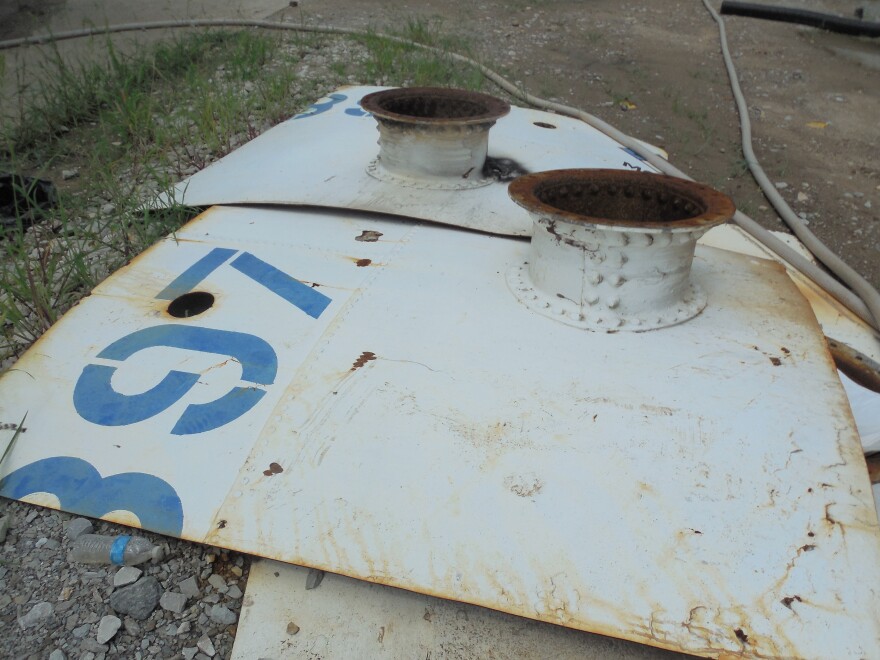
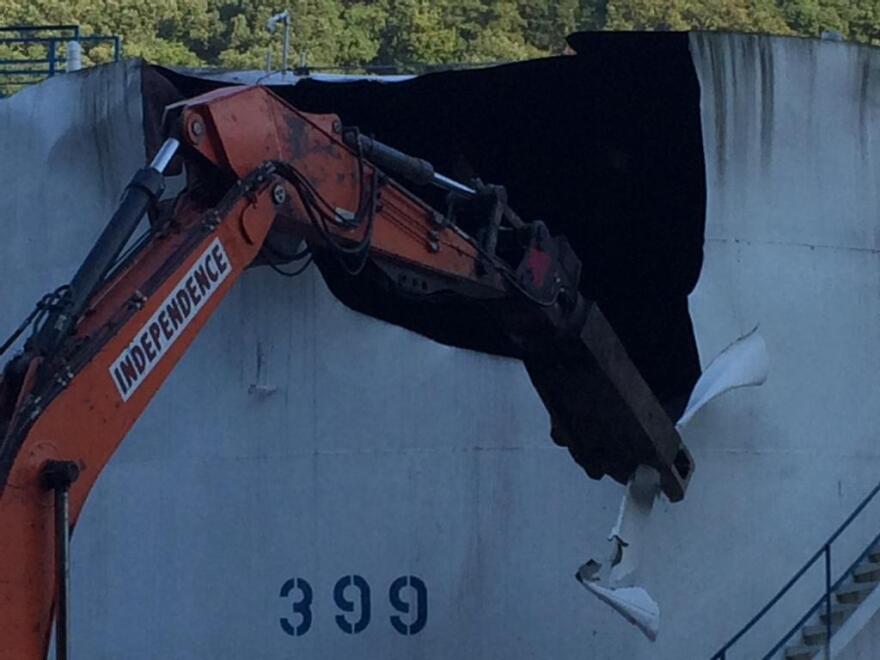
Freedom Industries contractors began the demolition process at the site of a January chemical leak that tainted the water supply of 300,000 West Virginians. Contractors knocked out a wall and ripped piping materials from the tanks Tuesday.
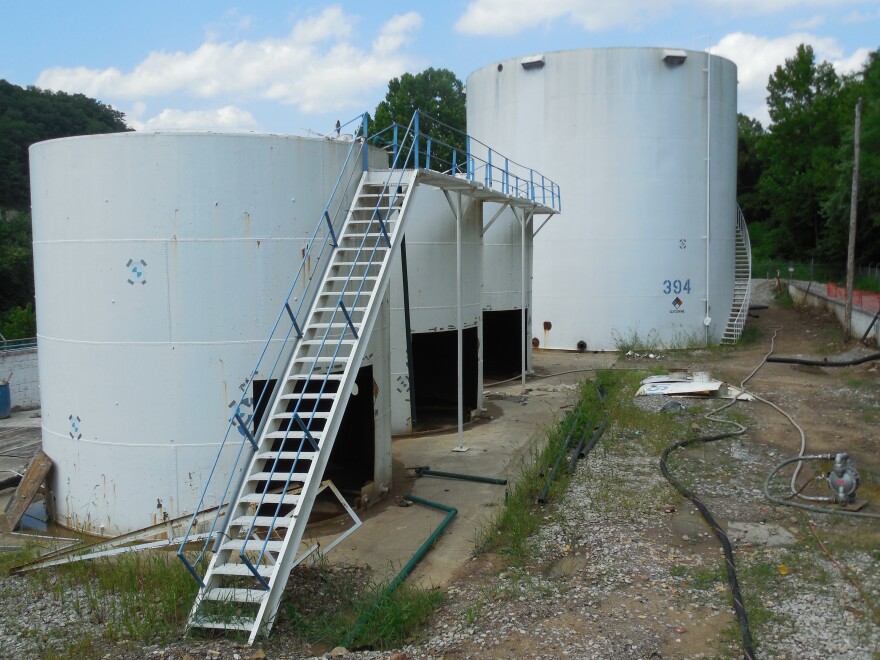
Freedom Chief Restructuring Officer Mark Welch said four tanks will remain up to store stormwater and waste at the site until their contents are removed. He said, at that point, the contents will be removed and those tanks will be torn down at the end of the process.
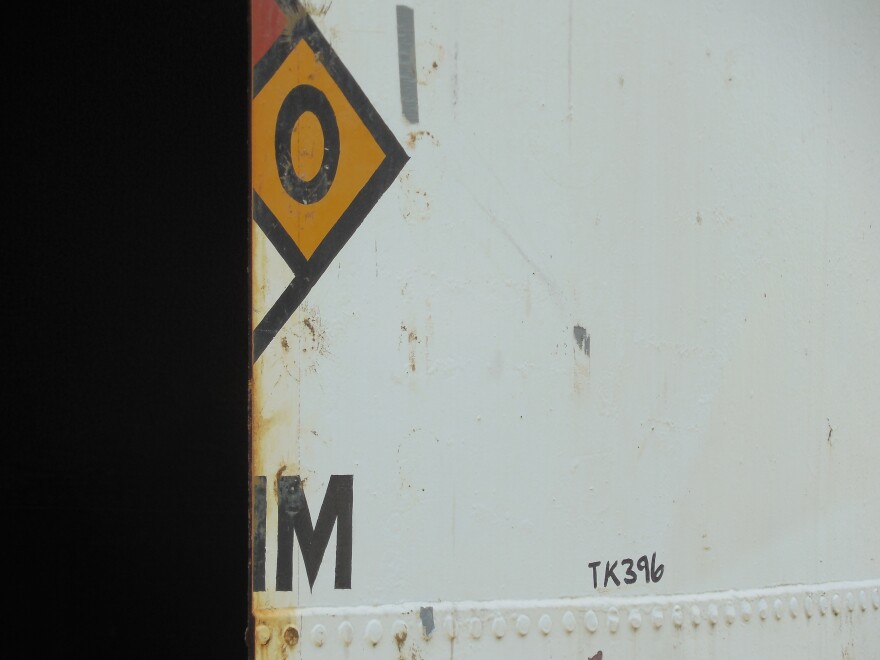
Welch says Tank No. 396, which is the tank that stored MCHM and leaked into the river on January 9, will be demolished sometime next week.
Here are some images of the site just before and during the initial phases of the demolition process:
Credit Dave Mistich / West Virginia Public Broadcasting
/
West Virginia Public Broadcasting
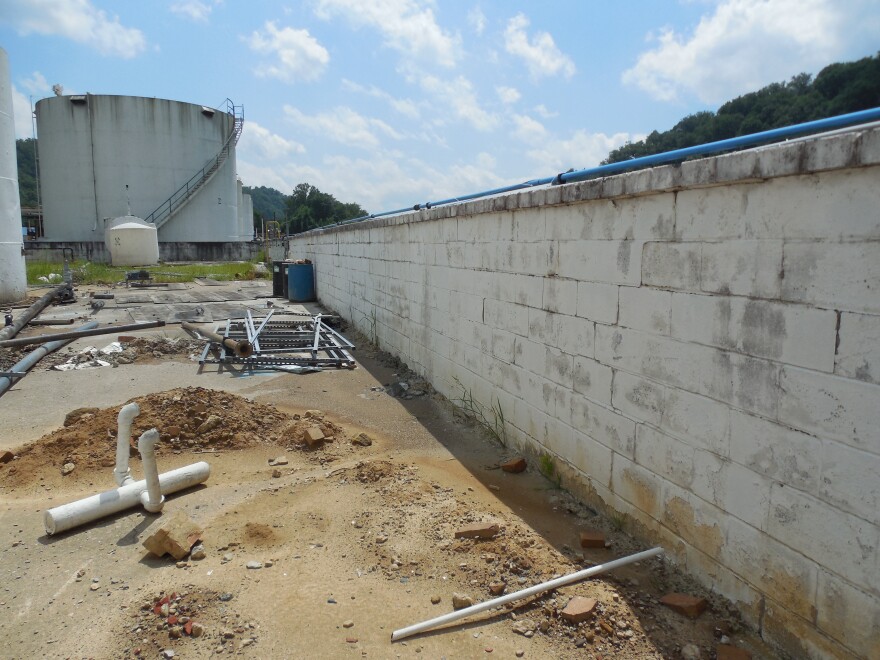
Tank No. 396 at Freedom Industries is the one where the January 9 leak occurred. Part of the tank wall was removed so it could be inspected from the inside, according to Freedom Industries Chief Restructuring Officer Mark Welch.
Credit Dave Mistich / West Virginia Public Broadcasting
/
West Virginia Public Broadcasting
Credit Dave Mistich / West Virginia Public Broadcasting
/
West Virginia Public Broadcasting
Credit Dave Mistich / West Virginia Public Broadcasting
/
West Virginia Public Broadcasting
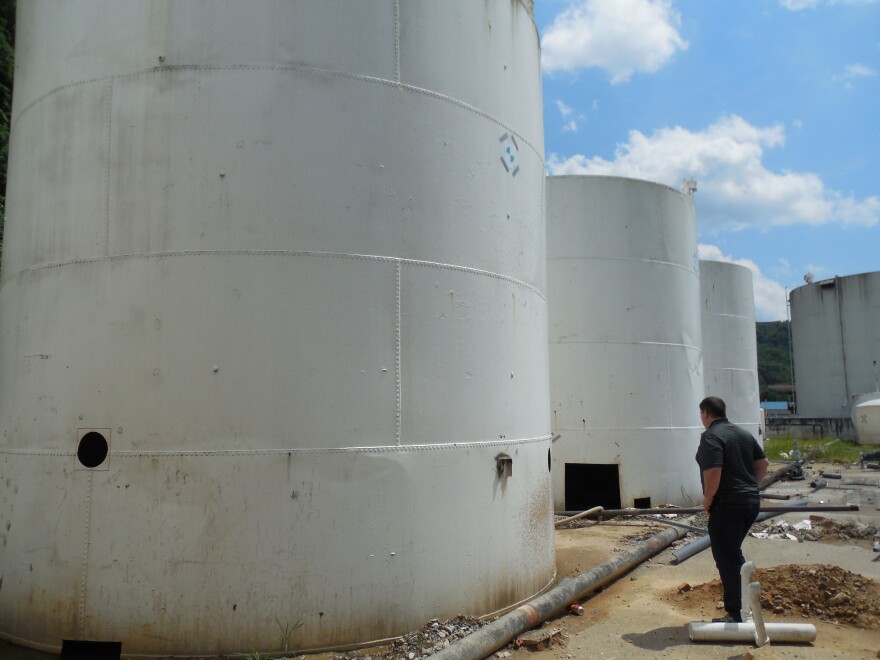
Freedom Chief Restructuring Officer Mark Welch stands next to the tanks that will soon be demolished.
Credit Dave Mistich / West Virginia Public Broadcasting
/
West Virginia Public Broadcasting
The containment wall where MCHM made its way through and into the Elk River.
Credit Dave Mistich / West Virginia Public Broadcasting
/
West Virginia Public Broadcasting
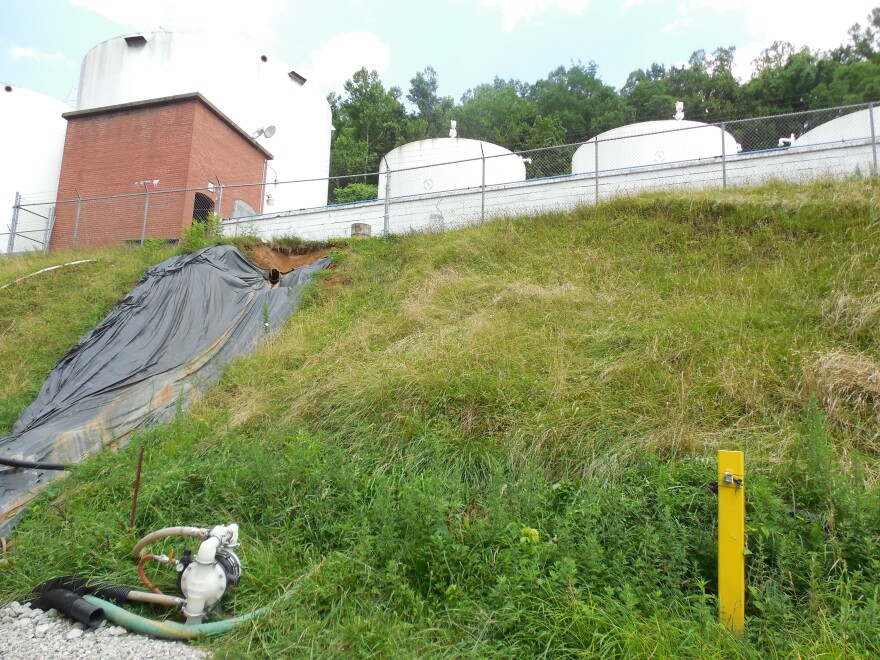
A view from the bank below the tank farm. Below my feet is the stormwater trench that overflowed on June 12 and 13.
An opening of the stormwater trench below the hill of the tank farm, where an overflow occurred on June 12 and 13. Mark Welch called this the “last resort” for catching storm or groundwater at the site.
Credit Dave Mistich / West Virginia Public Broadcasting
/
West Virginia Public Broadcasting
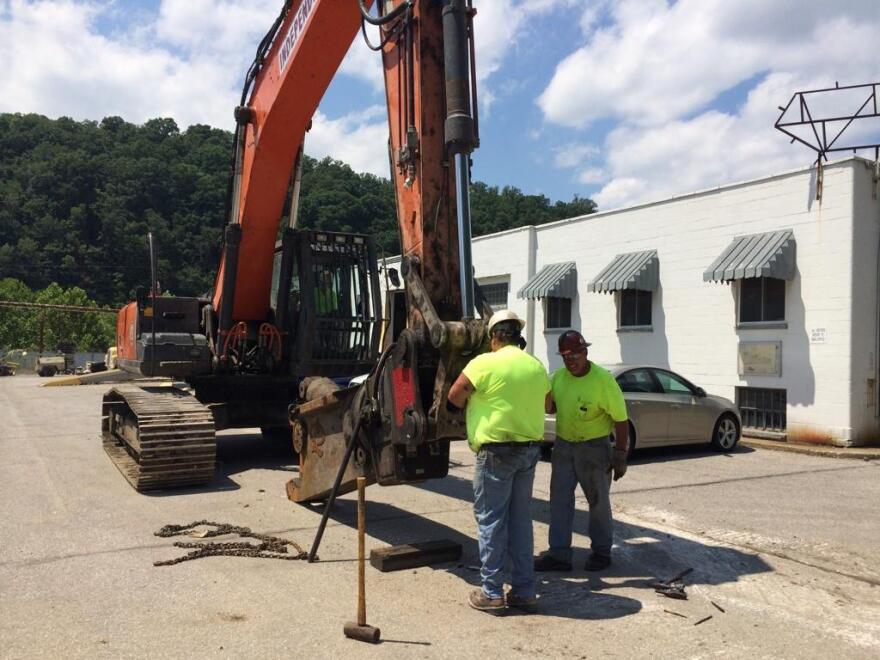
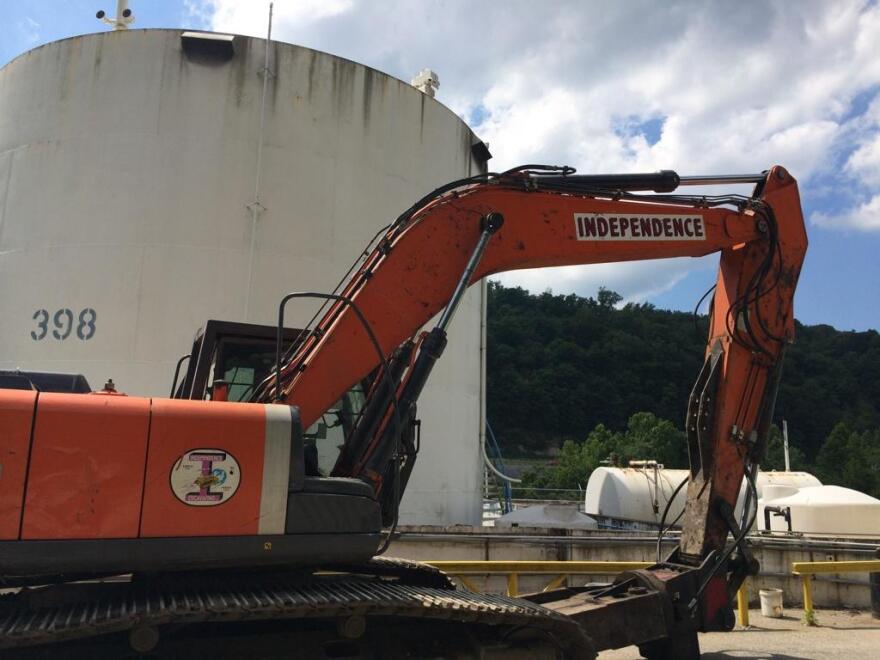
Contractors from Independence Excavating attach a sheer to a backhoe in preparation of demolition at the site.
Credit Dave Mistich / West Virginia Public Broadcasting
/
West Virginia Public Broadcasting
Credit Dave Mistich / West Virginia Public Broadcasting
/
West Virginia Public Broadcasting
Credit Dave Mistich / West Virginia Public Broadcasting
/
West Virginia Public Broadcasting
Demolition of the tanks begins on Wednesday morning.
Credit Dave Mistich / West Virginia Public Broadcasting
/
West Virginia Public Broadcasting
Credit Dave Mistich / West Virginia Public Broadcasting
/
West Virginia Public Broadcasting
The logo / slogan of contractors Independence Excavating reads: “Earth now, Moon later.”
Credit Dave Mistich / West Virginia Public Broadcasting
/
West Virginia Public Broadcasting
Add WVPB as a preferred source on Google to see more from our team
Hockey is still finding fans and players in central Appalachia, but just because it’s an emerging sport in this region doesn’t mean we don’t have hockey heroes. Inside Appalachia’s Abby Neff met with Gwyneth Phillips, a goalie for the gold-medal winning U.S. Olympics Women’s team, to learn more.
The Black Diamond Power Company and Appalachian Power have until next week to file a schedule with the Public Service Commission of West Virginia (PSC) for a proposed purchase agreement.
A series of storm systems moved across West Virginia earlier this week, bringing repeated periods of heavy rainfall and thunderstorms, overwhelming streams, creeks, drainage systems, and low-water crossings.
Two federally important facilities located in West Virginia require a strict limit on radio frequency interference. But for decades – increasingly as communication systems have become more advanced – those limits have made it difficult for emergency crews and first responders in Pendleton and Pocahontas counties to do their jobs as safely and effectively as possible. Now the results of a lengthy federal study show exactly how precarious the situation is. We caught up with Pendleton County Emergency Management’s Rick Gillespie to find out what the study shows and what happens next.