Alert (09/10/2026): Our Parkersburg TV transmitter is undergoing maintenance for a few days and will not be operational. We apologize for any inconvenience.
All our programming is available via our TV livestreams on our website and WVPB Passport. Thank you for your patience!
A new book called "Appalachian Plants: In the Garden, In the Yard, and In the Wild" explores some of the history and lore of plants that have been used by many in the region. Inside Appalachia’s Mason Adams spoke with author Linda Hager Pack and illustrator Pat Banks about their book.
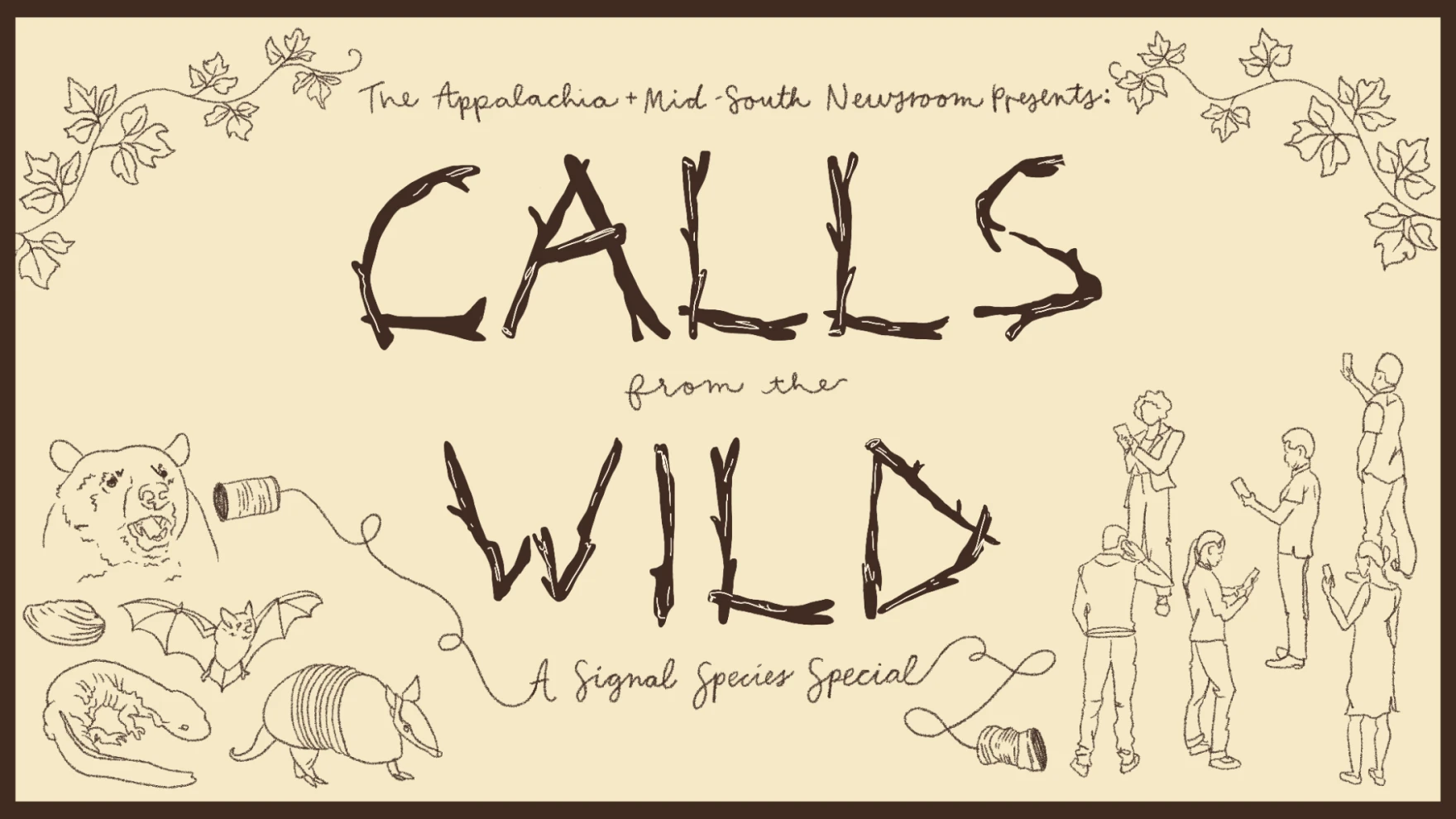
The Appalachia + Mid-South Newsroom Presents: Calls from the Wild
What can wildlife tell us about our ecosystem — and will we listen?
“Calls from the Wild” is an hourlong special about signal species from the Appalachia + Mid-South Newsroom.
Graphic Credit: Corie Brangers
A “signal” or “indicator” species is an organism that can tell us about changes occurring in an ecosystem.
We’re talking bears encountering humans more frequently, armadillos moving farther north, invasive vines like kudzu growing at accelerated rates and bat populations dwindling.
These are all examples of species sending us signals about our changing world and climate — but are we paying attention? And if we are, is there a way to contribute to scientific findings?
The Appalachia + Mid-South Newsroom and our partner stations in Tennessee, Kentucky and West Virginia explored these questions through a series of features all about wildlife.
Freshwater mussels are scattered throughout waterways in Kentucky, Tennessee and West Virginia, playing a vital role in maintaining healthy ecosystems. But populations are dwindling, and researchers want to better understand the causes.
Reporters: Catherine Eggers, Jacqui Sieber, Giselle Rhoden, Eric Douglas Producers: Megan Jones, Andrew Henderson, Jared Kunish Editor: John Boyle Additional editing: Tony Gonzalez, Megan Jones, Tasha A.F. Lemley.