


Aluminum Plates For Deep Space Win W.Va. 'Coolest' Contest
Aluminum plates that helped keep astronauts on the Artemis II rocket safe won the first ever Coolest Thing Made In West Virginia competition.
Continue Reading Take Me to More NewsAlert (09/29/2026): Our Parkersburg TV transmitter is still undergoing maintenance and remains temporarily inoperative. We apologize for the inconvenience.
All our programming is available via our TV livestreams on our website and WVPB Passport. Thank you for your patience!




To Educate, Inform, and Inspire by Telling West Virginia's Story
Mountain Readers Week will be held Oct. 5-9, 2026! Celebrate and foster a love of reading in children across West Virginia.
Nominate an exceptional West Virginia K-12 teacher today!

On Demand

On Demand
Stream original productions from WVPB

Watch locally produced documentaries & more.

On Demand

On Demand






West Virginia Morning

Inside Appalachia

West Virginia Week

Mountain Stage

Us & Them

The Legislature Today

The Legislature This Week

Send us your comments and questions.

Stream our board meetings.

Check out the latest WVPB news.

Sign up for our newsletter and get weekly updates.

Meet the WVPB staff.

WV Educational Broadcasting Commission, the WVPB Foundation, and the Friends of WVPB.

Come work with us!

Read our annual report and learn how we educate, inform and inspire with your support.

Sponsor impactful and engaging media and entertainment.

Use your IRA to make a gift to WVPB.

Become a member with your gift of $1,000 or more.

Make WVPB part of your legacy.

Manage your membership account.

Learn how you can Protect and Sustain West Virginia Public Broadcasting.
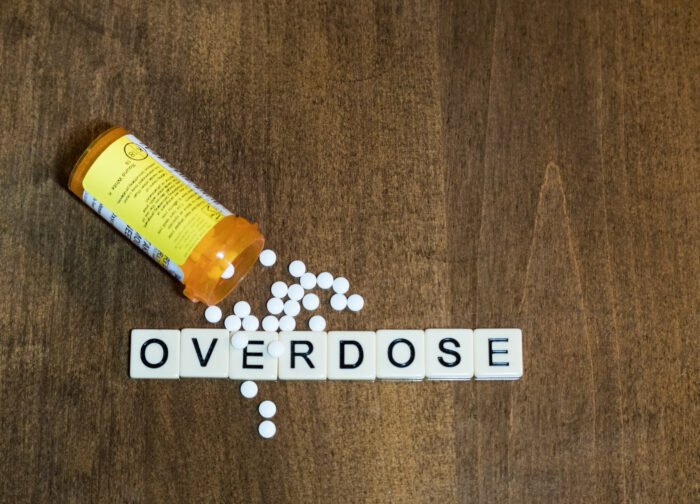 tloventures/Adobe Stock
A Sept. 1 analysis of provisional overdose death rate data from the Centers for Disease Control and Prevention (CDC) shows a rapid decrease in the number of drug overdose deaths in the U.S. and this time West Virginia appears to be keeping pace.
However, advocates working on the ground directly with communities affected by the substance use disorder (SUD) crisis, say to be cautious of preliminary data and that there’s more work to be done and policy changes to be enacted.
“If you were to compare these numbers to pre-COVID, they’re still very massively up,” said Sarah Stone, co-director of the Charleston non-profit group, Solutions Oriented Addiction Response (SOAR). “So it feels to me like we’re still very much in the thick of everything.”
Stone also noted that this data is provisional, meaning, these are not finalized figures for the year.
West Virginia’s drug overdose rate fell nearly 11 percent from April 2023 to April 2024, according to provisional CDC data. The same report showed the nation’s drug overdose death rate fell by a reported 12.2 percent during the same period.
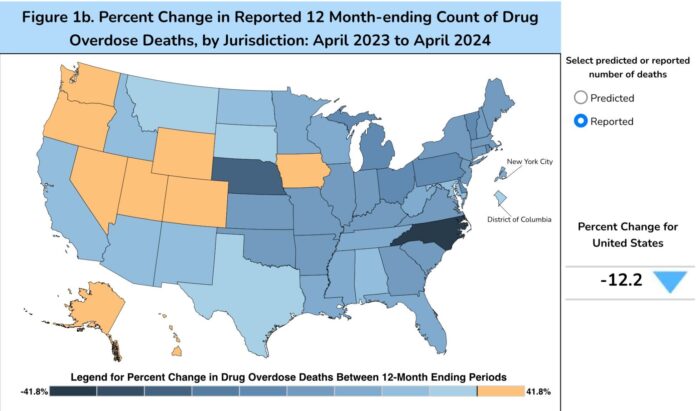
While falling overdose death rates are good news, advocates like Stone say even one drug overdose death is too many.
“Every one of the numbers from the data that we’re looking at is someone’s kid, is someone’s mom, is someone’s somebody, somebody celebrated when that number was born,” Stone said. “Until that number is zero, which is a goal, I can’t celebrate it.”
Stone said SOAR considers every drug overdose death a policy failure and that community recovery advocates feel like they are working against the state of West Virginia to make drug overdose death rates fall.
“If numbers are going down, we want to feel good about that, right? And it’s easy to feel good about that if you don’t make the connection that the number as a person and the number as a policy fail,” Stone said.
Stone is referencing policy decisions that have challenged the goals of those who work in West Virginia harm reduction in recent years.
According to the Substance Abuse and Mental Health Services Administration (SAMHSA), harm reduction refers to an evidence-based approach to treating SUD with a set of practical strategies and ideas aimed at reducing negative consequences associated with drug use.
“People want to show up to keep themselves more safe, and we should be able to provide that for them, but because of restrictive laws, we cannot,” Stone said.
In 2021, the Legislature passed Senate Bill 334, which requires licensing for syringe distribution, programs offering syringe exchanges to host many other harm reduction services, made programs deny clean needles to those who did not return with their used needles and only allowed them to serve clients with state IDs.
“I do celebrate the wins,” Stone said. “I know how hard we’re working, but it’d be cool if lawmakers would make things more accessible to folks.”
SOAR hosts four naloxone boxes across the city of Charleston and holds monthly mutual aid fairs to distribute the supplies they legally can to help people suffering from SUD stay safe.
On Sept. 26, SOAR will participate in the largest day of naloxone distribution to date. Save-A-Life Day began in 2020 with a two-county pilot project in Kanawha and Putnam counties. By 2021, the project expanded to 17 counties, then all 55 counties participated in 2022.
Last year, all 13 Appalachian states participated, hosting more than 300 events and distributing more than 45,000 naloxone doses in a single day.
Just four years after the project’s two-county start, 2024’s Save-A-Life Day events will be held in every state east of the Mississippi River, and a few beyond.
“We’ve heard of same-day saves,” Stone said. “So that, of course, is impactful, getting naloxone out, but it’s also making people think, ‘How can we make this more available in our community? How can we like, go deeper? How can we get it to people who we don’t even see on Save a Life Day? So it’s energizing to folks, and it is a day to celebrate.”
Appalachia Health News is a project of West Virginia Public Broadcasting with support from Marshall Health.
Add WVPB as a preferred source on Google to see more from our team

The West Virginia Extension service is asking volunteer firefighters why departments are struggling to recruit and maintain members and what support firefighters need.
Continue Reading Take Me to More NewsHuntington is one of eight communities nationwide to be awarded a $3-million federal grant to strengthen efforts to help struggling residents.
Continue Reading Take Me to More NewsWest Virginia Health Right (WVHR) will host its third annual #WeCareWV Day on Oct. 17, a free walk-in medical, dental, and vision clinic for anyone in need.
Continue Reading Take Me to More NewsDirect-to-consumer tests like full-body scans are marketed as a way to catch diseases early and establish a baseline. But there are financial, physical and psychological risks to all medical tests — and in some cases, not getting a test could be better for your health. From the Appalachia + Mid-South Newsroom, HealthQ hosts Cara Anthony and Blake Farmer speak with UCSF Cardiologist Dr. Rita Redberg.
Continue Reading Take Me to More News