Alert (09/29/2026): Our Parkersburg TV transmitter is still undergoing maintenance and remains temporarily inoperative. We apologize for the inconvenience.
All our programming is available via our TV livestreams on our website and WVPB Passport. Thank you for your patience!
Inside Appalachia Host Mason Adams met with author Barbara Kingsolver at her home outside Abingdon, Virginia, a couple weeks before her new novel "Partita" was set to publish.
On this encore episode of Us & Them, host Trey Kay hears about the challenges to America’s incarcerated population as they re-enter society.
At least 95% of all state prisoners are released after serving their sentence, more than 600,000 people each year. The re-entry process requires essential tasks; accessing identification materials, birth certificates and sometimes social security materials. How well do programs designed to help formerly incarcerated people succeed?
Some people suggest recognizing past traumas may be a powerful step to help people make a new life after they serve their time.
This encore episode of Us & Them received a best documentary award from the Public Media Journalists Association in 2023 and was acknowledged with a public service through journalism award from Virginia’s AP broadcasters.
This episode of Us & Them is presented with support from the West Virginia Humanities Council, the CRC Foundation, the Daywood Foundation and The Just Trust.
Subscribe to Us & Them on Apple Podcasts, NPR One, RadioPublic, Spotify, Stitcher and beyond.
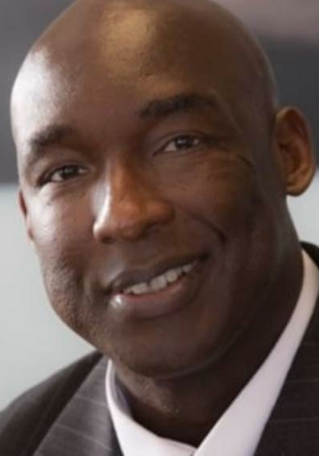
Daryl McGraw, who spent 10 years in a Connecticut prison, is now a criminal justice reform expert and community organizer. He works in policy development, contract management and project coordination, and collaborates with grassroots advocacy groups and the Connecticut Department of Corrections. McGraw, the founder of Formerly Inc, consults with law enforcement, universities, policymakers, and behavioral health and addiction treatment providers to support successful re-entry for formerly incarcerated people.
Photo courtesy of C4 Innovations
“One thing that America does really well is incarcerating people — we incarcerate more people than any other country in the world. However, we do a terrible job of reentry. Reentry doesn’t begin 60 days or 90 days before release. The system should be working on preparing me for release no matter how much time I have. We’re not responsible for how an individual goes into prison, but as human beings, as taxpayers, we should be concerned about how they come home.”
— Daryl McGraw, criminal justice reform advocate and founder of Formerly Inc., a reentry organization led by people with lived experience in the justice system.
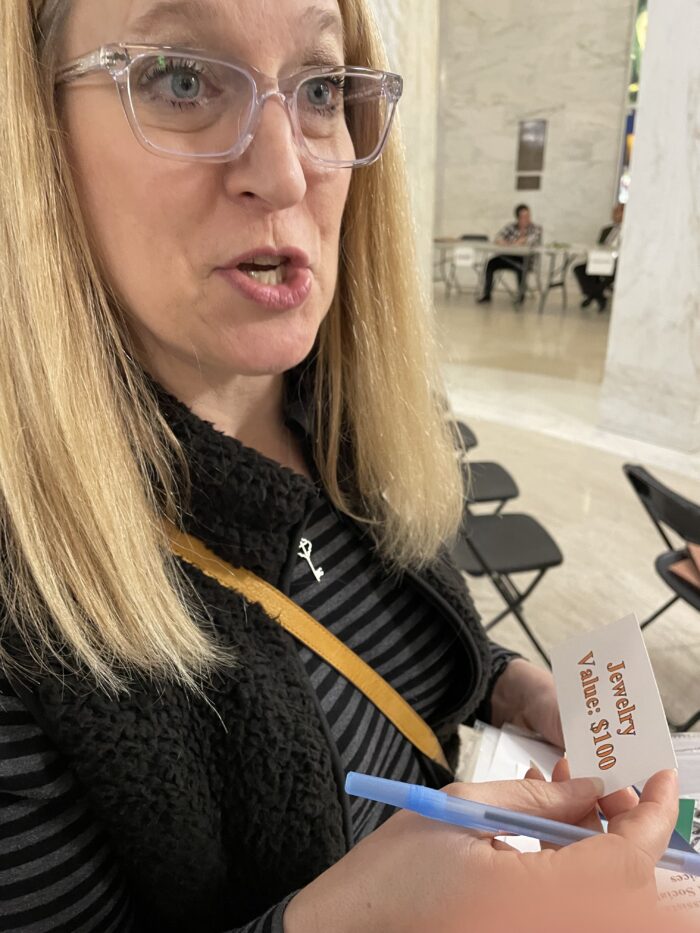
Michelle Thompson, director of outreach at Bible Center Church in Charleston, W.Va., participates in a reentry simulation at the West Virginia State Capitol during the 2023 legislative session. Thompson says her work often involves helping people secure rental assistance, transportation and help paying bills, but this was her first opportunity to experience the challenges formerly incarcerated people face when reentering society.
Photo Credit: Trey Kay/West Virginia Public Broadcasting
“I’m so used to being on the other side of this… it’s almost enough to make me tear up.”
— Michelle Thompson, director of outreach at Bible Center Church in Charleston, W.Va.
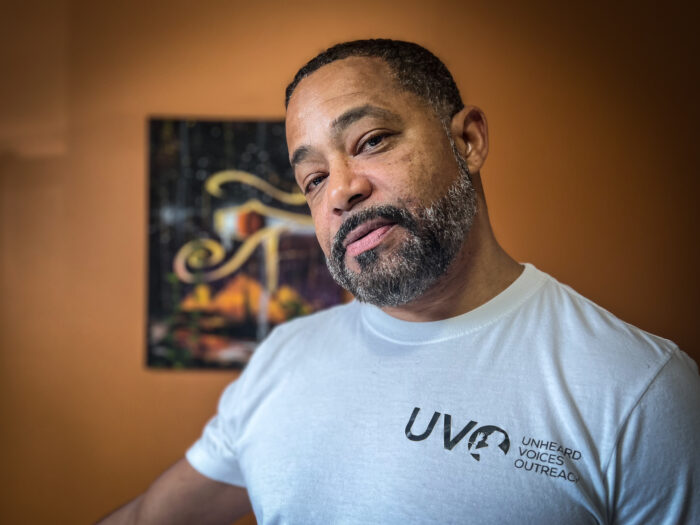
Rahim Buford says he was “caged for 26 years of my life, from age 18 to 44, seven different prisons throughout the state of Tennessee.” He says that people of all ages, faiths, races experience challenges when they reenter society, and that’s why he started his nonprofit Unheard Voices Outreach.
Photo courtesy of Rahim Buford
“Rehabilitation is a misnomer. It implies going back to something. People who go to prison have nothing to go back to — they were never really abilitated. What’s needed is healing and transformation, and the system already knows it’s a revolving door.”
— Rahim Buford, founder of Unheard Voices Outreach and a criminal justice reform advocate who spent 26 years incarcerated in Tennessee
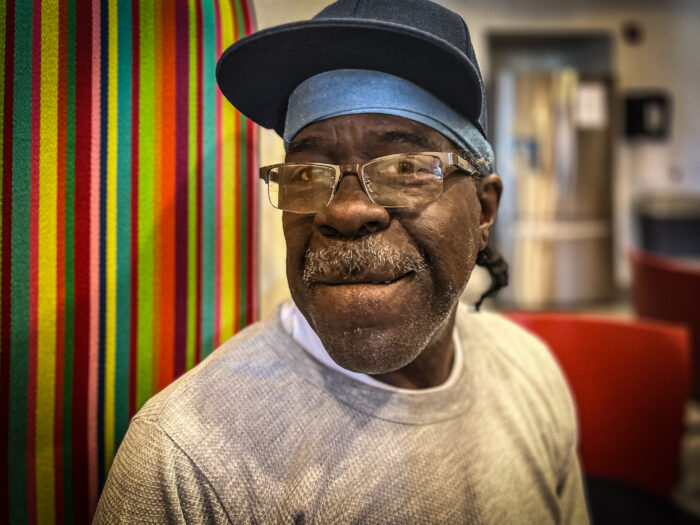
Thomas Murphy, known as “Tom Tom,” was incarcerated for 31 years before being released from prison in 2016. Since reentering society, Murphy has faced ongoing challenges securing housing, employment and stability while navigating life with a felony record.
Photo courtesy of Thomas Murphy
“They released me at 56 years old — 31 years, $35. I don’t have no money. Parole board wants fees. How can I pay fees, pay rent, get somewhere to live? … I got good credit. The only thing that’s hurting me — I am a convicted felon.”
— Thomas Murphy, formerly incarcerated for 31 years
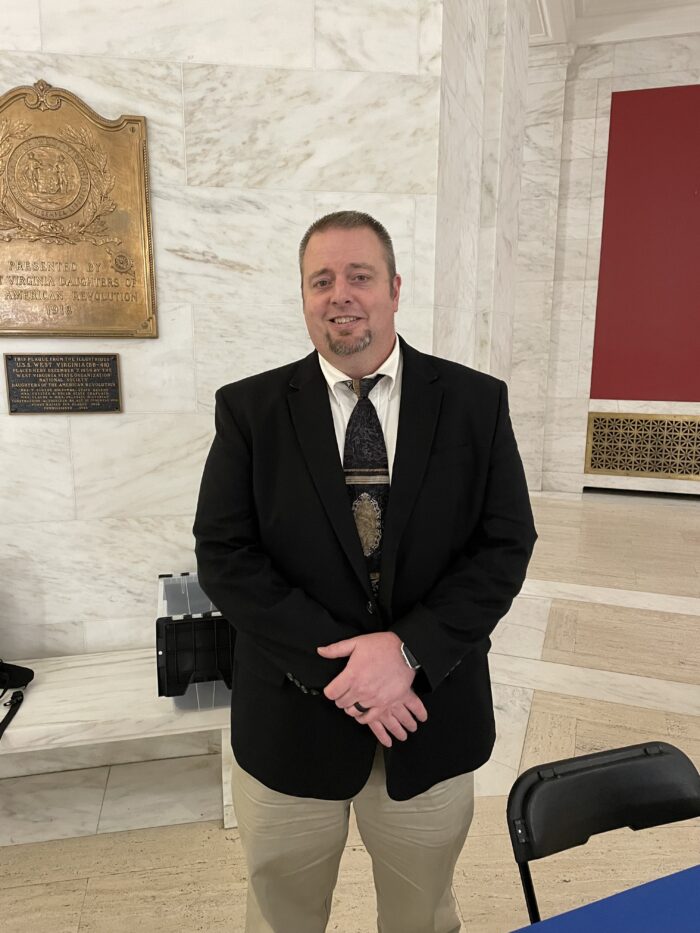
Jeremiah Nelson, with the West Virginia Reentry Council and the REACH Initiative — Restore, Empower, Attain Connections with Hope — helps organize a reentry simulation at the West Virginia State Capitol during the 2023 legislative session. Nelson, who was formerly incarcerated, says access to basic documents such as birth certificates, Social Security cards, state IDs and transportation can determine whether someone successfully reenters society or ends up back in prison.
Photo Credit: Trey Kay/West Virginia Public Broadcasting
“In prison, a person only makes about a hundred decisions a day. You’re told when and where to do everything. On the outside, life can mean 30,000 decisions a day.”
— Jeremiah Nelson
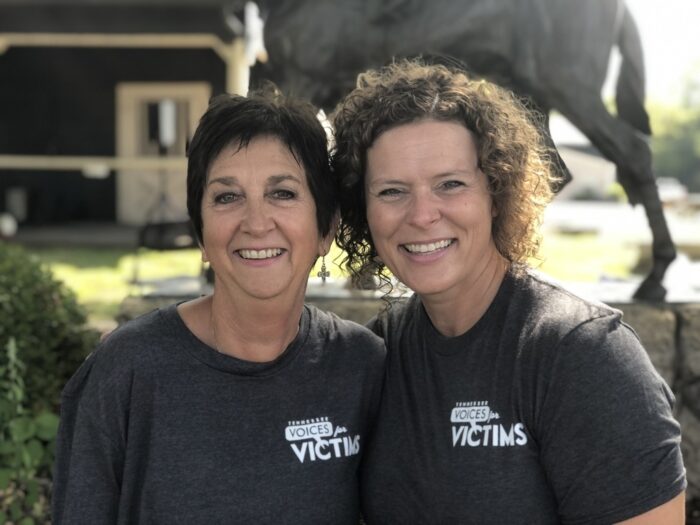
Verna Wyatt and Valerie Craig, victim advocates and co-founders of Tennessee Voices for Victims, work to develop a victim-centered approach to reentry and criminal justice reform. Wyatt began this work after her sister-in-law, who had been her best friend for 15 years, was raped and murdered.
Photo courtesy of Tennessee Voices for Victims
“My sister-in-law, who had been my best friend for 15 years when she was murdered, my whole world turned upside down and nothing was ever gonna be the same again. … I was so angry at the system. I was so angry at people that could do such horrible, despicable things to innocent people that I wanted to prevent that from happening to other people. … The pain that’s caused from a murder is so intense. It’s so unfair. … People that experience homicide just have to learn to live and create a new normal, and it’s hard. … So, like, for me, reentry, none of it’s working right. The problem is traumatic abuse that has been layered on over the years and it’s not been addressed or healed — and we’re not healing it.”
— Verna Wyatt, co-founder, Tennessee Voices for Victims
“We walked in with that same attitude … of we are here to present to you the pain that you have caused. … And then you begin to learn their stories, and you begin to hear their history. … We begin leaving this class looking at each other and just recognizing — what we’re teaching here is a room full of victims … who don’t know it. … I don’t believe that when people leave prison that any of them want to go back. I don’t think that that is ever a goal, but what we see is that revolving door.”
— Valerie Craig, co-founder, Tennessee Voices for Victims
Add WVPB as a preferred source on Google to see more from our team
On this West Virginia Week, a mine operation in Kanawha County gets a WARN Notice, three Wyoming County Schools will remain closed until next week, and we learn the origins of the Flatwoods Monster.
This week, Barbara Kingsolver’s new novel takes on issues of class and classical music. Also, kudzu warriors band together to fend off invasive plants and take back the land. And, it’s pawpaw season, but a new bug could be harming the trees.
Each NEST kit includes more than 20 newborn and postpartum essentials, including diapers, wipes, an infant thermometer, postpartum recovery and breastfeeding supplies, and a blood-pressure monitor. Families also receive information on postpartum health, infant safety and care, feeding and nutrition, and programs and resources available to support parents and their babies.