Alert (09/29/2026): Our Parkersburg TV transmitter is still undergoing maintenance and remains temporarily inoperative. We apologize for the inconvenience.
All our programming is available via our TV livestreams on our website and WVPB Passport. Thank you for your patience!
This week, Barbara Kingsolver’s new novel takes on issues of class and classical music. Also, kudzu warriors band together to fend off invasive plants and take back the land. And, it’s pawpaw season, but a new bug could be harming the trees.
Us & Them Encore: Housing Options Are Few & Far Between In Appalachia
Listen
Share this Article
For some Americans home ownership is a way to build wealth for future generations.
But West Virginia presents the complexities and nuances of that reality. The Mountain State has the nation’s highest homeownership rate but the second lowest personal income rate.
And much of the state’s housing is old and needs repair. In one West Virginia county, 67% of the homes are more than 80 years old and half rate below normal on standard quality measures. By several measures, there are 500,000 people living in such conditions.
In this encore Us & Them — which was recently honored by the Virginias Associated Press Broadcasters for Best Podcast — we travel just across the state line to western Virginia to experience a side of the housing crisis we don’t often see — structures in disrepair that people call home.
This episode of Us & Them is presented with support from the CRC Foundation.
Subscribe to Us & Them on Apple Podcasts, YouTube Music, Spotify, the NPR app and wherever you get your podcasts.
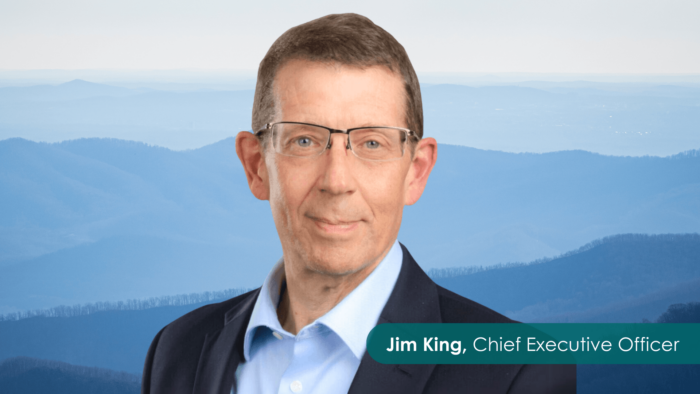
Jim King, CEO of FAHE, speaks about the challenges of housing in Appalachia. FAHE works with more than 50 community-based nonprofits across six Appalachian states to bring together resources, organizations and people to build homes and strengthen communities in one of the most difficult regions in the country to serve.
Photo courtesy of FAHE
“We have about 3.8 million households in Appalachia, and by several measures, there are half a million people living in homes built before 1930 or in families earning less than 30% of area median income. Cuts to the HUD budget this year have hit federal assistance hard, leaving people with less buying power. All things equal, if your income is very low, your ability to find a decent place to live is very limited.”
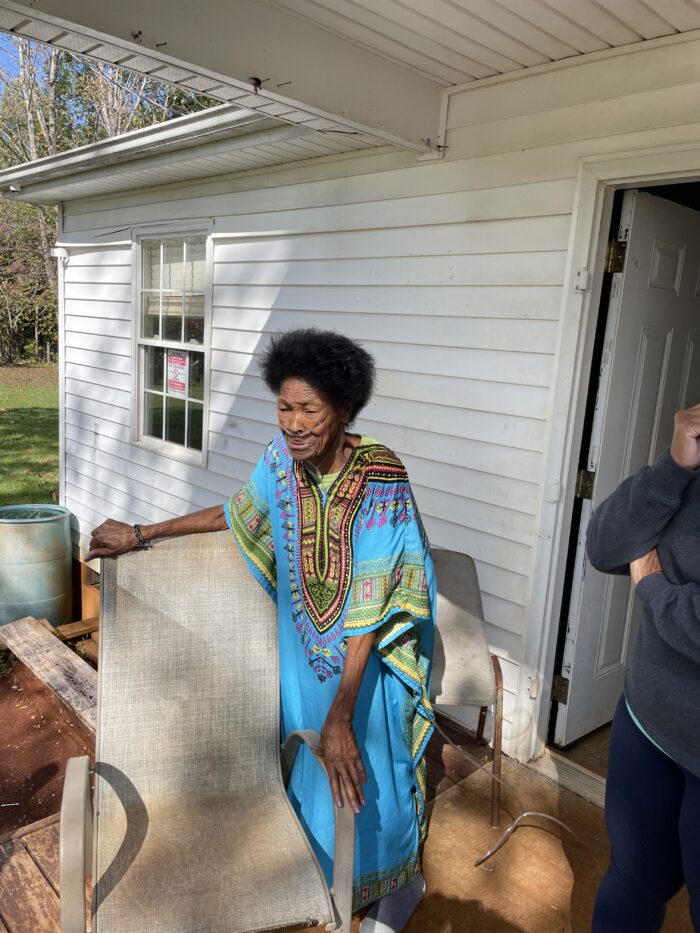
Joyce Vest speaks about her experience living in substandard housing in rural Virginia. She has spent most of her life on a piece of land near Faber, Virginia, and was 76 when we talked in fall 2024. Vest, who suffers from emphysema, once lived in a home in desperate need of repairs. For several years, she resided in a makeshift dwelling made of two trailers pushed together beneath a patched roof over the jerry-rigged structures. She had no running water or electricity, and over time, storms damaged her walls.
Photo Credit: Trey Kay/West Virginia Public Broadcasting
“Back then I would get the water in a barrel for cleaning and cooking and all that stuff. I got a big pot out there that I use to heat water in to bathe and stuff. I used wood and had a flue that I had built in for heat.”
— Joyce Vest
Stacey Reeder, a veterinarian in rural Virginia, speaks about helping Joyce Vest access safer housing. Reeder met Vest while treating her dog and later visited her home, where she found challenging living conditions. She helped connect Vest with the Southeast Rural Community Assistance Project (SERCAP), which provides services ranging from septic and well systems to indoor plumbing and community development across the region.
Photo Credit: Trey Kay/West Virginia Public Broadcasting
“I just realized when I came out here that that’s not a way for her to live, and if I could help her, we were going to do so. We started searching and looking [to find a service to help], and it took a couple of years before we had the house. It was one of those things that was on my heart that I had to do. To be honest, I didn’t realize people lived like that — without electricity and without water. I’m not sure how she did it, but she did. She managed. It was an eye-opening experience for me, and it made me realize that I needed to do some things.”
— Stacey Reeder, veterinarian in rural Virginia
Kenneth Rogers, a rural housing specialist with the Southeast Rural Community Assistance Project (SERCAP), speaks about helping Joyce Vest access basic housing infrastructure. After veterinarian Stacey Reeder raised concerns about Vest’s living conditions, Rogers was assigned to the case. SERCAP helped Vest enroll in its Indoor Plumbing and Rehabilitation program, which provides essential services for low- to moderate-income homeowners.
Photo Credit: Trey Kay/West Virginia Public Broadcasting
“The Indoor Plumbing and Rehabilitation program is designed for low- to moderate-income homeowners who have no indoor plumbing, no potable water or a failing septic system. In her case, she had no well, no indoor bathroom and no septic system — so she qualified for the program. It’s a common challenge: even if a septic system was installed 50 years ago, it may now have failed or be underperforming and must be replaced to meet current regulations and prevent groundwater contamination. And if someone who is 70 or 80 years old — who has lived in their home for decades — suddenly finds that their septic system has failed, they may be forced to install an alternative system that can cost up to $40,000, an expense that is often unaffordable on a fixed income.”
Before-and-after composite images of Joyce Vest’s home document conditions before the Southeast Rural Community Assistance Project (SERCAP) built a new structure with electricity and running water. The images were provided to Us & Them by SERCAP.
Photo by Trey Kay/West Virginia Public Broadcasting; composite images courtesy of SERCAP
The exterior of Joyce Vest’s home after improvements made by the Southeast Rural Community Assistance Project (SERCAP). The structure now includes electricity and running water.
Photo Credit: Trey Kay/West Virginia Public BroadcastingThe interior of Joyce Vest’s home shows a modest living room. The house also includes a small kitchen, a bathroom, a laundry area and two bedrooms.
Photo Credit: Trey Kay/West Virginia Public BroadcastingMel Jones, co-director of the Virginia Center for Housing Research at Virginia Tech in Blacksburg, Virginia, speaks about housing trends in Appalachia. She works with FAHE and has analyzed data showing that about 190,000 homes were removed from Central Appalachia between 2015 and 2021, as dilapidated properties were demolished or converted to other uses. Jones says low vacancy rates can drive up housing costs, discourage participation in affordable housing programs and create “tight markets” that increase competition for new development. She adds that while policies like the GI Bill helped build generational wealth, many families were left out.
Photo Credit: Trey Kay/West Virginia Public Broadcasting
“That means their families haven’t accumulated the wealth needed to pass on from generation to generation to ensure stability. People my age — and I’m among the oldest millennials — can buy homes largely because of intergenerational wealth. Without that, you lose access to safe, stable housing. Anyone could become homeless at any time — a huge medical expense could wipe you out and leave you on the street. We hear stories like that, but housing insecurity is mostly rooted in generations of being left out. We see it in Appalachia, where people live in old trailers, and in urban areas, where tenants endure poorly maintained rental homes while paying high rents. This isn’t so much a political divide as it is the result of setting our country on a wealth-building track that didn’t include everyone — and still doesn’t. It’s become an us-and-them scenario.”
On this West Virginia Week, a mine operation in Kanawha County gets a WARN Notice, three Wyoming County Schools will remain closed until next week, and we learn the origins of the Flatwoods Monster.
This week, Barbara Kingsolver’s new novel takes on issues of class and classical music. Also, kudzu warriors band together to fend off invasive plants and take back the land. And, it’s pawpaw season, but a new bug could be harming the trees.
Each NEST kit includes more than 20 newborn and postpartum essentials, including diapers, wipes, an infant thermometer, postpartum recovery and breastfeeding supplies, and a blood-pressure monitor. Families also receive information on postpartum health, infant safety and care, feeding and nutrition, and programs and resources available to support parents and their babies.