This week, too often, people with mental health challenges or substance use disorder wind up in jail. But crisis response teams offer another way. Also, changes to the Endangered Species Act could benefit big business. They could also kill animals like the eastern hellbender. And, in troubled times, a West Virginia writer says to find peace in nature.
Home » WVPB Podcasts » Hope Battles Fear in Appalachia as Trump Takes Office
Published
Hope Battles Fear in Appalachia as Trump Takes Office
Listen
Share this Article
Why is Donald Trump so popular in Appalachia? And how confident are Appalachians that Trump will change the economy and bring back thousands of coal mining jobs?
Trump won 95 percent of Appalachian counties, and 69 percent of West Virginia voters chose him – the highest percentage of any state.
As Trump prepares to take office, we talk with Appalachians about their hopes and fears surrounding Trump. We’ll also dig into the facts and talk with experts about what a Trump Presidency could actually mean for Appalachia.
A Presidential Standard
For some people, Trump’s statements on Muslims, women and immigrants disqualified him for the Presidency. We hear how Sharif Youssef, and Arab-America who grew up in West Virginia and Rev. Ronald English, an African American pastor who got his start working with Martin Luther King Jr. during the Civil Rights Era, are processing Trump’s victory.
"I'm hoping he can bring something that'll help everybody…and I believe he will."- coal miner Jonathan Griffith on Trump
We’ll also hear from a Venezuelan-born state delegate, Patricia Rucker, who voted for Trump, even though she recognizes his weaknesses.
“Everybody was excited to go because they knew something better was going to happen,” says coal miner Jonathan Griffith, recalling what it was like inside the mine on Election Day.
“You know a lot of people talk about the coal mines like it eventually is going to be gone. One day it probably will be but you know you’ve got to work what you’ve got while you’ve got it,” says his wife, Jessica Griffith.
“I’m hoping he can bring something that’ll help everybody…and I believe he will,” explains Jonathan Griffith on why he and his wife voted for Trump.
Could More Coal Mining Jobs Return to Appalachia?
"Appalachia has the potential to be the best investment opportunity in America."- Earl Gohl, federal co-chair of the ARC.
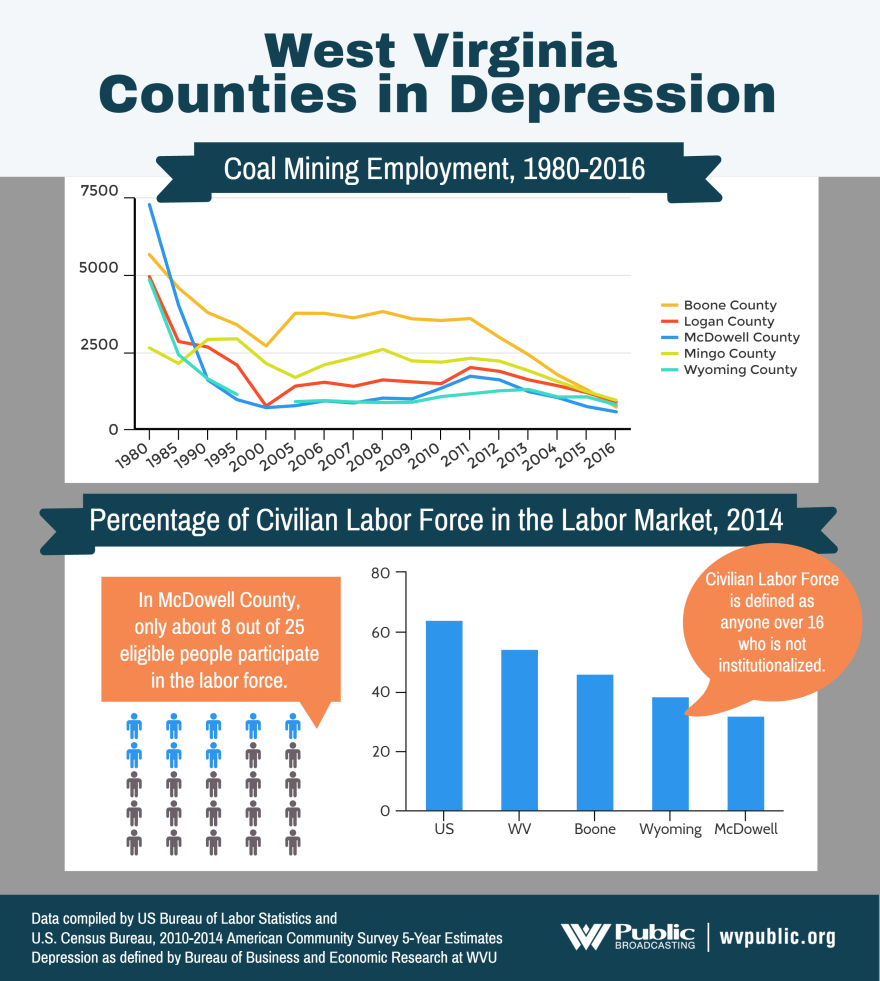
Things are looking up for coal – at least a little bit. In the last few months, there’s been a slight uptick in coal production, caused by increased demand for electricity and metallurgical coal, which is used to make steel.
Even so, West Virginia mined only about 80 million tons last year – the lowest level in several decades.
Credit WVPB/ Shayla Klein
/
In this episode we hear from John Deskins of West Virginia University’s Bureau of Business and Economic Research to predict the coal industry’s future, and how Trump’s election may affect coal jobs.
Appalachian Regional Commission
We also hear from Earl Gohl, Federal Co-chair for the Appalachian Regional Commission, or ARC, about what he thinks the next few years could bring for Appalachia. “Appalachia has the potential to be the best investment opportunity in America,” said Gohl.
The ARC is an economic development agency of the federal government and 13 state governments focusing on 420 counties across the Appalachian Region. The Federal Co-chair is appointed by the President, so Donald Trump will likely select a new co-chair to head the ARC.
100 Days in Appalachia
So how will Appalachia react to the start of the Trump Administration? “100 Days in Appalachia” is a new project to tell those stories from inside our region, a place that’s been dubbed “Trump Nation.”
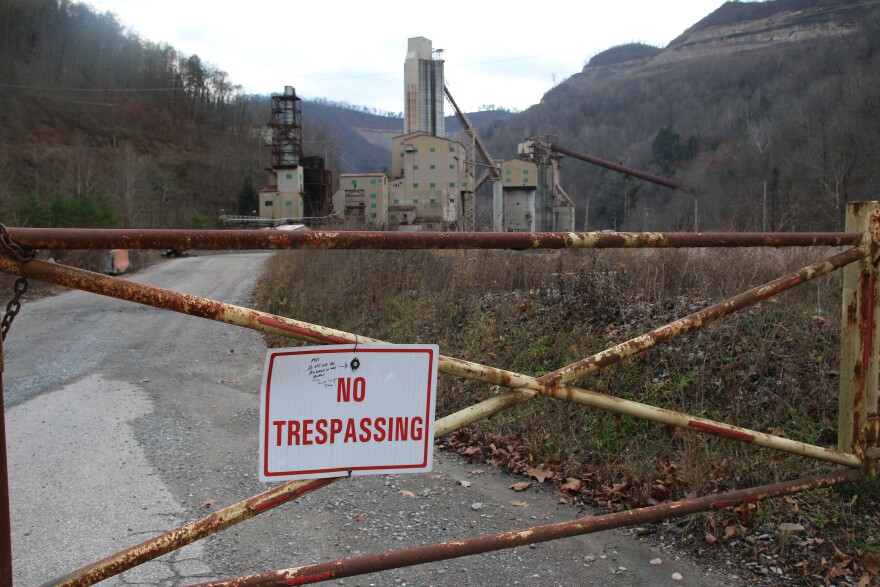
Closed mine in Van, W.Va. in Boone County
Host Jessica Lilly closes this episode with this personal message:
On this show, we hear from supporters and opponents of Trump in Appalachia to find out what it means for our future and what we should be watching.
They have a story just the same as anyone else. These folks have done their own research and looked for answers that made sense for their lives. This election was such a surprise to some people but maybe it wouldn’t have been if we just listened to a different viewpoint.
Credit Lance Booth
/
Former KY coal miner Gary Bentley
Get to know somebody who’s a different religion, or race, or registered as a different political party. Or talk with someone in a different tax bracket, or maybe even the man you see at the gas station covered in coal dust.
Credit U.S. National Archive Jack Corn
/
A boy in Raleigh County takes a swing at baseball while behind him is a mine site.
We had help producing Inside Appalachia this week from the Us and them Podcast and the Front Porch Podcast. Music in today’s show was provided by Jake Schepps, Andy Agnew Jr., and Ben Townsend.
Scott Finn edited this episode. Zander Aloi is our audio mixer. Our producer is Roxy Todd. What do you think about Trump’s election? We’d love to hear from you. Find us on Twitter @InAppalachia or @JessicaYLilly.
Add WVPB as a preferred source on Google to see more from our team
This week, too often, people with mental health challenges or substance use disorder wind up in jail. But crisis response teams offer another way. Also, changes to the Endangered Species Act could benefit big business. They could also kill animals like the eastern hellbender. And, in troubled times, a West Virginia writer says to find peace in nature.
A plan to funnel millions of dollars in oil and gas royalties toward conservation efforts is getting support from an unexpected group. From The Allegheny Front, we learn about fracking proposals in southeastern Ohio – and what WVU researchers say could be the impact on wildlife.
Across the country, old railroads have been converted into multi-use trails for folks to get out and enjoy nature. Chris Schulz has more on an ambitious vision to connect communities in West Virginia to Pittsburgh via rail trail.