The Greenbank Observatory is offering a limited chance to go behind the scenes to check out its Search for Extra Terrestrial Intelligence (SETI). SETI tours are offered to small groups – ages 12 and up – several times a month through October. We caught up with the Observatory’s news manager to find out more about the tours – and what exactly scientists there are looking for.
Home » WVPB Podcasts » Finding Meaning And Authenticity In Hot Rods, Dollywood and Everywhere Inside Appalachia
Published
Finding Meaning And Authenticity In Hot Rods, Dollywood and Everywhere Inside Appalachia
Listen
Share this Article
One could spend a lifetime learning about Appalachia, and just scratch the surface.
On this week’s episode, we take a deeper look at traditional cultural practices found throughout these mountains.
We’ll hear stories spanning from fiddle music, to Appalachian style food. We’ll also hear how moonshine getaway cars turned into an Appalachian subculture of families who rebuild and race hot rods.
Learning A Unique Fiddle Style That’s Rooted In Geographical Place
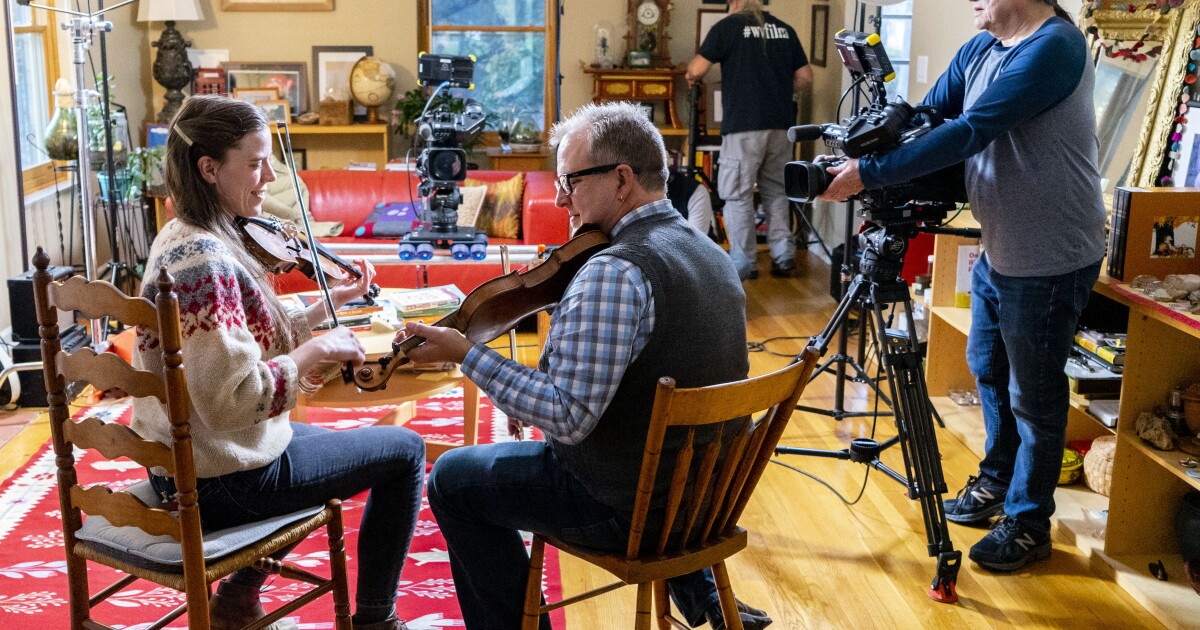
A lot of traditional Appalachian practices would be lost if it weren’t for experts sharing their knowledge with the next generation. And the West Virginia Humanities Council has been promoting that exchange through their Folklife Apprentice Program.
One master and apprentice duo that completed the program recently spent a year preserving a style of old-time fiddling. Our folkways reporter Caitlin Tan brings us this story.
Does Dollywood Offer Tourists An Authentic Experience?
And we’ll travel to a theme park that’s crafted its facade off of the fantasy of being authentically Appalachian: Dollywood. Yes, glorious Dollywood, with a water-powered gristmill that really makes cornmeal and a campy stage show that performs music that’s loosely based on the traditional music Dolly Parton grew up on. Among many other things, Dollywood is a masterfully crafted business, and a gem to many of us Appalachians. But does it give travelers an authentic mountain experience? Reporter Betsy Shepherd went to find out for a story she originally produced for the podcast “Gravy”, produced by the Southern Foodways Alliance.
Loading…
Credit Mason Adams/ WVPB
/
Jeremy (left) and Jeff Bennett stand by a 1937 Ford pickup they rebuilt.
Hot Rods In Roanoke
Americans love cars, period. But in Appalachia, we’ve always had a way of tinkering with objects to make them perform the way we want them to. On any given Friday night, amid the glow of stoplights, fast food franchises and international grocery stores, along Williamson Road in Roanoke, Virginia, you can see cars and trucks modified with neon lights, spinning rims and streamlined spoilers strutting from north to south and back again.
Drivers propel themselves around the asphalt track at the Ona Speedway in Ona, West Virginia. Built in the early 1960s, the track was the first of its kind in the Mountain State and hosted four NASCAR races in the small town.
A Little Bit Of Daytona — Close To Home
In the early 1960s, short-track racing put Ona, West Virginia on the map. As West Virginia’s first and only oval asphalt racetrack, the Ona Speedway has been at the epicenter of regional racing culture. The road has been bumpy at times, and the track has survived its fair share of challenges and changes. Yet what hasn’t changed is that year after year, many families return to race, watch and impart their hard-earned wisdom to the community’s upcoming generations of drivers. Inside Appalachia Folkways Reporter Lexi Browning recently spent some time with one of those families, the Siglers, and brings us this story.
Mason and Lexi’s stories are part of the Inside Appalachia Folkways Reporting Project, a partnership with West Virginia Public Broadcasting’s Inside Appalachia and the Folklife Program of the West Virginia Humanities Council. The Folkways Reporting Project is made possible in part with support from Margaret A. Cargill Philanthropies to the West Virginia Public Broadcasting Foundation. Subscribe to the podcast to hear more stories of Appalachian folklife, arts, and culture.
Glynis Board guest hosts this week’s show. “I find that whenever I tell folks I’m from Appalachia, people respond with a lot of different kinds of questions,” Board said. “And maybe like you, there are some questions that are, well, ridiculous. Like, ‘do you have running water in your home? Or indoor plumbing? Do you have all your teeth?’”
“But honestly, the more I travel outside our region, I find there’s a growing appetite for authenticity in general, and a lot of folks with a genuine curiosity about life here and in our people. And I find these interactions so encouraging.”
We had help producing Inside Appalachia this week from The Southern Foodways Alliance and their podcast Gravy. Special thanks to the West Virginia Folklife Program at the West Virginia Humanities Council.
Our theme music is by Matt Jackfert. Other music this week was provided by Dinosaur Burps, Adrien Niles, Larry Groce, Bruce Springsteen, DougVan Gundy, Mose Coffman, Annie Stroud, and Dolly Parton.
As temperatures rise and people start heading outside, the chance of contracting a tick-borne illness goes up. Cases of Lyme disease have seen a sharp rise in recent years, so reporter Chris Schulz recently spoke with Dr. Kane Maiers, associate medical director for UPMC GoHealth Urgent Care in West Virginia, to learn more.
The Greenbank Observatory is offering a limited chance to go behind the scenes to check out its Search for Extra Terrestrial Intelligence (SETI). SETI tours are offered to small groups – ages 12 and up – several times a month through October. We caught up with the Observatory’s news manager to find out more about the tours – and what exactly scientists there are looking for.
There are still many questions that surround the chemical incident near Institute last week that killed two workers. Chris Schulz spoke with Dr. Christopher Martin, a specialist in occupational and environmental medicine at West Virginia University (WVU), to try and shed some light on what happened.