


'Haunted' Town Already Celebrating Spooky Season
Halloween is still several weeks away, but one West Virginia town is already celebrating the season.
Continue Reading Take Me to More NewsAlert (09/29/2026): Our Parkersburg TV transmitter is still undergoing maintenance and remains temporarily inoperative. We apologize for the inconvenience.
All our programming is available via our TV livestreams on our website and WVPB Passport. Thank you for your patience!




To Educate, Inform, and Inspire by Telling West Virginia's Story
Mountain Readers Week will be held Oct. 5-9, 2026! Celebrate and foster a love of reading in children across West Virginia.
Nominate an exceptional West Virginia K-12 teacher today!

On Demand

On Demand

Stream original productions from WVPB

Watch locally produced documentaries & more.

On Demand

On Demand






West Virginia Morning

Inside Appalachia

West Virginia Week

Mountain Stage

Us & Them

The Legislature Today

The Legislature This Week

Send us your comments and questions.

Stream our board meetings.

Check out the latest WVPB news.

Sign up for our newsletter and get weekly updates.

Meet the WVPB staff.

WV Educational Broadcasting Commission, the WVPB Foundation, and the Friends of WVPB.

Come work with us!

Read our annual report and learn how we educate, inform and inspire with your support.

Sponsor impactful and engaging media and entertainment.

Use your IRA to make a gift to WVPB.

Become a member with your gift of $1,000 or more.

Make WVPB part of your legacy.

Manage your membership account.

Learn how you can Protect and Sustain West Virginia Public Broadcasting.

Since 1967, Foxfire has been a storehouse of traditional Appalachian knowledge that still helps people today.
It continues to preserve music and history, but part of Foxfire’s heritage has been recording the stories of Appalachian women.
This week, Inside Appalachia explores Foxfire – its past, present and future.
In This Episode:
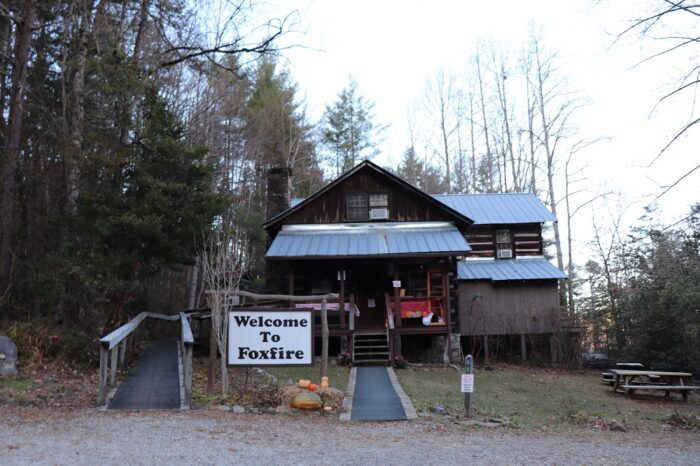
Foxfire began in 1967 as a student-run magazine in North Georgia. It was a way for high school students to collect and share the wisdom and lore from their community members. They named it “Foxfire” after a fungus in the region that glows in the dark.
Over 50 years, it’s grown into a book series, a magazine, a museum, and an oral history archive. One of those oral histories is from 1975 and captures the kind of knowledge that Foxfire collected.
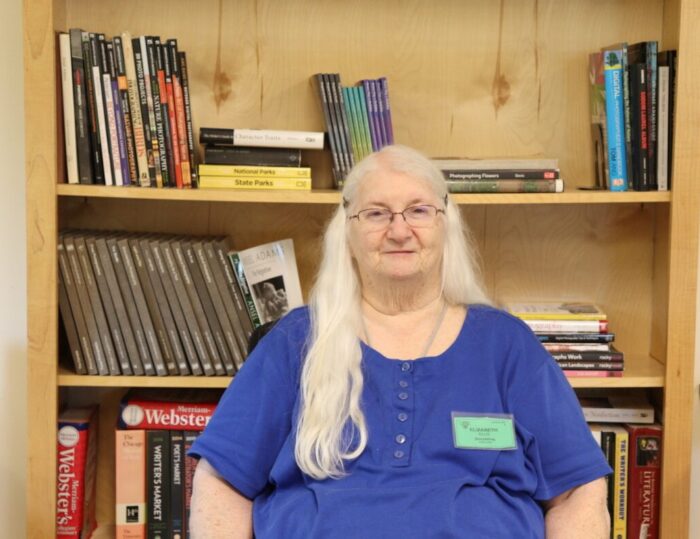
A lot of the women in older archival Foxfire interviews said that they “didn’t work” but so many Appalachian women were midwives, mothers, and business owners.
Foxfire’s latest collection features 21 women in the book called “The Foxfire Book of Appalachian Women,” edited by then Foxfire education director and museum curator Kami Ahrens. Mason Adams had more.
In 2020, Blue Ridge Public Radio partnered with Ahrens to record oral histories and aired them on the radio. BPR’s Lilly Knoepp shared a few.
------
Our theme music is by Matt Jackfert. Other music this week was provided by Bela Fleck and Abigail Washburn, Sean Watkins, The Steel Woods, and Dr. Kathy Bullock and her class at the John C. Campbell Folk School.
Bill Lynch is our producer. Zander Aloi is our associate producer. Our executive producer is Eric Douglas. Kelley Libby is our editor. Our audio mixer is Patrick Stephens.
You can send us an email: InsideAppalachia@wvpublic.org.
You can find us on Instagram, Threads and Twitter @InAppalachia. Or here on Facebook.
Sign-up for the Inside Appalachia Newsletter!
Inside Appalachia is a production of West Virginia Public Broadcasting.

Add WVPB as a preferred source on Google to see more from our team

West Virginia has seen the largest population decline in the nation - nearly 1.5% - and many of those leaving are young people. In an episode that aired last month, Us & Them host Trey Kay heard from some young people who think they may stay in the state to launch their futures. This month, Kay talks with those who say living their dreams may well require moving away from the Mountain State. We listen to an excerpt from the latest Us & Them.
Continue Reading Take Me to More NewsThey love West Virginia, but love alone may not be enough to keep them here. In the second of two Us & Them episodes, Trey Kay talks with young West Virginians who say they may need to leave in search of careers, community and a place where they can imagine their futures. Their decisions reveal what the Mountain State risks losing when young people cannot see a place for themselves at home.
Continue Reading Take Me to More NewsLast week, we aired the first part of an interview with a WVSU professor about what is AI. In the second part of that interview, we explore the best way to use AI to get what you want – while avoiding fabricated or false answers that seem real.
Continue Reading Take Me to More NewsDirect-to-consumer tests like full-body scans are marketed as a way to catch diseases early and establish a baseline. But there are financial, physical and psychological risks to all medical tests — and in some cases, not getting a test could be better for your health. From the Appalachia + Mid-South Newsroom, HealthQ hosts Cara Anthony and Blake Farmer speak with UCSF Cardiologist Dr. Rita Redberg.
Continue Reading Take Me to More News