


Aluminum Plates For Deep Space Win W.Va. 'Coolest' Contest
Aluminum plates that helped keep astronauts on the Artemis II rocket safe won the first ever Coolest Thing Made In West Virginia competition.
Continue Reading Take Me to More NewsAlert (09/29/2026): Our Parkersburg TV transmitter is still undergoing maintenance and remains temporarily inoperative. We apologize for the inconvenience.
All our programming is available via our TV livestreams on our website and WVPB Passport. Thank you for your patience!




To Educate, Inform, and Inspire by Telling West Virginia's Story
Mountain Readers Week will be held Oct. 5-9, 2026! Celebrate and foster a love of reading in children across West Virginia.
Nominate an exceptional West Virginia K-12 teacher today!

On Demand

On Demand

Stream original productions from WVPB

Watch locally produced documentaries & more.

On Demand

On Demand

West Virginia Morning
Inside Appalachia
West Virginia Week
Mountain Stage
Us & Them
The Legislature Today
The Legislature This Week

Send us your comments and questions.

Stream our board meetings.

Check out the latest WVPB news.

Sign up for our newsletter and get weekly updates.

Meet the WVPB staff.

WV Educational Broadcasting Commission, the WVPB Foundation, and the Friends of WVPB.

Come work with us!

Read our annual report and learn how we educate, inform and inspire with your support.

Sponsor impactful and engaging media and entertainment.

Use your IRA to make a gift to WVPB.

Become a member with your gift of $1,000 or more.

Make WVPB part of your legacy.

Manage your membership account.

Learn how you can Protect and Sustain West Virginia Public Broadcasting.
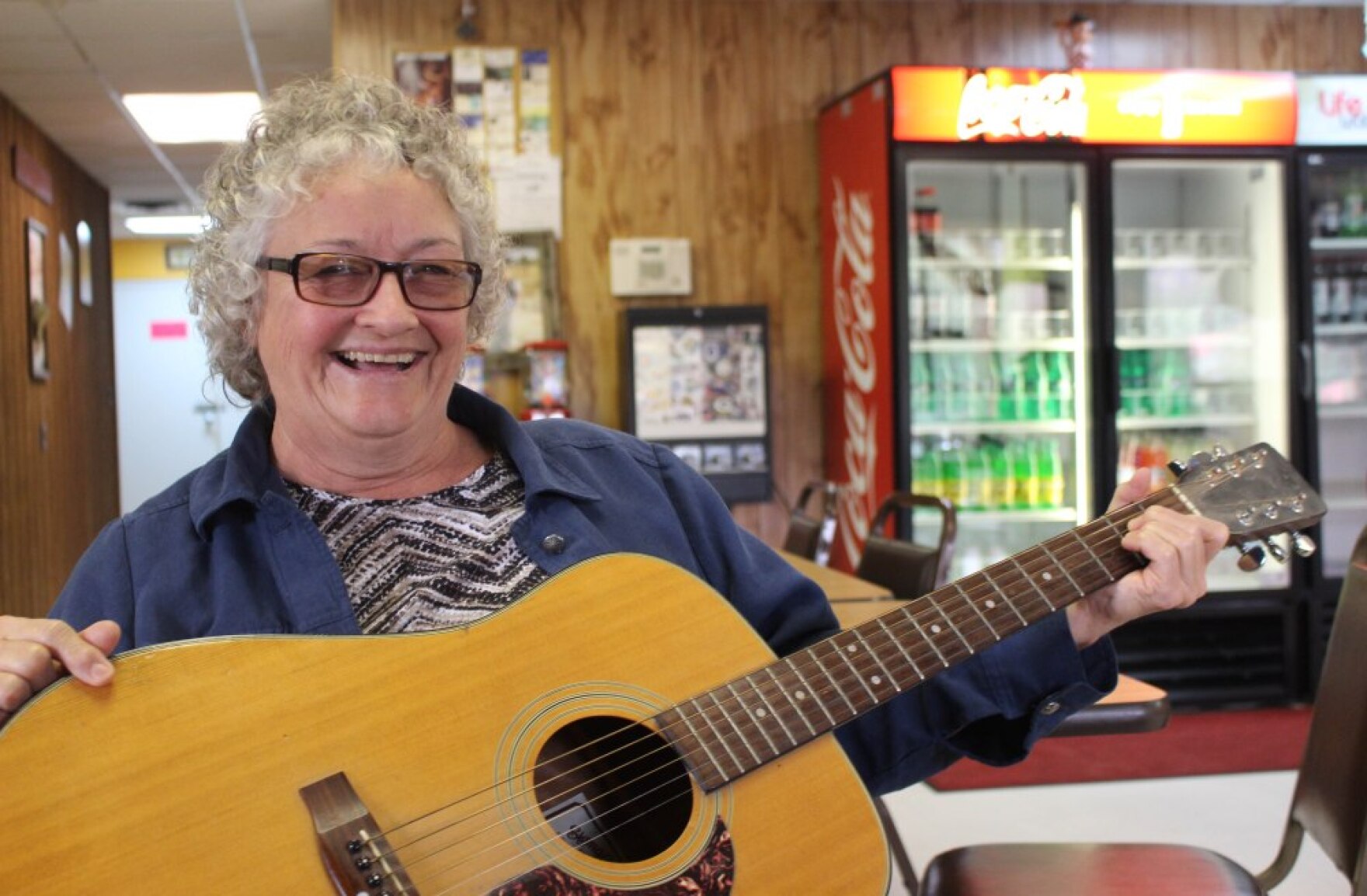
COVID-19 has taken the lives of nearly 300 West Virginians, and earlier this month, the state lost one of its most powerful and vocal social activists and musicians.
Elaine Purkey passed away Sept. 2 in Ranger, West Virginia at 71 years old.
Purkey grew up a coal miner’s daughter in the mountains of Lincoln County. She was a coal miner’s wife, a mother, grandmother and great-grandmother. But much of her life was spent as a musician activist – taking part and writing songs for many of the major union strikes over the past 50 years.
Purkey was internationally known. One of her performances was featured in a PBS documentary. She played in the 2003 Smithsonian Folklife Festival, and she is included in a folklife collection in the Library of Congress. But all her inspiration came from the Mountain State.
“I used the term hillbilly as a compliment,” said Rick Wilson, a native West Virginian who works with the American Friends Service Committee, a Quaker social justice group. “She’s hardcore Southern West Virginia. And, West Virginians, you know, are almost tribal in some ways. There’s just like this real visceral connection to place. I’d have to say it wasn’t just a connection to place, but a connection of solidarity and sympathy for the poor and disadvantaged.”
Purkey learned to play guitar and sing from her family. Legend has it that as a young girl her father would put her on top of a rock to sing to whoever happened to walk by, Wilson said.
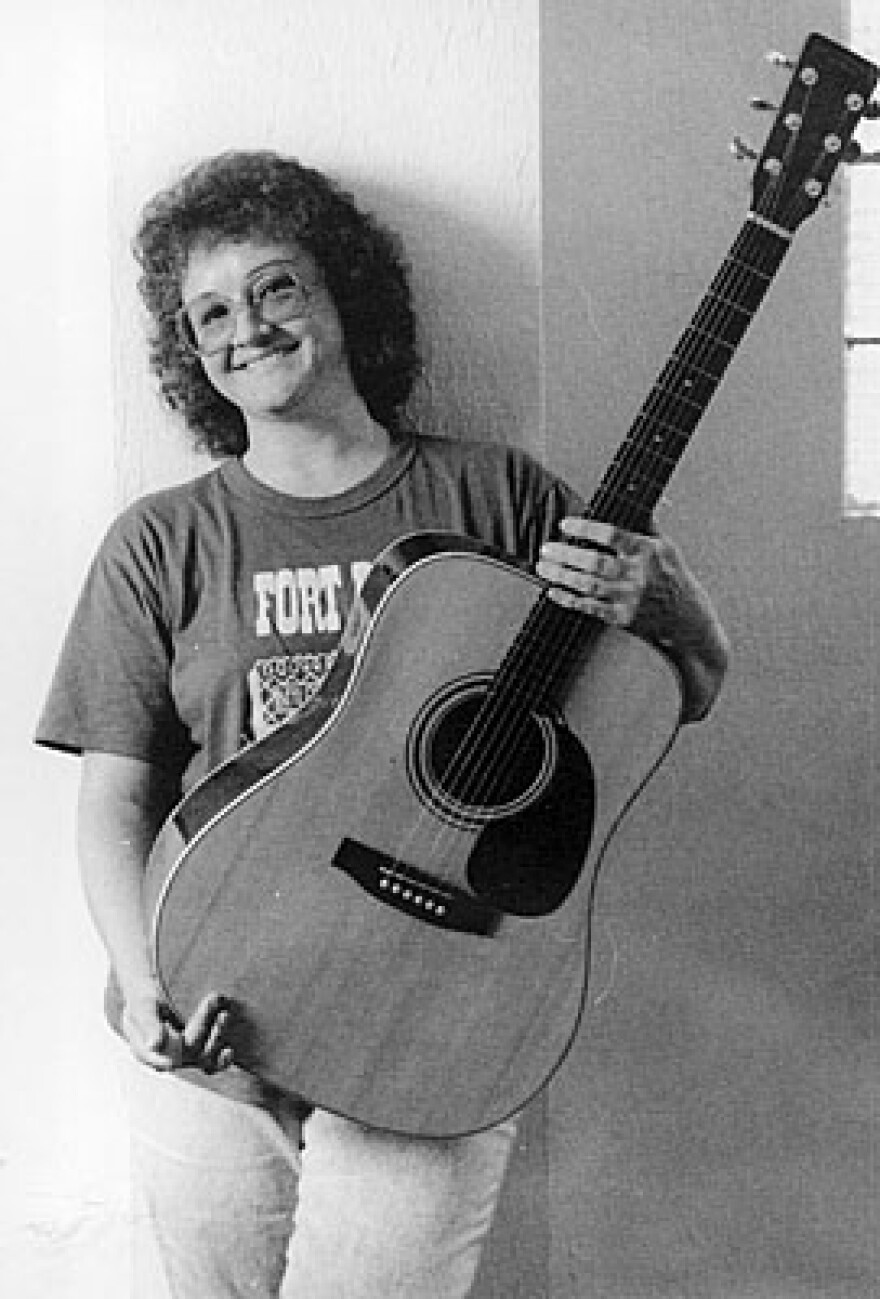
“You didn’t want to hear Elaine sing in a small room because she could just blow you away,” he said.
Wilson and Purkey were friends for over 30 years, first meeting at a coal worker strike and later bonding over their love of music.
Her song ‘One Day More’ is about the 1990-92 Ravenswood Lockout, where nearly 2,000 United Steelworkers Union members demanded safer working conditions. It became one of her most famous songs, featuring in the 2006 Smithsonian Folkways Recordings album ‘Classic Labor Songs.’
It is about union workers outlasting companies by “one day” to get their demands met.
“If the company holds out 20 years, we’ll hold out one day more,” according to the lyrics.
Purkey focused much of her time and songs on issues like clean water, police brutality and teacher strikes, but also lighter things, like teaching Appalachian folk songs to kids at the Big Ugly Community Center and being an active member in Leets Church of Christ in Lincoln County.
She was absorbed by her passions and had a random, yet charismatic sense of humor, Wilson said.
“We used to have a joke that her brain worked like an old-fashioned car with an AM radio driving on curvy mountain roads at night and you never knew what station she was gonna pick up,” he said.
Another friend of Purkey’s was Jeff Bosley, a recording event production engineer based in Huntington. He met Purkey through the music industry 10 years ago and described her as “fire and vinegar.”
“She never stopped, and for us to be in a position here talking about Elaine being stopped, it just, it doesn’t really compute at this point, it just doesn’t,” Bosley said. “She was like an elemental force of nature.”
Bosley recorded Purkey singing the old Hazel Dickens’ song ‘Fire in the Hole’ at the opening of the Mine Wars Museum in Matewan in 2015. Her voice echoed through the building that still bore bullet holes from one of the many labor union strikes during the mine wars years in the early 1900s.
“You can tell them in the country, tell them in the town, the miners down in Mingo laid their shovels down,” according to the ‘Fire in the Hole lyrics. “We won’t pull another pillar, load another ton, or lift another finger till the union we have won.”
“I think Elaine was really singing about what she felt, what her thoughts were and what her experiences were,” Bosley said. “It’s just so sincere and come straight from the heart.”
Purkey truly believed in West Virginia and its ability to persevere, much like her song says in ‘One Day More’, Wilson said.
“I think Elaine’s advice to us in these days, which are really dark in more ways than one, would be to hold out one day more,” he said.
If you have a loved one who has passed away from COVID-19 and you would like us to remember them, reach out at news@wvpublic.org.
The West Virginia Folklife Program at the West Virginia Humanities Council provided audio for the songs ‘One Day More’ and ‘Keepers of the Mountains.’
Add WVPB as a preferred source on Google to see more from our team

A Charleston man accused of a fraudulent scheme related to the COVID-19 pandemic is one of 33 people prosecuted for such crimes through the U.S. Attorney's Office for the Southern District of West Virginia.
Continue Reading Take Me to More NewsAppalachia, and the entire world, really, was shaken by the passing of Dolly Parton. Dolly — everyone called her Dolly — was a Tennessee native, country and pop music singer, and philanthropist who invested heavily in people – especially here in Appalachia. And in children’s literacy through her Imagination Library, which provides free books to young kids. To a lot of people, she was Appalachia. To mark her passing, Inside Appalachia Host Mason Adams spoke with Ted Olson, a country music historian at East Tennessee State University’s Department for Appalachian Studies.
Continue Reading Take Me to More NewsSinger, actress and icon Dolly Parton visited West Virginia in 2022 to celebrate the state’s full participation in her Imagination Library, an early childhood literacy program she started in honor of her father in 1995. Dolly Parton died Tuesday after a brief illness. We listen back to an interview she did with then WVPB Executive Producer Suzanne Higgins.
Continue Reading Take Me to More NewsWest Virginia has been at the center of America's opioid epidemic and overdose death toll. While recent reports show the state’s overdose deaths have fallen by nearly 38%, addiction remains the most common reason for West Virginia children to be taken from their families. In the next episode of Us & Them, host Trey Kay attends a WVU training symposium, including a screening of the recent film "What We Hide," and hears from professionals who work with people affected by addiction.
Continue Reading Take Me to More News