Alert (09/10/2026): Our Parkersburg TV transmitter is undergoing maintenance for a few days and will not be operational. We apologize for any inconvenience.
All our programming is available via our TV livestreams on our website and WVPB Passport. Thank you for your patience!
A new book called "Appalachian Plants: In the Garden, In the Yard, and In the Wild" explores some of the history and lore of plants that have been used by many in the region. Inside Appalachia’s Mason Adams spoke with author Linda Hager Pack and illustrator Pat Banks about their book.
Black Lung Patient Fights for Miner Benefits in His Final Days
Listen
Share this Article
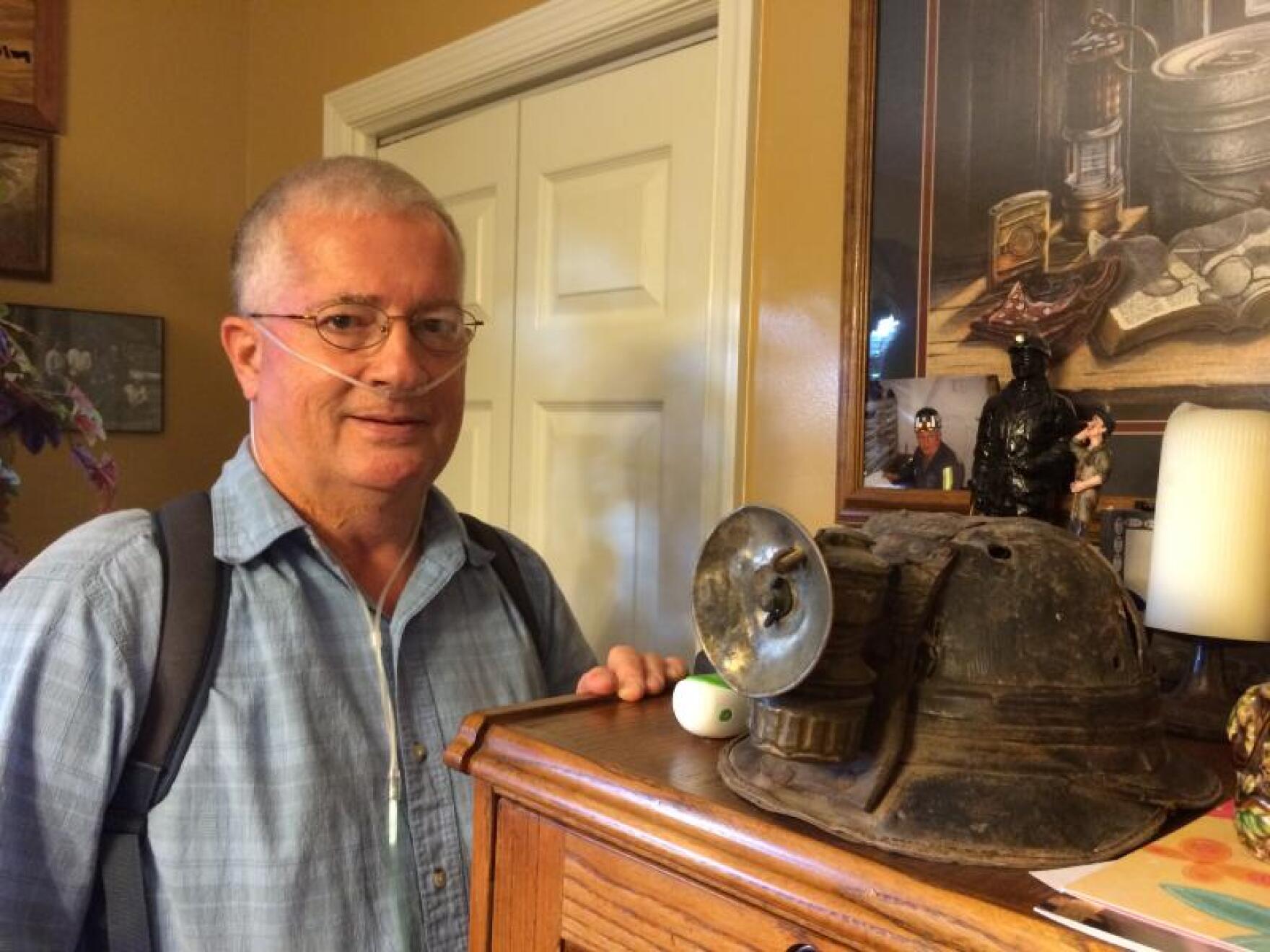
Robert Bailey was a coal miner for 36 years. He began working in McDowell County, and after it became too hard to breathe, he retired from a mine owned by Patriot Coal in Boone County. Bailey first told his story with WVPB in June 2014. He shared his final story with Inside Appalachia host, Jessica Lilly, on February 15, 2019.
“It’s a struggle just to receive the help that you still need,” Bailey said back in 2014. He was still in the process of a lung transplant. At this time, Bailey was waiting to hear if Patriot Coal’s insurance company, Underwriters Safety and Claims, would approve his appointment for a medical evaluation. He’d already had to cancel one appointment.
Bailey had already been approved for federal black lung benefits by the U.S. Department of Labor and his doctor told him he needed a double lung transplant.
Black lung disease made it difficult for Bailey to breathe. “It’s almost like drowning,” he said.
Credit Jessica Lilly / West Virginia Public Broadcasting
/
West Virginia Public Broadcasting
Former Coal miner Robert Bailey
As Bailey waded through another bureaucratic process, the clock was ticking, and he was running out of time.
“They told me that as soon as my testing was done that they’d put me on a list,” Bailey explained. “So that tells me that they don’t think that my lungs have very much life left in them.”
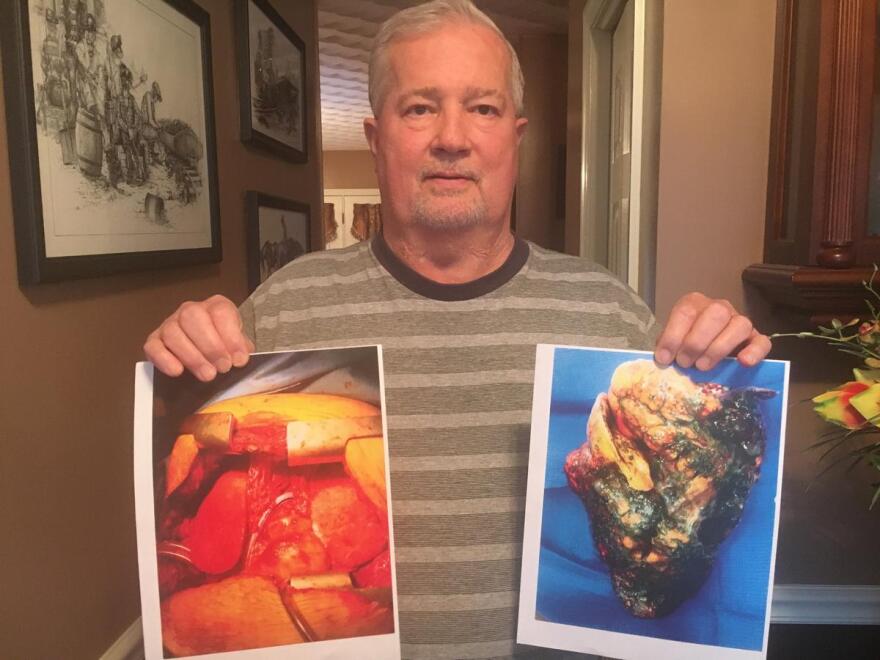
Robert Bailey (right) kisses his wife of 45 years, Brenda Bailey (left), after his lung transplant.
A double lung transplant comes with its own set of health challenges. About half of all adults who receive a double lung transplant live just five years after the surgery.
Robert became an advocate for miners with black lung and spoke twice to Congress during Senate hearings, urging lawmakers to act quickly in order to reduce the backlog of black lung cases still needed to be evaluated.
“I’m hoping that through my experience other people could maybe have better results,” he said.
Final Days
About two months ago, Robert learned he had an aggressive form of liver cancer. Doctors gave him weeks to live, and he was put on hospice care when he got home. He wanted to share more of his story.
“I wasn’t really shocked about it really,” Bailey said. “It wasn’t really news that I was looking forward to hearing, but I know it was news that we would have to deal with. But God gave me first breath. He’ll take my last one.”
Robert reflected on his struggle with black lung. He said that doctors told him his liver cancer was probably linked to medications he took as part of his treatment after his lung transplant. Still, he said, these side effects of his transplant wouldn’t have even been an issue if he hadn’t contracted black lung to begin with.
Credit Jessica Lilly / West Virginia Public Broadcasting
/
West Virginia Public Broadcasting
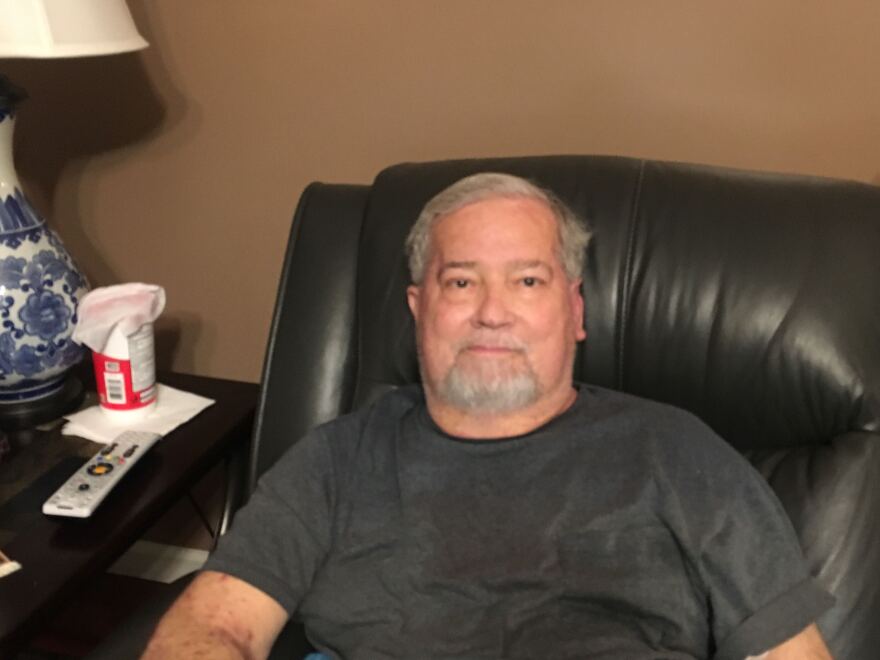
Robert Bailey, February 15, 2019
Mr. Bailey was a humble man, but he still wanted to share his story. He said he hoped that his suffering, and his death, wouldn’t be in vain.
“Even though I have been blessed with this extra time that I wouldn’t have had, it would be so much better in the long run if the disease itself would be conquered,” he said.
Robert said he hoped his story might help inspire lawmakers to take more steps to improve health conditions for other miners, and perhaps even prevent other coal miners from the same suffering. He pointed out that laws to protect coal miners typically don’t change until miners die, and sometimes not even then.
“Most laws across the nation, most laws [have] been written with blood. I don’t want the things I went through just to drop and no knowledge to be gained.”
As for advice for any young miners today, he said it’s important to do a good job during the day but it’s also important to be able to come back.
“I know a lot of them does a lot of things for the money, and they’re offered a lot of money to meet certain goals. But you can meet a goal today that will take you out of this world tomorrow,” Bailey warned.
A new book called "Appalachian Plants: In the Garden, In the Yard, and In the Wild" explores some of the history and lore of plants that have been used by many in the region. Inside Appalachia’s Mason Adams spoke with author Linda Hager Pack and illustrator Pat Banks about their book.
West Virginia received $199 million in the first year of the Rural Health Transformation Program. Dr. Arvin Singh, secretary of the West Virginia Department of Health, told lawmakers he expects the state's level of funding to remain the same next year.
Many West Virginians may not remember the name Doris “Dorie” Miller, but he served on the USS West Virginia when it was attacked at Pearl Harbor. While Miller was never trained to fight, he raced to the deck on the day of the attack and fought back - shooting down at least one enemy plane. In 2020, a new aircraft was commissioned by the U.S. Navy and named for Miller. But recent stories have surfaced with talk of renaming it after President Donald Trump. We speak with Scott Womack, the commander of American Legion Post 100 in Monroe, West Virginia, to discuss the group’s recent resolution that the Navy should retain Miller’s name on the ship.
A new report from the Centers for Disease Control found that black lung rates are the highest they’ve been since the 1970s. The disease can be debilitating, even for young miners. Justin Hicks reported for the Appalachia + Mid-South Newsroom on the new CDC report. Longtime investigative reporter Howard Berkes assisted, continuing his years of reporting on black lung, as previously featured on Inside Appalachia. Following the story’s release, Inside Appalachia Host Mason Adams reached out to dig deeper.