


The Mystery Of The Flatwoods Monster
Many cryptids are said to lurk in the shadows of Appalachia, including West Virginia’s Flatwoods Monster.
Continue Reading Take Me to More NewsAlert (09/29/2026): Our Parkersburg TV transmitter is still undergoing maintenance and remains temporarily inoperative. We apologize for the inconvenience.
All our programming is available via our TV livestreams on our website and WVPB Passport. Thank you for your patience!




To Educate, Inform, and Inspire by Telling West Virginia's Story

Mountain Readers Week will be held Oct. 5-9, 2026! Celebrate and foster a love of reading in children across West Virginia.

Nominate an exceptional West Virginia K-12 teacher today!

On Demand

On Demand

Stream original productions from WVPB

Watch locally produced documentaries & more.

On Demand

On Demand






West Virginia Morning

Inside Appalachia

West Virginia Week

Mountain Stage

Us & Them

The Legislature Today

The Legislature This Week

Send us your comments and questions.

Stream our board meetings.

Check out the latest WVPB news.

Sign up for our newsletter and get weekly updates.

Meet the WVPB staff.

WV Educational Broadcasting Commission, the WVPB Foundation, and the Friends of WVPB.

Come work with us!

Read our annual report and learn how we educate, inform and inspire with your support.

Sponsor impactful and engaging media and entertainment.

Use your IRA to make a gift to WVPB.

Become a member with your gift of $1,000 or more.

Make WVPB part of your legacy.

Manage your membership account.

Learn how you can Protect and Sustain West Virginia Public Broadcasting.

Mistletoe (Phoradendron leucarpum) is found in all 55 counties in West
Virginia. It grows high in the branches of hardwood trees and is considered semi-parasitic.
Sometimes called kiss and go, it pushes its root-like structures called haustoria
into tree branches, where it takes water and nutrients from the host tree.
It spreads to other tree tops by birds eating its white berries.
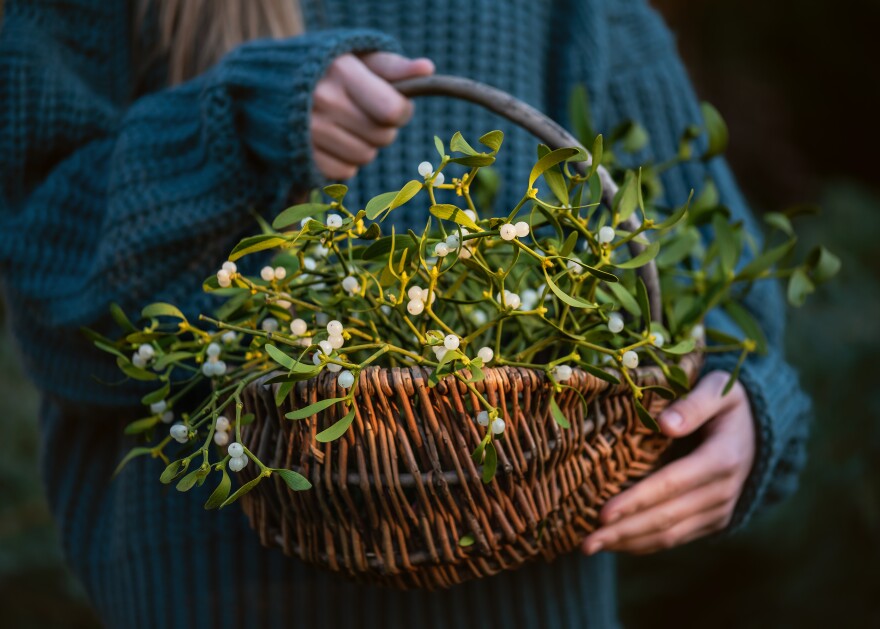
Sounds like a freeloader, right? But some studies suggest that by
attracting more berry-eating birds, other berry-producing plants nearby
benefit as well, thus promoting higher diversities of berry-eating
animals and creating a much more diverse ecosystem overall.
Because it grows so high in trees, harvesting it can be tricky. Some
folks shoot it out of the tree and try to catch it. With a wholesale
market price of $10 per pound, a clump could bring in as much as $500.
All parts of the plant are toxic when ingested. While the bulk of poison
cases are children, no fatalities have been reported.That’s probably
one of the reasons why we hang it high and out of reach when used as
Christmas decor.
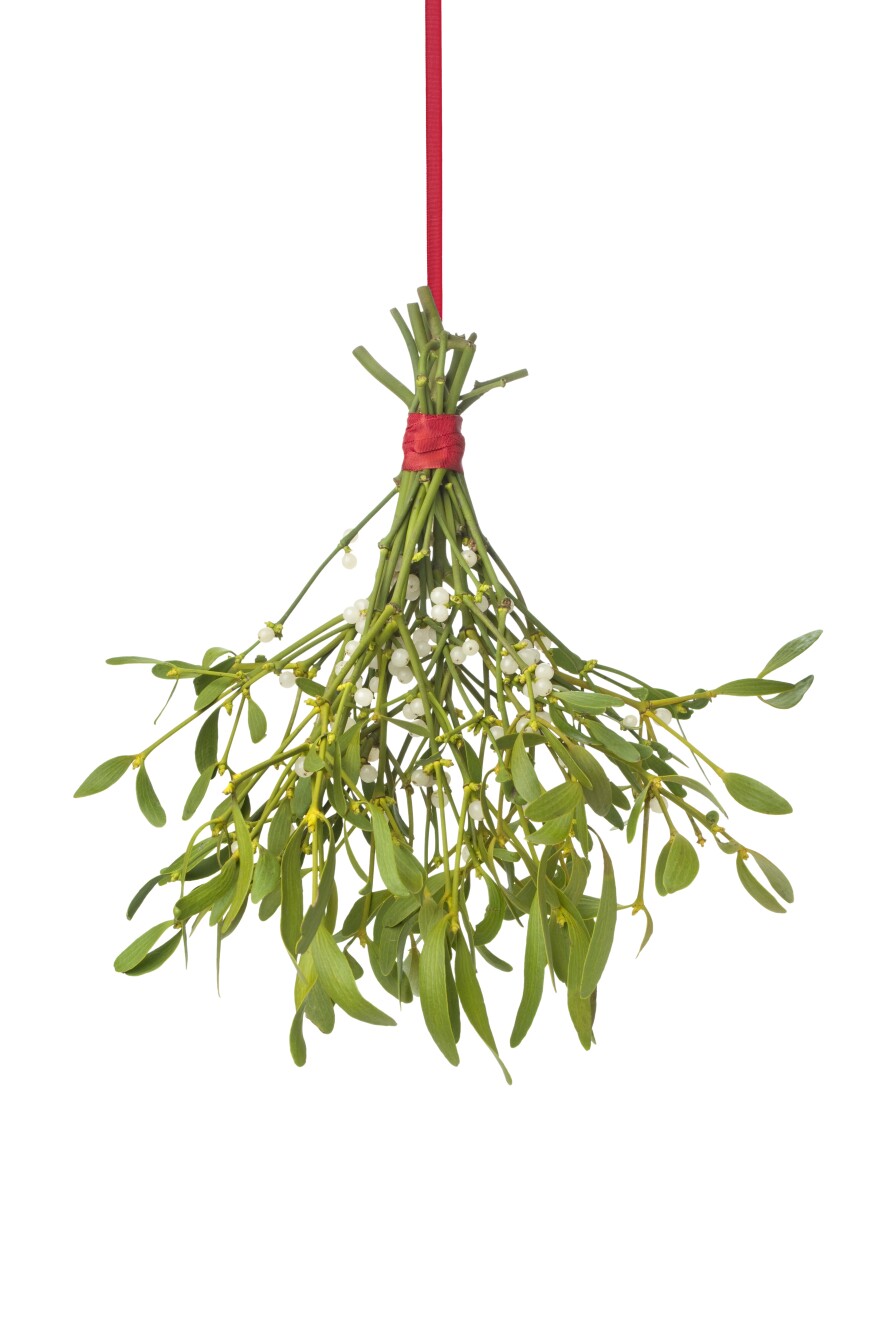
Mistletoe has a wealth of cultural references throughout history and
across the world.
Of course the one we all know and love is the tradition of meeting someone under the mistletoe and stealing a kiss.
But, per old Appalachian folklore, if you put mistletoe under your
pillow on Christmas, you’ll see the face of your true love while you
dream.
Edible Mountain is a bite-sized, digital series from WVPB that showcases
some of Appalachia’s overlooked and underappreciated products of the
forest while highlighting their mostly forgotten uses. The series
features experts, from botanists to conservationists, who provide
insight on how to sustainably forage these delicacies. It also explores
the preparation of these amazing delectables, something that many could
achieve in the home kitchen.
Add WVPB as a preferred source on Google to see more from our team

Mountain Stage is changing locations for its final two live events of 2026. The Sunday, Nov. 15 show will now take place at the Charleston Theater at the Convention Center, and the Sunday, Dec. 6 show will be held at the Capitol Theater in Downtown Charleston.
Continue Reading Take Me to More NewsDuring spooky season, popular attention turns toward ghosts and goblins – or if you live in Appalachia – cryptids. For the Appalachia + Mid-South Newsroom, Bill Lynch, producer of Inside Appalachia, brings us the story of the Flatwoods Monster.
Continue Reading Take Me to More NewsThis week, ballroom culture offers LBGTQ folks a chance to be as fabulous as they want to be. Also, national media reports on the deaths of notable people, but small, hometown papers add a more personal touch. And, alpha-gal syndrome takes red meat off the menu, but what about ostrich?
Continue Reading Take Me to More NewsLocal leaders continue to promote the state's aviation industry as the country continues to face a shortage of specialized workers including mechanics, technicians and air traffic controllers.
Continue Reading Take Me to More News