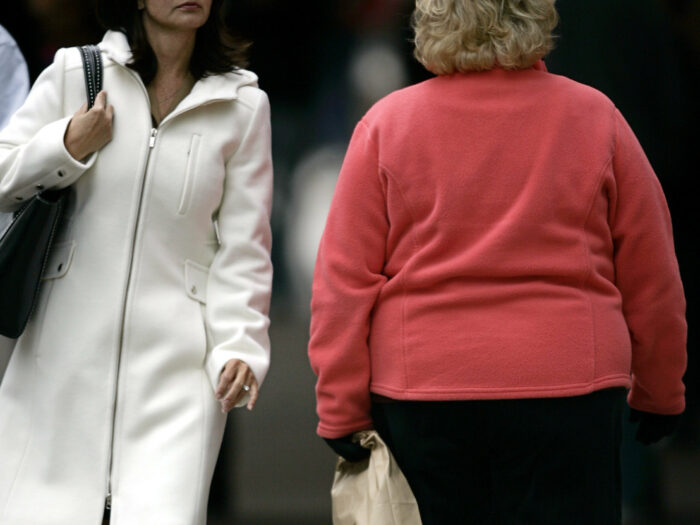
It’s not often that we associate West Virginia’s obesity rates with good news – but data released last month from the nonprofit Trust for America’s Health (TFAH) finds this is one of just two states nationwide to show a significant drop in adult obesity rates.
Maria Young caught up with Tekisha Dwan Everette, executive vice president of TFAH, to find out what’s causing the decline – and whether it’s likely to continue. Below is a partial transcript of that discussion.
The following has been edited for clarity and length.
Young: I will tell you, we here in West Virginia, we’re pretty excited to have some good news about our obesity rates, which I would have to say we’re not always accustomed to getting. Can you tell me what specifically this report said about the obesity rate for adults nationwide, and then we’ll get into West Virginia?
Everette: Overall, nationwide, we have seen that the adult obesity rates have leveled off. And then specifically, as you have noted, West Virginia is one of two states that has experienced meaningfully different decreases in adult obesity rates between 2024 and 2025.
Young: I looked at the numbers and a 41.4% rate for adults in the state of West Virginia in 2020 down to a 37.4% rate among adults in West Virginia in 2025. So that’s a 4% drop. It also, if I calculate correctly here, that represents about 56,870 people who are not obese who would have been counted in that obesity figure the first year. That feels a lot. What does the Trust for America’s Health point to as potentially explaining some of the reasons for these better figures?
Everette: Sure. I think we’ve seen a lot of attention over the last few years toward thinking differently about food access and food and nutrition content. So of course, we’ve seen front of package labeling become a conversation of interest in our nation. We’ve also seen the reduction of salt and sugar and our added salt and sugar into foods is something that we’re paying a lot of attention to. So creating a more healthy food environment. We also cannot ignore the use of medications and treatments, but it is very complicated and there’s no one singular thing that we can say, aha, this is the change. This is why we’re seeing that change.
Young: Okay, what would you say are the biggest challenges for the state of West Virginia, but also nationwide, as we as a nation continue to struggle and try to be a healthier place.
Everette: Over the past. few decades, the public health system has really fully understood its role as it relates to obesity. And in that system there’s a heavy reliance on the federal government to provide states and localities with funds to support solutions to the challenge of obesity. And what we’re facing right now is a huge effort to defund and reorganize some of those physical activity and nutrition-based programs.
Young: I think there are folks who would look at these figures and say, this is great, but it really is up to these individuals to manage this themselves. It’s not on the government. It’s certainly not on the federal government or on taxpayers to fund programs that help individual people take better care of themselves. So what would you say to that?
Everette: There are plenty of communities, folks who are actually in any community who are actually looking at the higher inflation rates and the increased cost of food that we’re facing right now in our nation who don’t have access to a choice when it comes to healthy food items and food options. It might not be the government’s responsibility to target an individual’s challenge like one by one, but it is definitely our collective responsibility to ensure communities have what is necessary to be healthy as possible, which includes a solid, healthy food environment as well as safe access to physical nutrition.