Alert (06/23/2026): Our Bluefield FM 88.5 signal is experiencing technical difficulties and is off the air. Our engineers are actively addressing the issue. Thank you for your patience.
Urban renewal in the last century was supposed to revitalize struggling cities, but it often sacrificed Black neighborhoods and business districts, like Black Bottom in Bristol, Virginia. Inside Appalachia’s Mason Adams spoke with organizer Tina McDaniel about “The Souls of Bristol’s Black Bottom,” a project in Bristol that remembers the community through interpretive signs, public art and digital storytelling. McDaniel says learning about Black Bottom was a revelation.
Two helicopters and several National Guard personnel were deployed to Hardy County on Friday.
They aim to assist the West Virginia Division of Forestry and other emergency response personnel in quenching the blazes.
The deployment of National Guard personnel follows Gov. Jim Justice’s state of emergency declaration Thursday afternoon.
The National Guard said more than 4,000 acres of land has burned as of Friday.
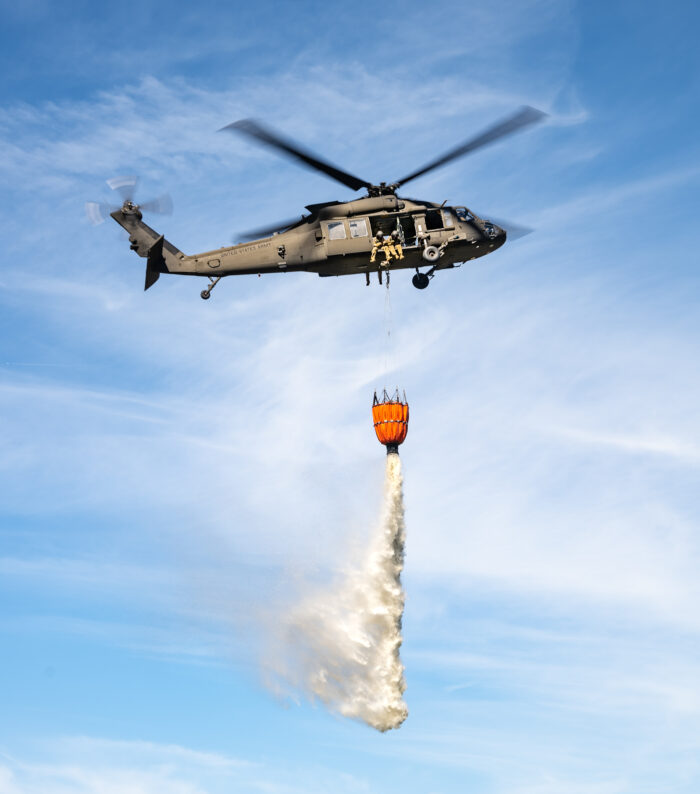
Helicopters in use by the National Guard can hold 630 gallons of water each, which personnel then disperse over wildfires from above. This helps target areas of the wildfires that are unsafe for emergency responders to approach on the ground.
“Our aircrews have extensive experience in helping to combat wildland fires,” said Bill Crane, adjutant general of the West Virginia National Guard in a press release Thursday.
“We will do all we can to help bring these fires under control to protect lives and property in the impacted communities,” he said.
Dropping water onto wildfires from above allows firefighters to extinguish fires that are unsafe for ground personnel to approach. Photo Credit: West Virginia National Guard
Add WVPB as a preferred source on Google to see more from our team
Urban renewal in the last century was supposed to revitalize struggling cities, but it often sacrificed Black neighborhoods and business districts, like Black Bottom in Bristol, Virginia. Inside Appalachia’s Mason Adams spoke with organizer Tina McDaniel about “The Souls of Bristol’s Black Bottom,” a project in Bristol that remembers the community through interpretive signs, public art and digital storytelling. McDaniel says learning about Black Bottom was a revelation.
The hearing relates to the proposed construction of a 1,200-megawatt gas plant next to the existing coal-fired Fort Martin Power Station, as well 70-megawatts of solar projects.
Gov. Patrick Morrisey has declared a State of Emergency for Boone, Logan, and Raleigh counties following severe storms, flash flooding, and landslides.
Silicon Foundation Energy says a three-phase plan will start with developing 10 megawatts of energy directly from the existing energy grid before expanding to a 100-megawatt regional compute hub